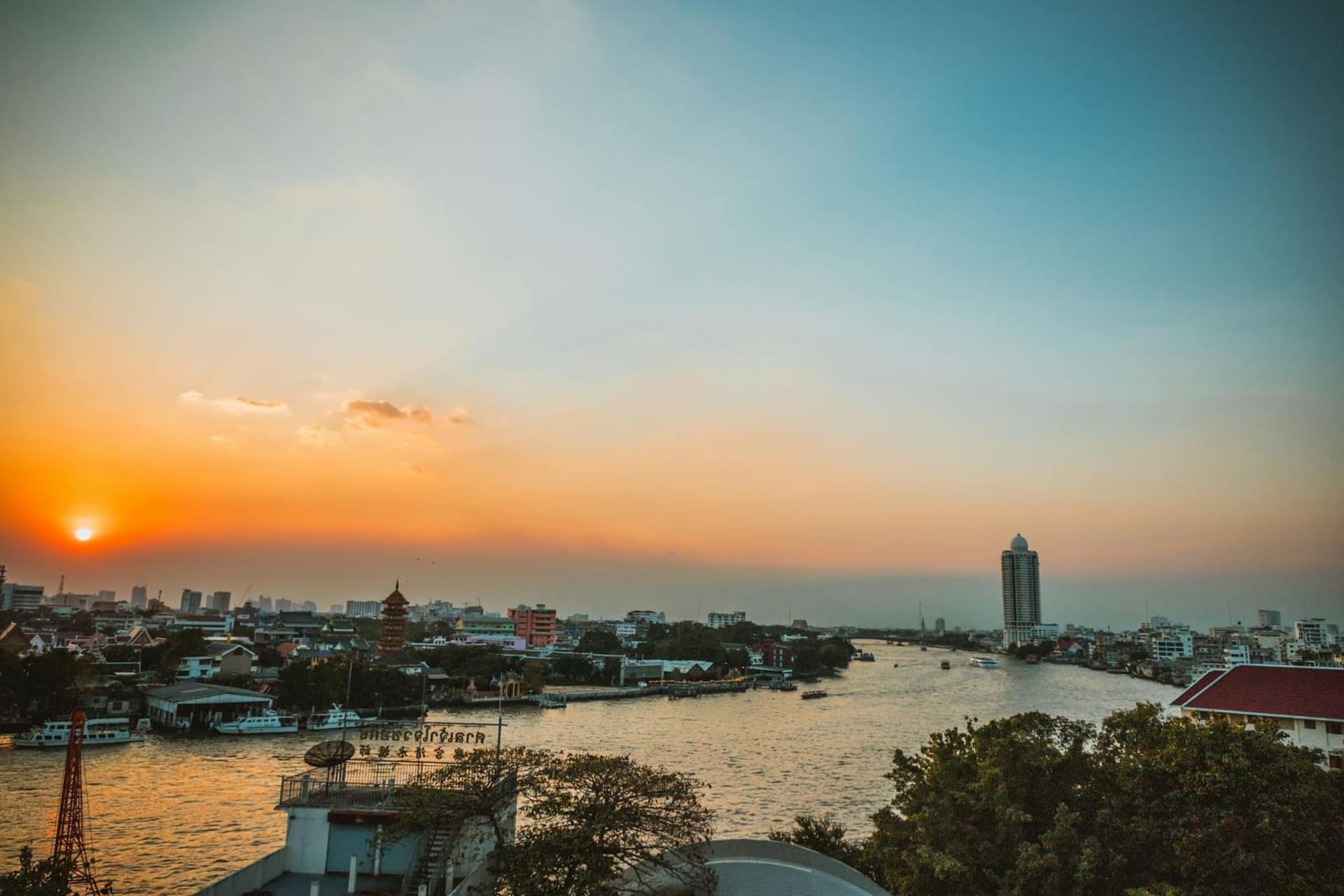
Narrow red-earth ridges above the Pai valley, walked at sunset for views across the mountains to Burma.
We came up the hill from town in the late afternoon, on a rented motorbike that had been complaining about the gears since we picked it up on Chaisongkram Road. The road to Kong Lap curves south out of Pai’s market strip and climbs through dry teak forest before the car park appears — small, dusty, buzzing with the kind of anticipation that collects wherever people know something good is about to happen.
The Edge of the World
Nothing in the approach prepares you for the first ridge. The canyon is not deep in the way canyons usually are — it’s more like the earth simply cracked open here and forgot to apologize. The soil is iron-red, baked to something between clay and terracotta, and the ridges run like the spines of buried animals, narrow enough in places that walking them feels less like hiking and more like tightrope work. To the left, a dry gully. To the right, the same. Ahead, the Pai valley spread open all the way to the mountains of the Shan State, the border with Burma somewhere inside all that blue.
I went first. Lia refused to look down.
Sunset on the Spine
The light was the thing I hadn’t expected. Around five in the afternoon the sun drops behind the western ridgeline and for maybe twenty minutes the entire valley goes soft — a kind of diffuse amber that doesn’t throw hard shadows, just saturates everything. The dry grass on the canyon walls, normally tan and forgettable, turned to something almost gold. The mountains to the north went from grey-green to violet.
Most of the other visitors were taking photographs at the obvious lookout near the entrance. We kept walking, past that first platform, along the narrow dirt spine to where the crowds thinned and the path narrowed to maybe forty centimeters of packed earth. That’s where I stopped. Not from fear — though there was some of that — but because the view from that particular pinch demanded stillness. A lone cattle egret crossed below us, flying through the valley air the way birds do when they think no one is watching.
The surprise was the sound. Or rather the absence of it. At that distance from town, in that stillness, there was almost nothing. Just the occasional far-off bark of a dog in one of the valley villages, and the wind moving through the canyon’s raw walls with a low, continuous sigh.
After the Walk
We rode back into Pai as the streetlamps came on along Walking Street, parked the bike near the night market, and ate bowls of khao soi at a plastic table outside a stall that had no sign and needed none. The noodles were fat and curried and exactly right.
When to go: The canyon is best in the cool dry season, November through February, when the afternoon light is clear and the air doesn’t carry the haze of burning fields. Avoid the wet season if you value your footing — the red clay turns treacherous after rain.