Kanchanaburi
"The Kwai flows quietly here, indifferent to the bridge above it and all the history it carries."
The Bridge on the River Kwai and WWII history woven into jungle waterfall landscapes.
I didn’t expect to feel so much standing on a bridge.
The Death Railway Bridge in Kanchanaburi is narrower than I imagined — two narrow pedestrian walkways flanking a single train track, the whole structure built from dark riveted steel that has been repainted so many times the bolts look almost decorative now. Tourists walk its length and take selfies. A vendor sells corn from a cart at the western end. Somewhere below, the Kwai Yai moves the color of oxidized jade, unhurried.
The Weight of the River Road
We arrived from Bangkok on an early third-class train, the kind where the windows stay open and the countryside slides past like an unedited film. Kanchanaburi sits about three hours west of the capital, pressed against the Burmese border by mountains and river. The main strip along Maenam Kwai Road is guesthouses, banana pancake spots, and motorbike rental shops — familiar Thailand traveler infrastructure. But step half a block toward the water and the noise softens.
Lia found the JEATH War Museum before I did, tucked down a side lane near Pak Phraek Road. It’s a reconstruction of the bamboo huts where prisoners of war were held — cramped, low-ceilinged, lined with photographs and ration lists and personal accounts. I spent an hour in there reading letters home that never made it. The museum is rough around the edges and none the worse for it. History this close doesn’t need polish.
Erawan and the Unexpected
What I didn’t anticipate was how thoroughly the jungle would reset everything.
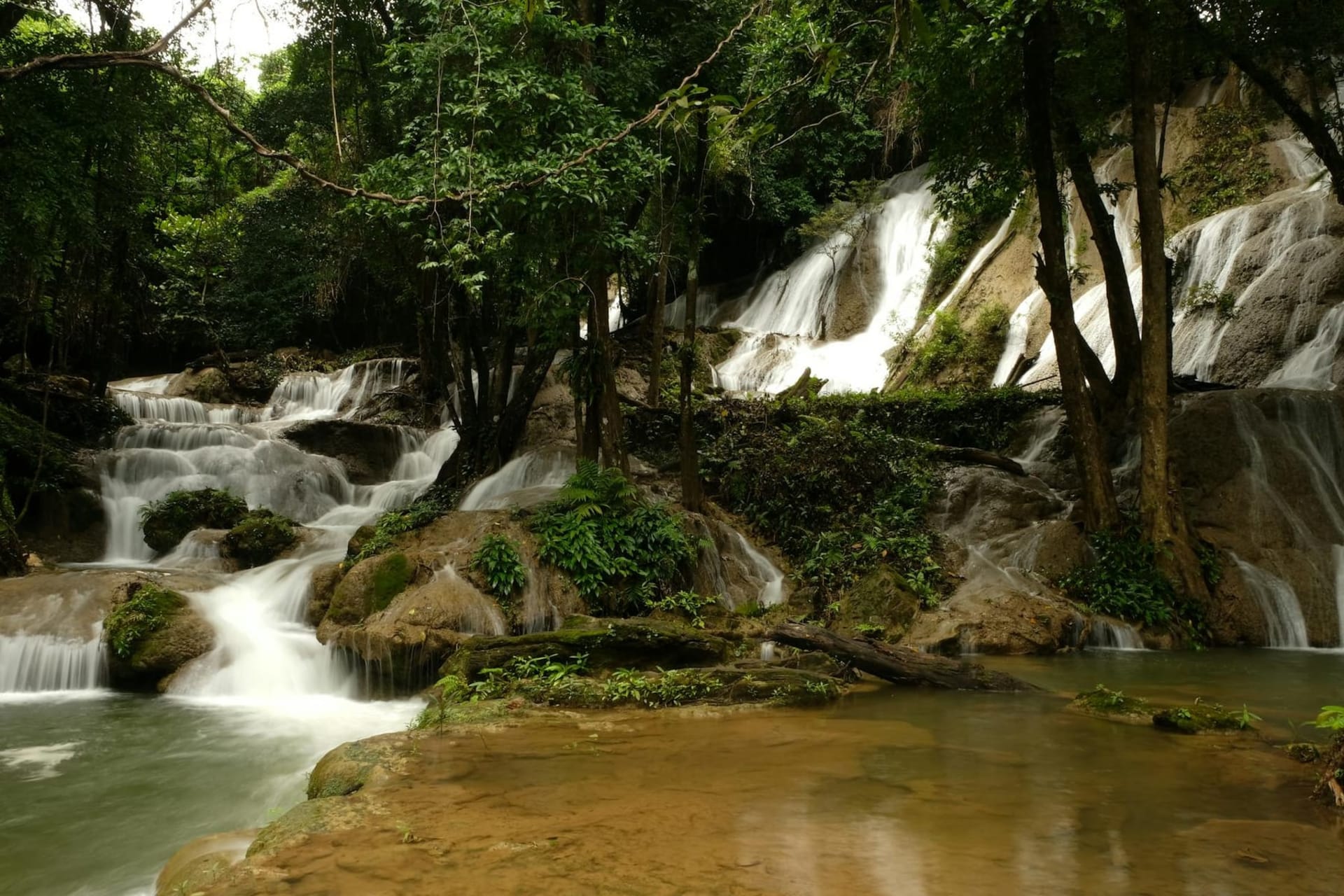
Erawan National Park is forty kilometers north of town, and its seven-tiered waterfall is one of those places that earns every photograph ever taken of it. The lower pools are so turquoise they look filtered. We swam in the third tier, where small fish come to nibble at your ankles — an involuntary spa treatment — while the falls above tumbled white against limestone. After a morning at the war cemetery reading dates of death printed next to ages that shouldn’t have ages of death, the cold water felt almost necessary.
The unexpected thing: at the top tier, the crowds disappear entirely. We were alone up there with the sound of water and a few long-tailed birds I couldn’t name.
Where the Day Ends
Back in town, we ate at a floating restaurant on the river — grilled river fish with a tamarind sauce I’m still thinking about, served with sticky rice and morning glory stir-fried in garlic. The lights of Sangchuto Road reflected in the water. A train crossed the bridge in the dark, its headlight swinging over the steel.
When to go: November through February, when the rains have cleared and the air is cool enough to walk the park trails without stopping every ten minutes to breathe. Avoid the bridge on the first Monday of December — it gets crowded for the annual light and sound show, which is spectacle more than substance.