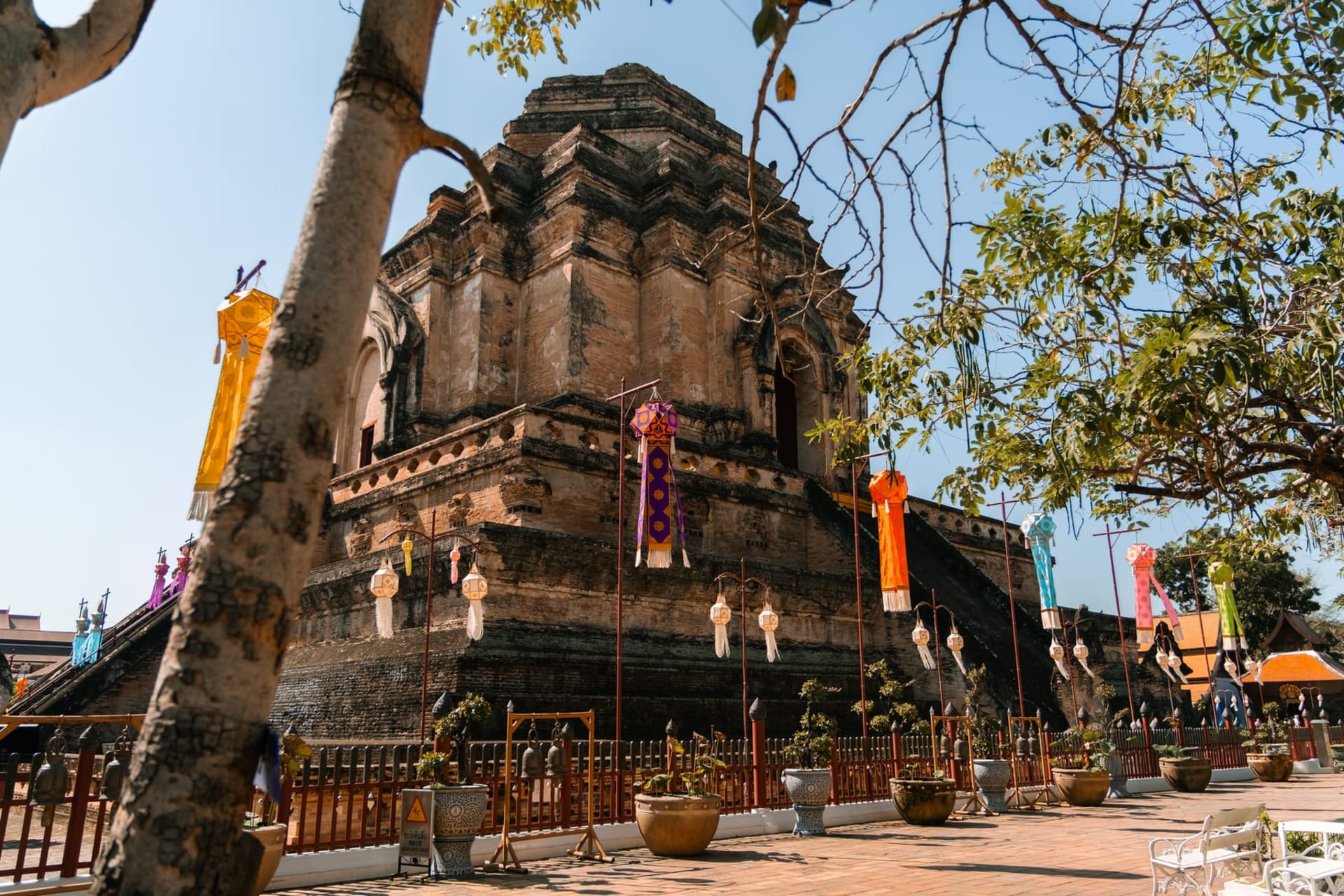
Chiang Rai Night Bazaar
"By night, Chiang Rai's bazaar smells of grilled pork and incense and a dozen languages at once."
Northern hill-tribe crafts, Lanna street food, and lantern glow after dark in Thailand's coolest city.
Chiang Mai gets all the headlines, and I understand why — it is beautiful and easy and endlessly photogenic. But there is something slightly exhausted about it now, a city that has been loved almost to transparency. Chiang Rai is different. Coming here from the south felt like stepping through a door that had not yet been worn smooth by too many hands.
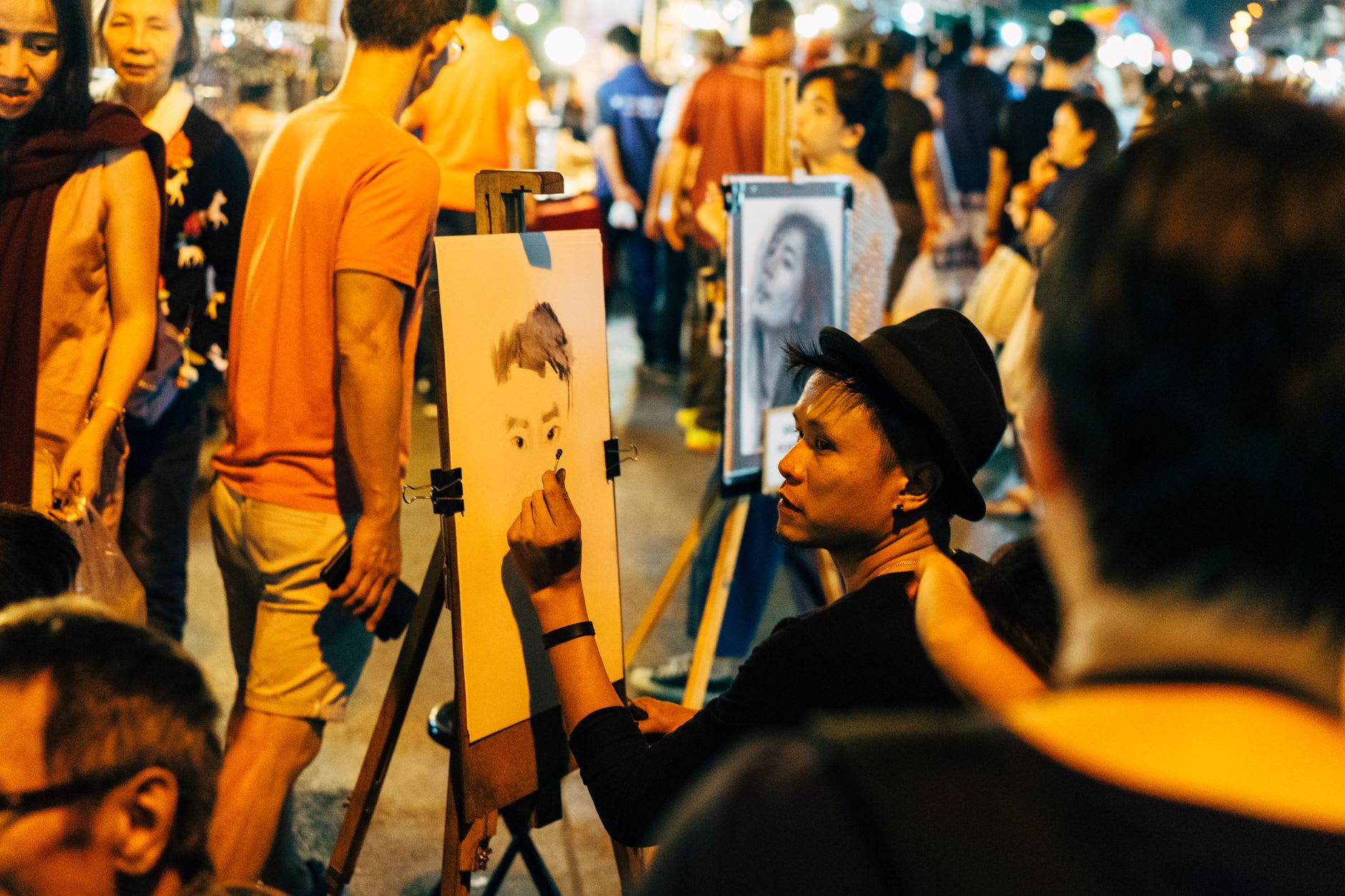
The Night Bazaar on Phahon Yothin Road opens around five in the afternoon, when the heat in the hills finally begins to relent and vendors wheel out their carts onto the footpath with the quiet efficiency of people who have done this every evening for years. By six, it has found its rhythm.
The Stalls Along Phahon Yothin
The northern end of the market is where I spent most of the first evening — the craft stalls, run almost entirely by hill-tribe women from the Akha, Karen, and Hmong communities whose villages dot the mountains above the city. Their textiles have a particular quality that no market in Chiang Mai quite matches: indigo-dyed cotton with white geometric embroidery, cross-stitch panels that look like circuitry but come from traditions several centuries old, bags woven from bamboo and dyed with forest plants. The colours are not the bright synthetic tourist hues. They are deeper, more uncertain — the purples that lean towards brown, the greens that lean towards black.
I spent forty minutes at one stall run by an Akha woman who couldn’t have been older than sixty but moved with the ease of someone who had been sitting cross-legged on a mat since before I was born. She was finishing a panel of embroidery as she watched the market from under a lamp hung on a string between two poles. I bought a small woven purse for Lia, who had insisted on going to the White Temple first and said she would find me later. The woman wrapped it in a square of newspaper without being asked, which felt more careful than any gift box.
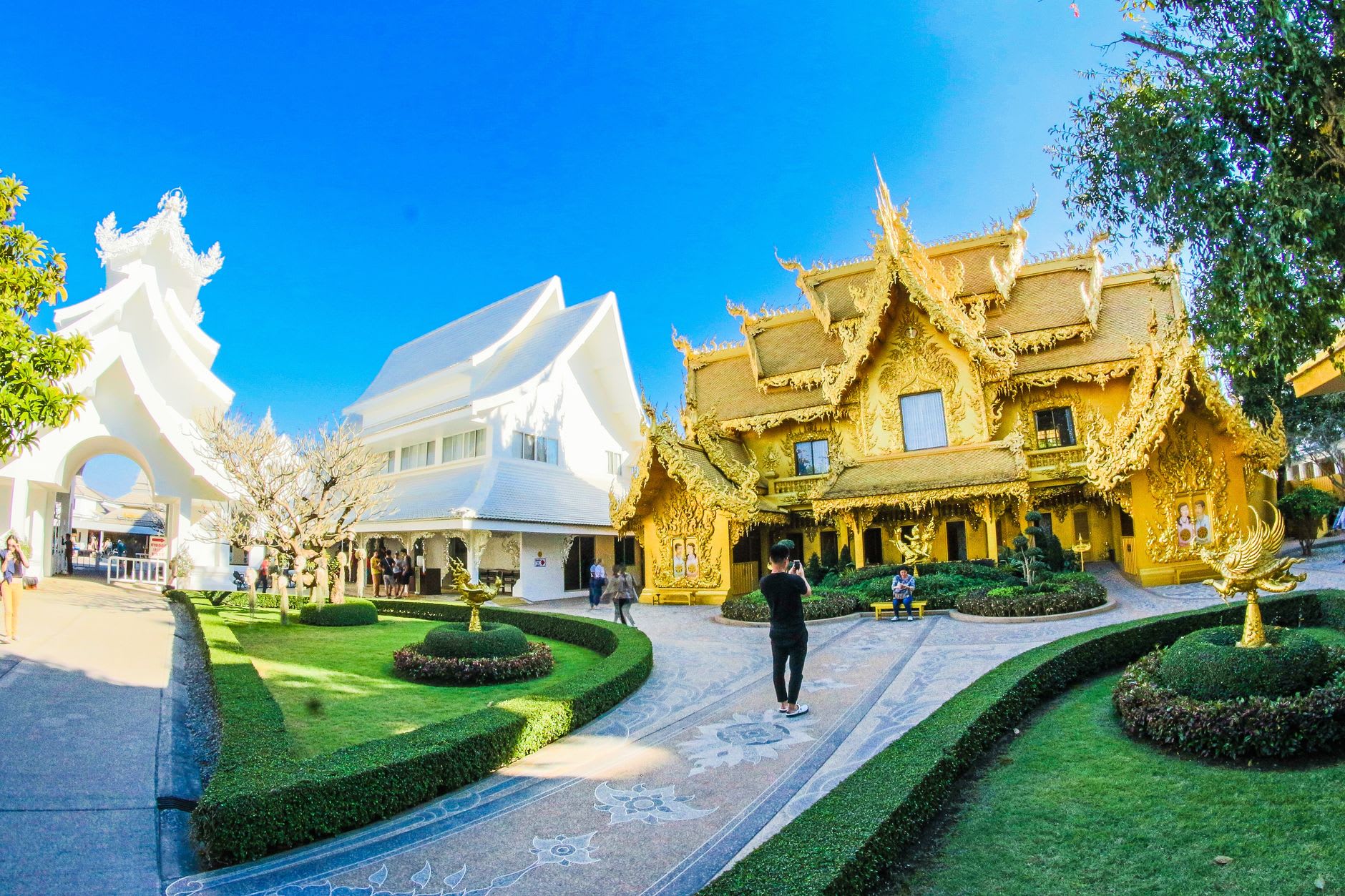
The Food Section — Smoke and Lanna Fire
The centre of the bazaar is where the cooking happens, and the smoke is the first thing that reaches you — charcoal and pork fat and something floral underneath, probably galangal or lemongrass burning off the drip tray. The grills run in a row along the interior lane: skewers of moo ping, the marinated pork that Thais eat at breakfast but that tastes better at night, beside them sticky rice pressed into small parcels and roasted over coals until the outside chars and the interior stays soft and fragrant with coconut milk.
I ate a bowl of khao soi from a woman who had set up a folding table and two plastic stools beside the cloth stall and seemed to be running an entirely separate operation from the main bazaar. Khao soi is Chiang Rai’s own dish — a curry broth poured over soft egg noodles with a nest of crispy fried noodles on top, a wedge of lime on the side, pickled mustard greens, shallots, and a jar of roasted chilli paste that you add at your own peril. I added too much. I added it again. The broth was richer than any version I had eaten in Bangkok, darker, with a coconut cream that had been cooked down to something almost caramel.
Lia found me here, mouth still burning, and ordered the same thing. She added even more chilli paste, looked at me, and said nothing. I have been with her long enough to know that this was a victory lap.
The Thing I Did Not Expect
I had been told about the food and the crafts. What nobody mentioned was the KALARE Night Bazaar section — a separate enclosed square off the main lane, reached through a gap between two textile stalls, that opens into a wide courtyard with a permanent stage at one end and a ring of food vendors around the perimeter. Most evenings, there is live music here: not the acoustic covers you find in tourist bars, but a full band playing a mix of Thai pop, country music, and what I can only describe as northern Thai folk sung into a microphone by a man in his fifties who clearly had no interest in what visitors expected and every interest in what he wanted to play.
We sat on low wooden benches and drank Chang beer from bottles wrapped in paper napkins to keep them cold, and listened to music we did not understand, and watched the courtyard fill with locals — older couples, a group of monks in saffron who had presumably stopped to rest their feet, teenagers from the technical college down the road eating from paper cones of grilled corn. The lanterns overhead swung gently in the warm air. The music was unhurried and slightly mournful in the way that northern Thai music can be, and the gap between what I had planned to do with the evening and what I was actually doing felt, in that moment, like exactly the right kind of distance.

I had expected a market. I had not expected the sensation of being a guest at something that was not arranged for guests.
When to go: November through February is the best window — the hills have cooled, the air is dry, and the evenings around the bazaar sit at the precise temperature where you do not need to think about weather at all. Avoid April, which is Songkran season and transforms the city into something wonderful but entirely different. The market runs every evening from roughly 17:00 to 23:00, and it earns more of your time than most people give it.