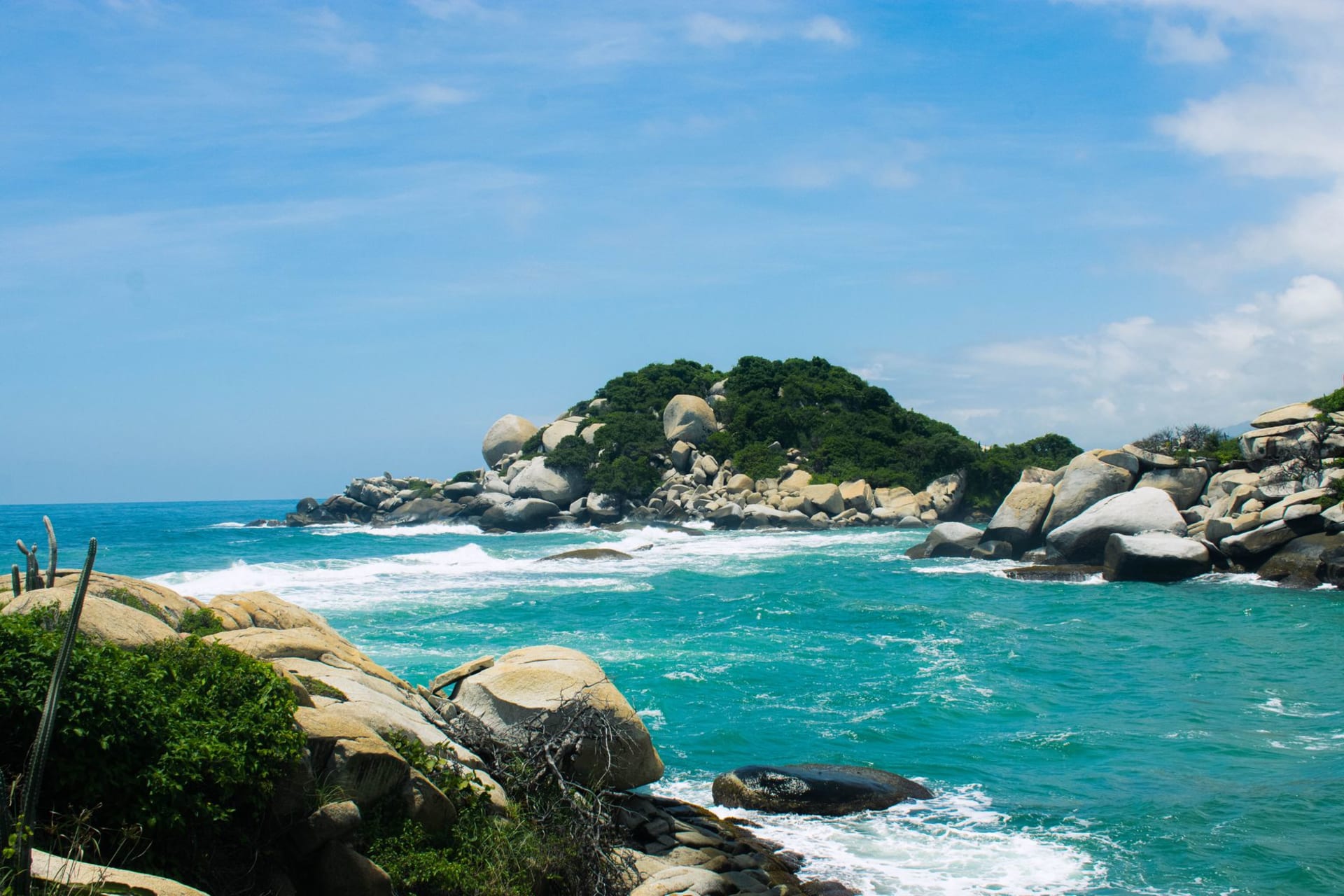
Playa Cristal
"Water this clear starts to feel like a philosophical position — an insistence on showing you everything."
Playa Cristal has no road. No trail. There’s no way in except by boat from Taganga or Santa Marta, a twenty-five minute crossing over open Caribbean water that arrives without warning at one of the more quietly overwhelming beaches on this coast. When the lancha’s engine cuts and you drift toward the sand, you can see the anchor rope’s shadow on the seafloor below before the anchor itself has hit bottom. That’s the kind of water we’re dealing with here.
The boat trip is part of the experience in a way that matters. You leave the built environment entirely — watch Santa Marta’s sprawl and then the smaller buildings of Taganga recede behind you, watch the Sierra Nevada float above everything, watch the coastline unroll in a series of headlands and jungle-covered points with no interrupting infrastructure. By the time Playa Cristal appears around a rocky promontory, you’ve been displaced from ordinary logistics long enough that arriving feels significant.
The Water’s Logic
The beach sits in a protected cove backed by dry tropical forest — different vegetation from the lush jungle of Tayrona’s interior, thornier and more spare. The absence of a river mouth nearby means no sediment plume clouding the water, no agricultural runoff, nothing to interrupt the visibility. The seafloor is white sand and reef patches, and the water over it is somewhere between pale turquoise and colorless, depending on the angle of the light.
I went in immediately, before I’d established where to put my bag or negotiated lunch. There are small reef areas at either end of the cove with parrotfish, damselfish, the odd spotted trunkfish; snorkeling masks are available from the food stand on the beach. Without a mask you can still see everything in the shallows — you don’t so much look through the water as acknowledge that the water is technically there.
The Beach Itself
Playa Cristal is modest in size — maybe two hundred meters of sand — which means that in peak months it can feel crowded. The tour boats from Taganga and Santa Marta deposit groups for a few hours before returning, so there’s a rhythm of arrival and departure that creates windows of relative quiet in the early morning and late afternoon if you stay longer than a day trip.
The food stand does a reliable fried fish and coconut rice. There’s a hammock or two available if you want to extend the afternoon past the tour group departure and negotiate your own boat back. Staying into the late afternoon, when the light goes low and golden and most visitors have left, is one of those adjustments to a normal itinerary that costs relatively little and returns considerably more.
Getting There
Most people do Playa Cristal as a day trip from Taganga or Santa Marta, joining a shared boat tour that may also stop at Playa Grande or the coral areas off the Tayrona park boundary. Prices vary seasonally and by operator. Going directly with a Taganga fisherman rather than through a tour agency is generally cheaper and often gives you more flexibility in timing — ask at the beach in the early morning when the fishing boats are coming in.
When to go: January through March is peak clarity — northeast trade winds keep the water settled and the visibility at its best. Avoid weekends in July, August, and Semana Santa when boat tours fill up and the beach gets genuinely crowded. An early morning departure from Taganga (by 7 a.m.) gets you there before the midday rush.