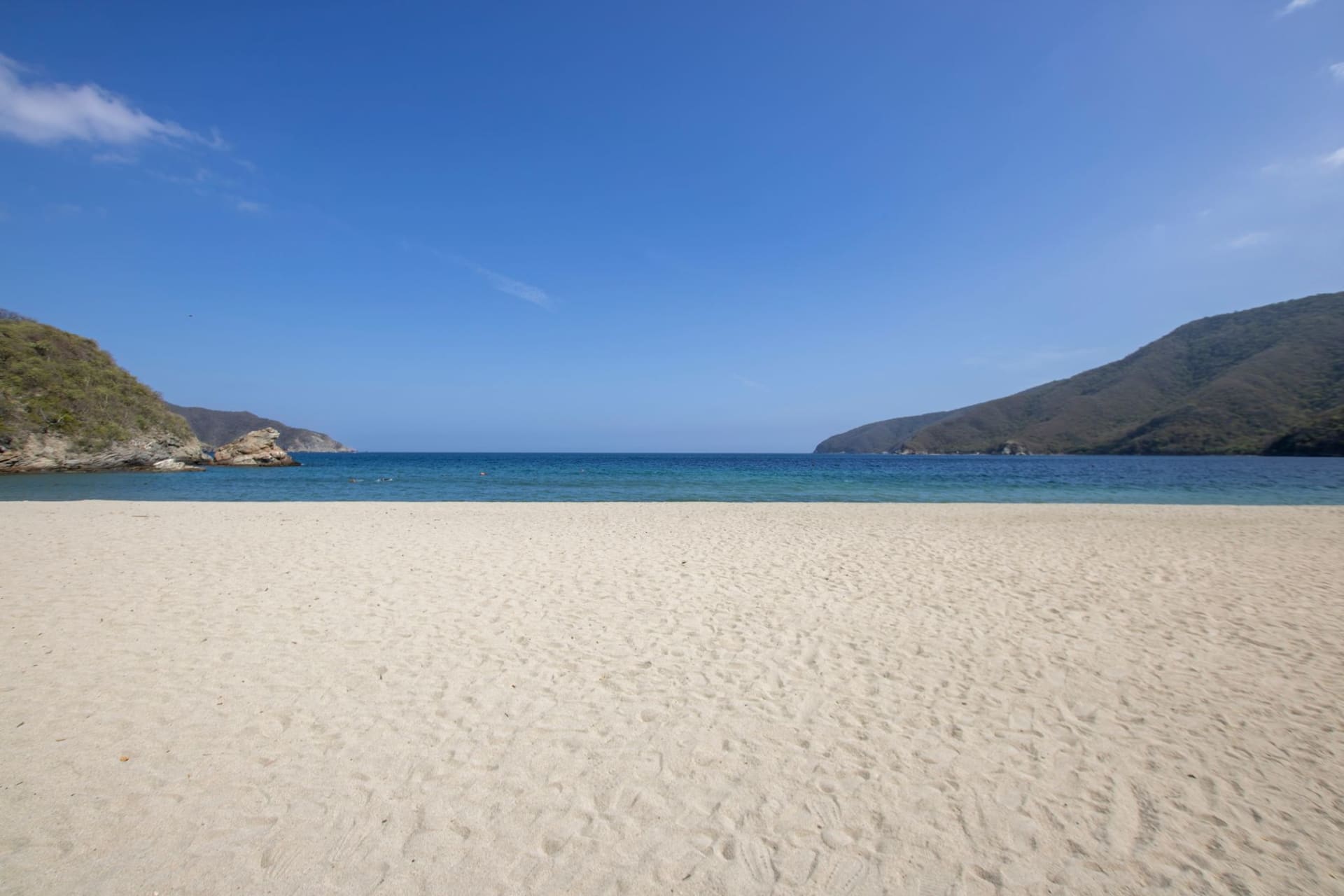
Playa Brava
"I've never been somewhere that made beauty feel so obviously beside the point."
Playa Brava means Rough Beach, and it is not dissembling. This is Tayrona’s most exposed stretch of coast, the section that faces northeast into the open Caribbean and takes the swell full in the face without the boulder arrangements or headland geometry that shelter the park’s calmer bays. The waves here are not fun waves. They are the serious kind, the kind with lateral drag and irregular timing and the general disposition of something that doesn’t particularly care about your presence.
Swimming is prohibited at Playa Brava. Every year the prohibition is ignored by some visitors and the consequences range from frightening to fatal. I mention this at the top because the beach is so spectacular that people forget they came to look at it.
How You Arrive
Playa Brava sits between Arrecifes and Cabo San Juan along the main coastal trail, which means most people pass through it in transit rather than staying. The trail drops onto the beach briefly — maybe three hundred meters of open walking on the sand itself — before climbing back into the trees. On that open stretch you’re exposed to the full wind and the full sound of the surf, and the contrast with the sheltered jungle trail is total and immediate.
The sand is coarser than the park’s calmer beaches, darker, mixed with fragments of coral and shell. The debris line above the tide is dramatic — pieces of driftwood, coconut husks, occasionally the remnants of fishing gear that’s made it all the way from the outer Caribbean. You get a clear sense of the ocean’s domestic economy.
The Light at Both Ends of the Day
I passed through Playa Brava twice: once in the middle of the day, once at around six in the morning on my way from Cabo San Juan to the park exit. The difference between these two versions of the same place was considerable. At noon, with the sun overhead, the beach was vivid and flat-lit, the waves impressive but exposed. At six in the morning, with the sun barely up and the light coming in low from the sea, the waves caught the light on their faces before breaking, and the whole scene had a quality of drama so concentrated it was almost embarrassing to be watching alone.
Lia was behind me on the trail and arrived about five minutes later, just as the light shifted. She said something about it being a lot, and that seemed exactly right.
What Playa Brava Is Trying to Say
Tayrona’s more famous beaches — Cabo San Juan, La Piscina, the sheltered coves — offer a version of the Caribbean that’s been gently organized for human use. Beautiful, absolutely, and genuinely wild in the larger sense. Playa Brava offers no such organization. The Sierra Nevada just falls into the sea here, and the sea is doing its own thing, and you’re in between them with your sunscreen and your day pack.
There’s a tempered humility that comes from standing on a beach where the ocean is actively explaining that it’s not for you. Not the uncomfortable humility of failure, but the useful kind — the reminder that landscapes that look like backdrops are actually systems running on their own schedule, with or without observers.
Then the trail goes back into the forest and you’re sheltered again and forty-five minutes later you’re having lunch at Cabo San Juan. The contrast is part of the walk.
When to go: Playa Brava is most dramatically itself during the more active swell months — May through November — when the waves are largest and the surf most theatrical. The dry season (December–March) brings smaller swell but better hiking conditions overall. Either way, you’re there to walk through, not to linger: budget thirty minutes max on the beach itself.