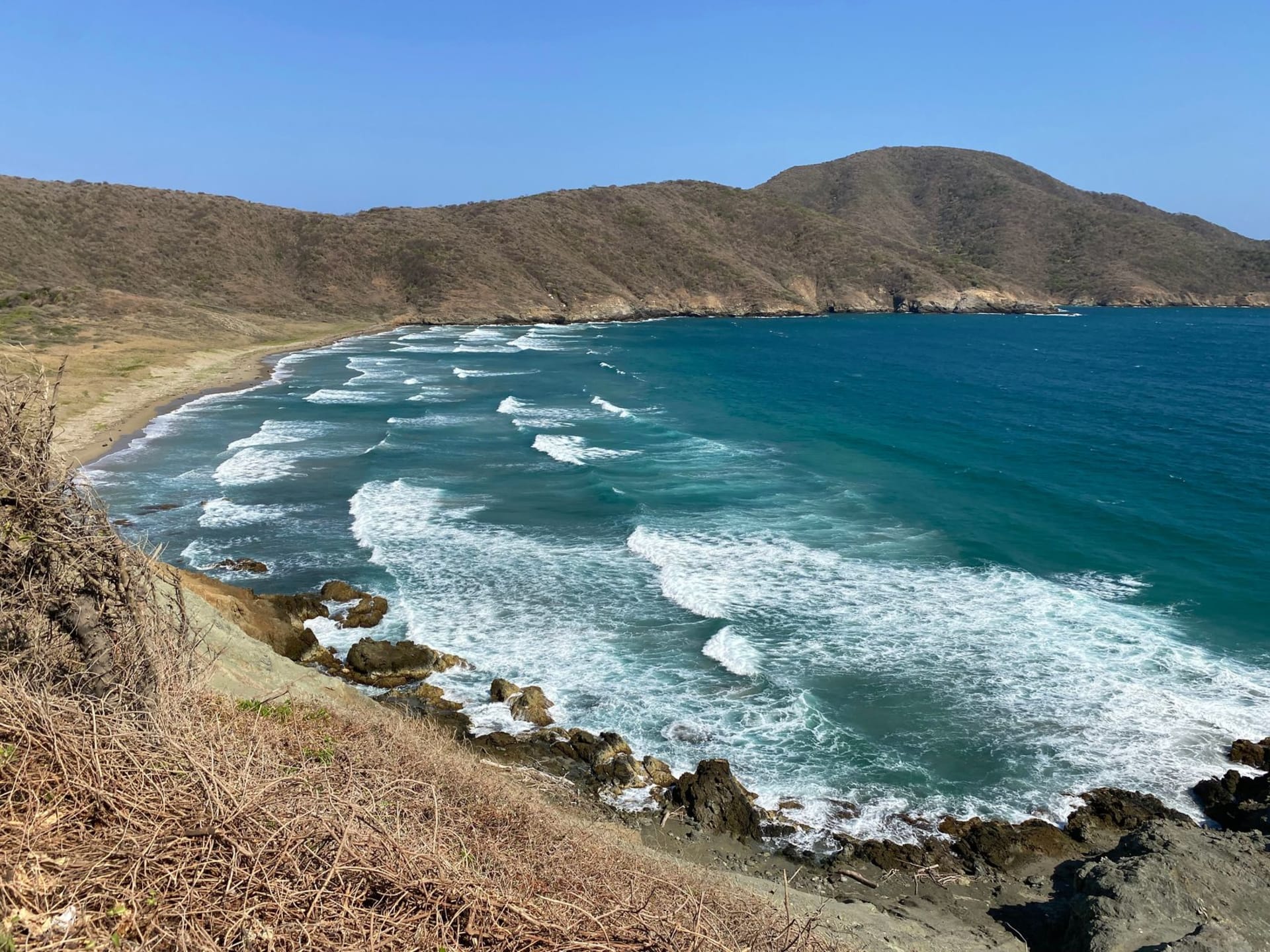
Cañaveral
"Everyone treats it as a trailhead. I think it might be the best beach in the park."
The Entrance Nobody Looks At
Cañaveral is where most people’s Tayrona day actually begins: it is the first sector inside the main El Zaino entrance, the place where the shuttle drops you and the walking starts. Because of that, it gets read as a logistics point rather than a destination. People stride straight through it toward Arrecifes and Cabo San Juan, sweating, focused on the famous photo beaches further west. Lia and I did exactly this the first time, and I regret it slightly, because Cañaveral turned out to be the part I think about most.
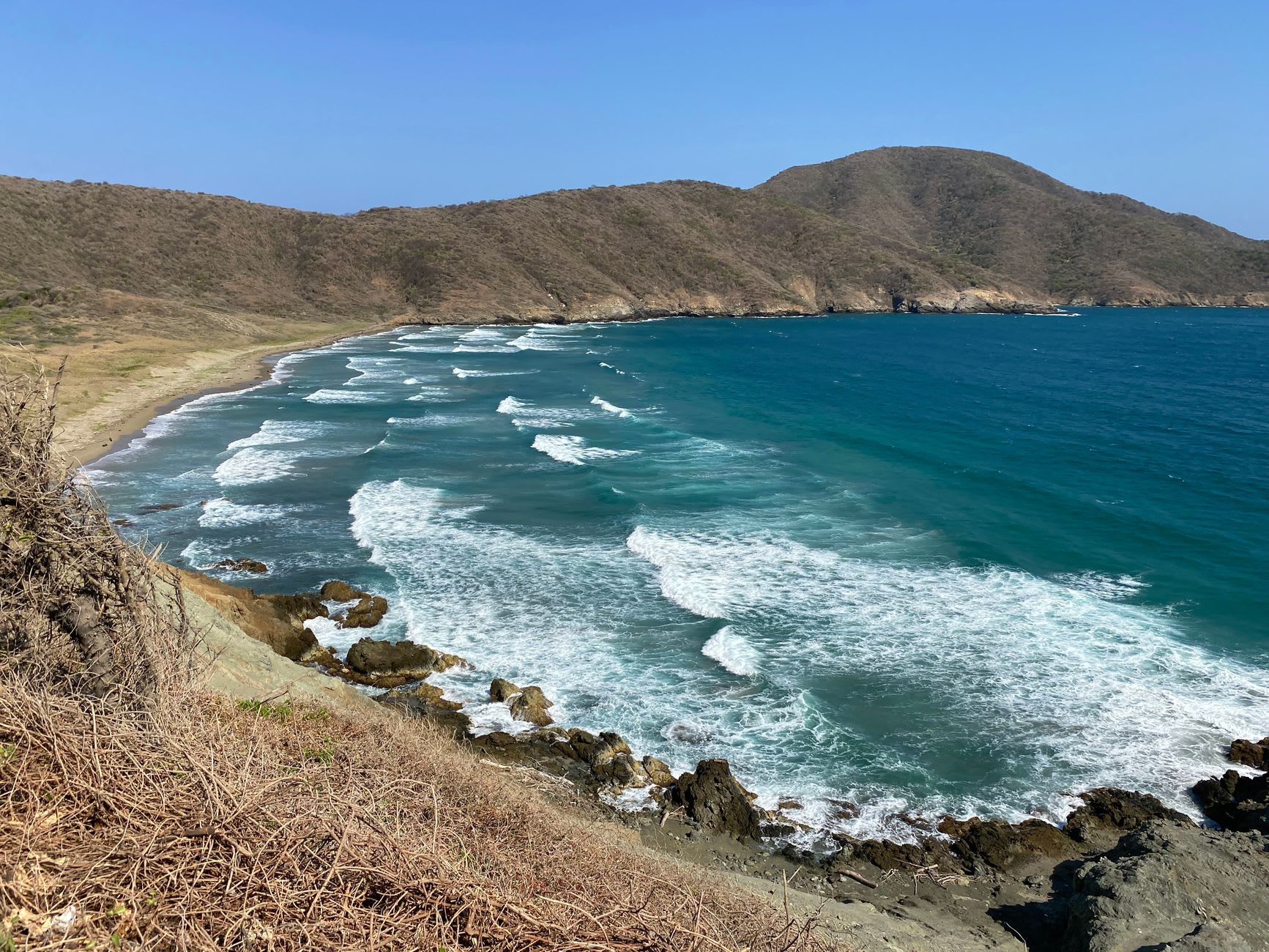
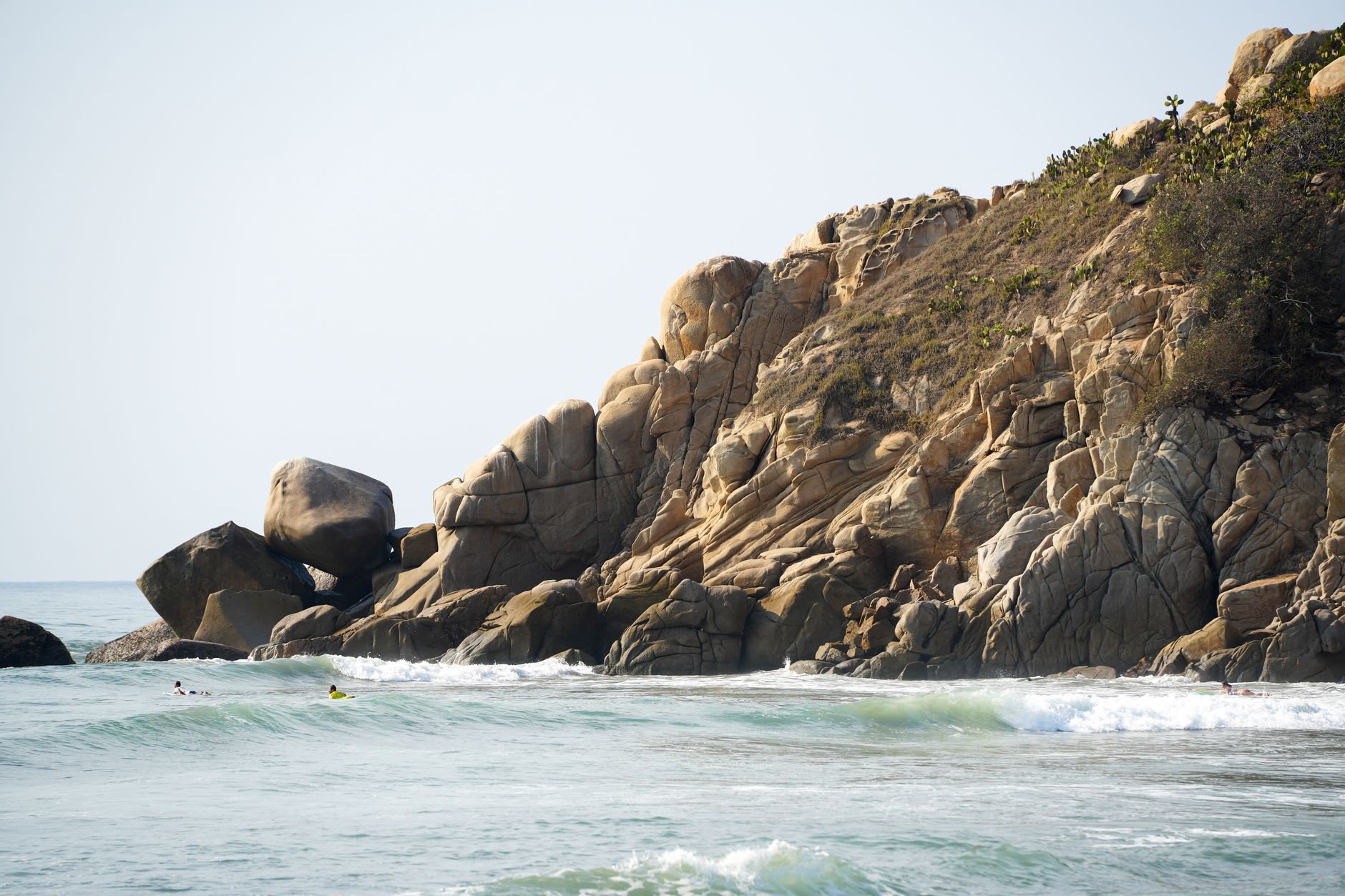
The beach here is not for swimming. The currents off this stretch of the Caribbean are genuinely lethal, with a long grim history of drownings, and the signs do not exaggerate. But it is spectacular to look at: enormous rounded granite boulders, some the size of houses, piled along the shore where the jungle meets the surf. The sea hits them and throws spray several meters up. I sat on one for the better part of an hour the second time we came, doing nothing, and it was the calmest I felt in the whole park.
Ecohabs, Iguanas, and the Cost of Comfort
Cañaveral is also where the park’s upmarket lodging sits — the Ecohabs, thatched cabins perched on a hill with a view down the coast, run by the park concession and priced for people who are not me. I will say the setting is undeniable. We did not stay there; we walked up to look, got chased off politely, and noted the prices with the particular bitterness of the budget traveler. There is a campground and a restaurant down at beach level that are more within reach, though everything inside Tayrona carries a captive-audience markup that you simply have to accept.
The wildlife here is constant and unbothered. Iguanas the length of my forearm sun themselves on the boulders. We watched a troop of cotton-top tamarins — tiny, punk-haired, critically endangered monkeys found only in this corner of Colombia — move through the canopy near the restaurant while everyone else stared at their phones. A park ranger told me, without much hope in his voice, that they are doing slightly better inside the park than out.
Going Slow on Purpose
My argument for Cañaveral is simple: it is the one part of Tayrona where you can stand still. The walk to the postcard beaches is hot, crowded, and a little competitive, everyone moving at the same time on the same path. Here at the entrance, if you arrive early or linger late, you get the boulders and the noise of the sea and not much else. We came back on our last morning specifically to sit here before the day’s crowd arrived, and it confirmed what I suspected. The destination people skip is often the one worth slowing down for.
When to go: December to March for the driest weather; the park usually closes for several weeks each year for ecological recovery, often in February and again in autumn, so check the current dates before you commit. Arrive at the El Zaino gate early to beat both the heat and the lines. Do not swim at Cañaveral, no matter how inviting it looks.