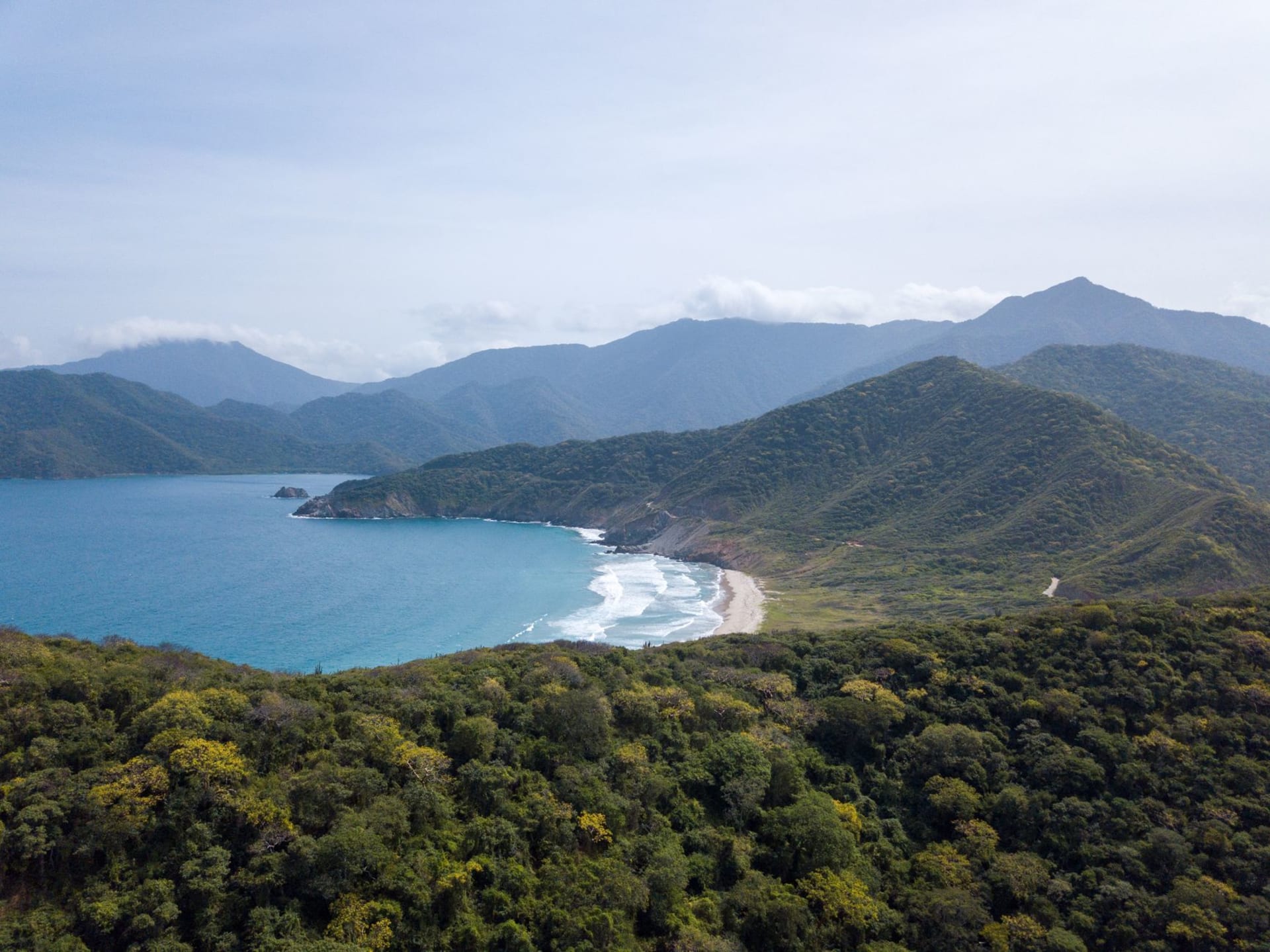
Most beaches in Tayrona are selling you the same idea — clear water, calm coves, fish you can see without a mask. Arrecifes is selling something different. This is the park’s big surf beach, where the Caribbean arrives with its full Atlantic fetch and no geological apology, and the water is actively, legitimately dangerous. The rip currents here have killed people. The warning signs are not decorative.
I mention this not to be grim but because Arrecifes is worth visiting specifically for what it is, not as a consolation for what it isn’t. This is a beach you watch. And watching it is a full sensory experience.
What the Ocean Does Here
The waves at Arrecifes are inconsistent in the way that genuinely powerful things are — you can’t predict their size or timing. A set will roll through that’s twice the height of what came before, hitting the dark boulders at the water’s edge with a sound like a struck drum. The spray carries far enough inland that your sunglasses mist. I stood at the tree line for a long time just following individual waves from their break to their conclusion against the rocks, each one different.
The beach itself is wide and covered in coarse sand mixed with broken coral. Driftwood accumulates in piles above the tide line. Vultures work the wrack. The forest behind comes right to the edge of the beach without any transitional zone — one step you’re on exposed sand in full sun, the next you’re in deep shade under fig trees and the temperature drops noticeably. That contrast — the violence of the ocean, the contained quiet of the jungle at its back — is what the place runs on.
The Camping Hub
Despite the unsettling surf, Arrecifes is one of the main logistical hubs within the park. There are camping areas here, the first proper restaurant after the entrance at El Zaino, and hammock accommodations for hikers not going all the way to Cabo San Juan. The restaurant serves the standard Tayrona menu — fried snapper, rice, plantain, cold beer — and at lunchtime it fills with people looking dazed in the particular way that tropical heat and a long hike together produce.
The infrastructure means Arrecifes gets more foot traffic than the more remote beaches, but somehow the wildness of the ocean absorbs it. There’s no version of this beach that feels tamed.
The Sound at Night
I stayed one night in a hammock near the beach. The sound of Arrecifes at night is continuous and low-frequency, a bass note under everything. It’s the kind of sound that removes the need for a white noise machine by simply being louder than any thoughts you might otherwise entertain. I slept better there than I had any right to expect, the waves organizing themselves into a rhythm my body apparently found acceptable.
A horse walked through the campsite at around 3 a.m. I only know this because I half-woke to the sound of hooves on packed dirt. I didn’t look. Some things are better as audio.
When to go: Arrecifes is dramatic year-round, but the surf is heaviest and most spectacular from May through November when Caribbean storms push larger swells. If you want calmer conditions on the trail (if not the beach), December through March is the dry window. Reserve park entry well in advance.