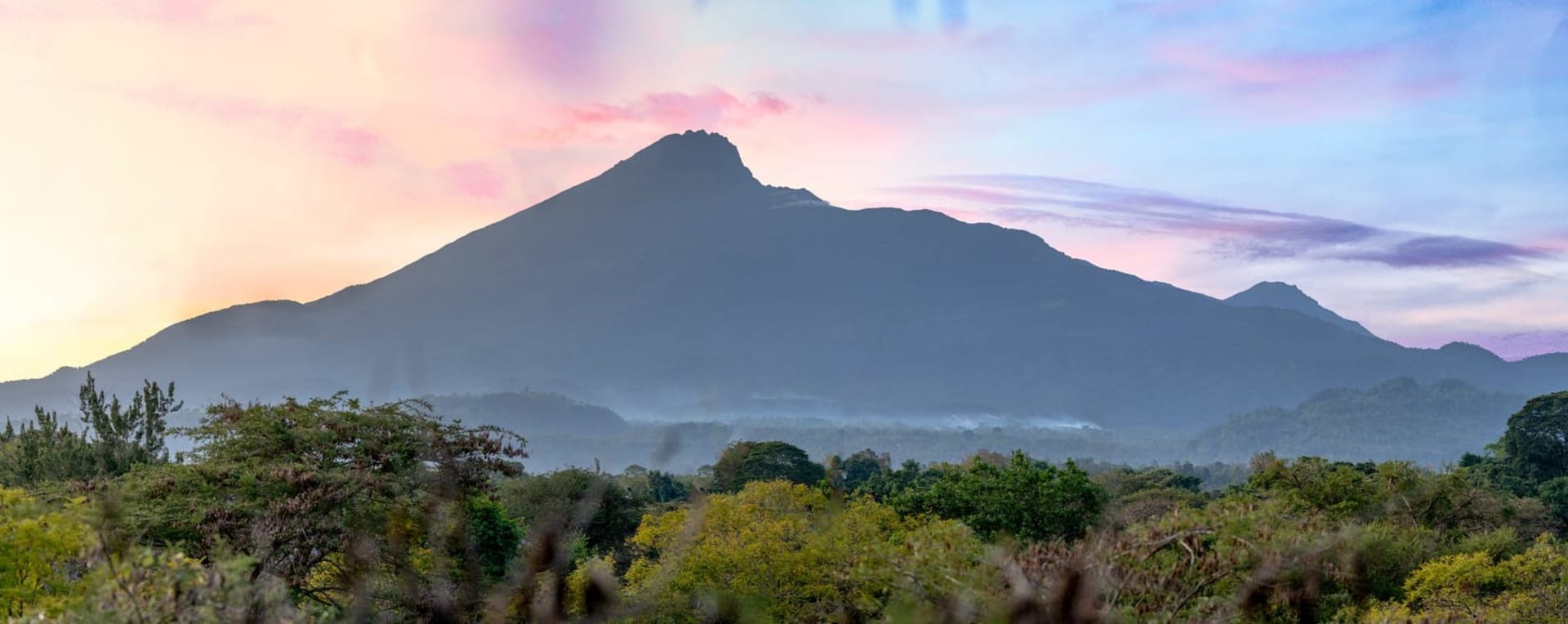
Mist-draped highlands nicknamed the 'Galapagos of Africa' for their staggering biodiversity.
I came to the Usambaras expecting mountains. What I found instead was a world that had decided to dissolve the boundary between earth and atmosphere entirely. Within an hour of leaving Mombo on the winding tarmac road up to Lushoto, the air changed — cooler, greener, carrying the faint mineral smell of wet soil and something herbaceous I couldn’t name. The mist didn’t drift down from peaks. It materialized from the trees themselves, rising off broad fern leaves like the forest was breathing.

Lushoto and the Slow Pace of Highland Time
Lushoto is the kind of town that makes you recalibrate your sense of urgency. The main market on the central square smells of cardamom and dried fish and overripe mango — competing in a way that shouldn’t work but does. Lia spent an entire morning there with a woman selling dried hibiscus flowers, attempting a conversation that required three languages and a lot of hand gestures. I bought a bag of passion fruit and sat on a concrete step and watched the mist slide across the ridge above town, slow and purposeful, like it had somewhere specific to be.
The German colonial architecture still marks Lushoto’s bones — the old Boma building, the mission church — layered beneath decades of painted storefronts and corrugated iron. It gives the town an odd double-exposure quality, as if two eras are being held gently against each other.
Walking into the Forest
The trails out of Lushoto toward Irente or Magamba Forest Reserve are not dramatic in the way that safari landscapes are dramatic. They are quiet and accumulative. You pass through shamba plots of maize and sweet potato, then suddenly into stands of indigenous forest where the canopy closes and the light turns submarine-green. On the trail toward Irente Viewpoint, I rounded a corner and found myself face to face with a Usambara two-horned chameleon, motionless on a branch at eye level, one eye rotating to regard me with complete indifference. I stood still for a long time.

The unexpected thing I never read in any guidebook: the silence here has texture. The forest deadens sound so completely that your own footsteps feel like an intrusion.
What to Eat, and What to Drink
In the guesthouses and small restaurants around the market, the staple is ugali with mchicha — a dark braised amaranth green, slightly bitter, deeply savory — served with whatever the kitchen had that morning. At the Lutheran Uhuru Hotel, they make a thin black tea with fresh ginger that I thought about for weeks afterward.
The highlands grow their own vegetables; everything arrives directly from the plot behind the kitchen.
When to go: The dry seasons — June to October and December to February — bring the clearest days and the best walking conditions on the forest trails. The rains turn the hills an almost hallucinatory green but make paths slippery and visibility unpredictable.