The smell reaches you before the island does. Standing on the deck of the ferry from Dar es Salaam, the wind shifts, and suddenly there it is — clove and salt and woodsmoke and something sweeter underneath, maybe frangipani, maybe the memory of every tropical place you have ever imagined. Zanzibar announces itself through the senses before it offers itself to the eyes, and this order of introduction is exactly right. This is an island that must be inhaled, tasted, and touched before it can be understood.
The Spice Island
The interior of Unguja — Zanzibar’s main island — is a dense, humid tapestry of spice plantations that have shaped the island’s identity and its conflicts for centuries. Cloves, vanilla, cinnamon, black pepper, cardamom, nutmeg, and lemongrass grow in tangled profusion. A spice tour is less an agricultural lesson than a sensory awakening: your guide peels bark, crushes leaves, and presses berries into your palm until your hands carry the scent of an entire spice rack. It was these small, fragrant seeds and pods that drew the Omani sultans, the Portuguese, and the British — each in turn claiming the island for its perfumed wealth.
The Beaches
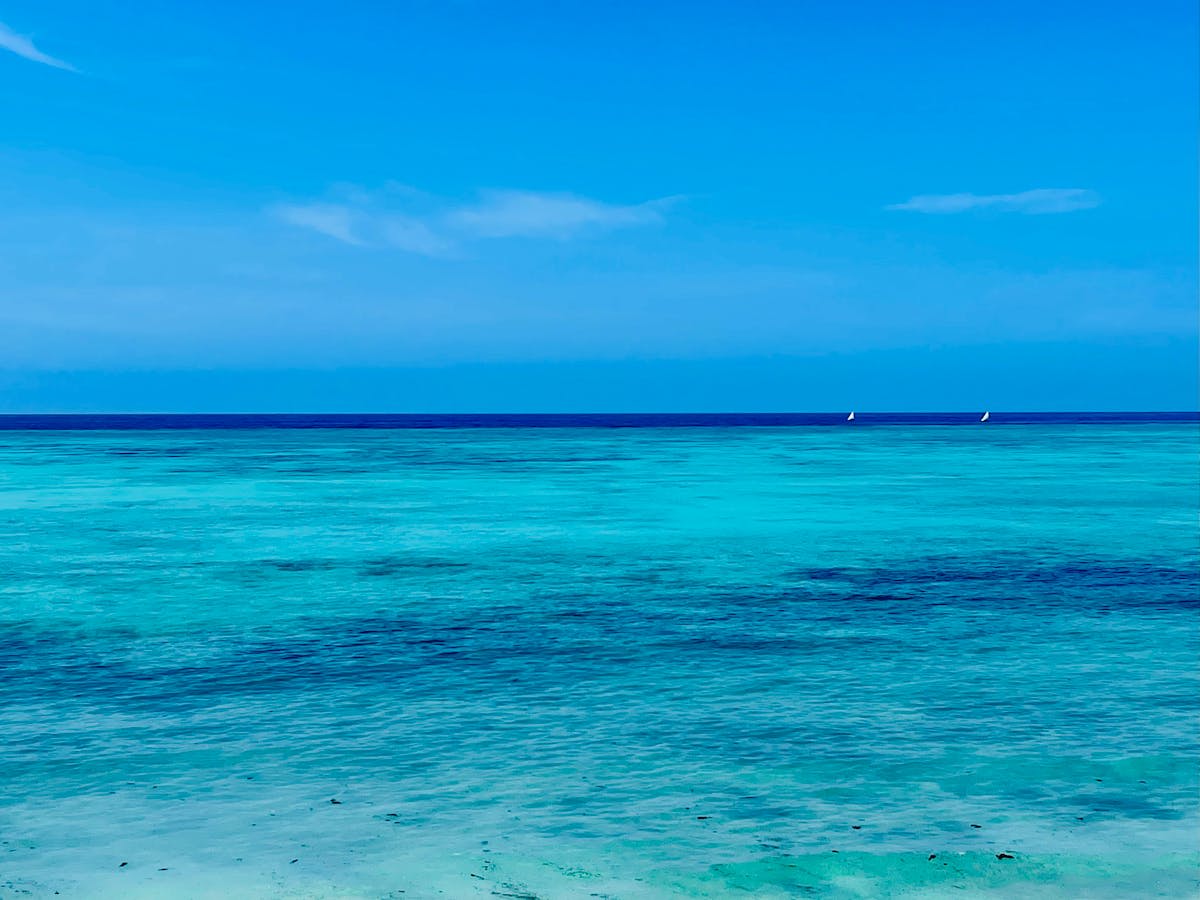
The coastline is where Zanzibar delivers the postcard. Nungwi, at the island’s northern tip, offers white sand that squeaks underfoot and water so clear you can count the spines on a sea urchin from the surface. Kendwa, just south, has the gentler temperament — no tidal retreat, a relaxed atmosphere, and sunsets that turn the Indian Ocean into hammered copper. On the east coast, Paje and Jambiani face the full force of the tides, and at low water the reef flats stretch hundreds of meters out, revealing a secondary world: women in bright kangas harvesting seaweed, children chasing crabs, octopus hunters probing rock pools with wooden sticks.
Under the Surface
The coral reefs surrounding Zanzibar are among the richest in the western Indian Ocean. Mnemba Atoll, a marine conservation area off the northeast coast, offers snorkeling and diving in visibility that can exceed thirty meters — green turtles gliding below you, clouds of anthias pulsing over the reef crest, and occasionally the dark shadow of a bottlenose dolphin passing through the blue beyond. Even from a simple dhow anchored over a patch reef, a mask and snorkel open a world that makes the beauty above the waterline seem almost ordinary.
Dhow Sailing and the Rhythm of the Sea
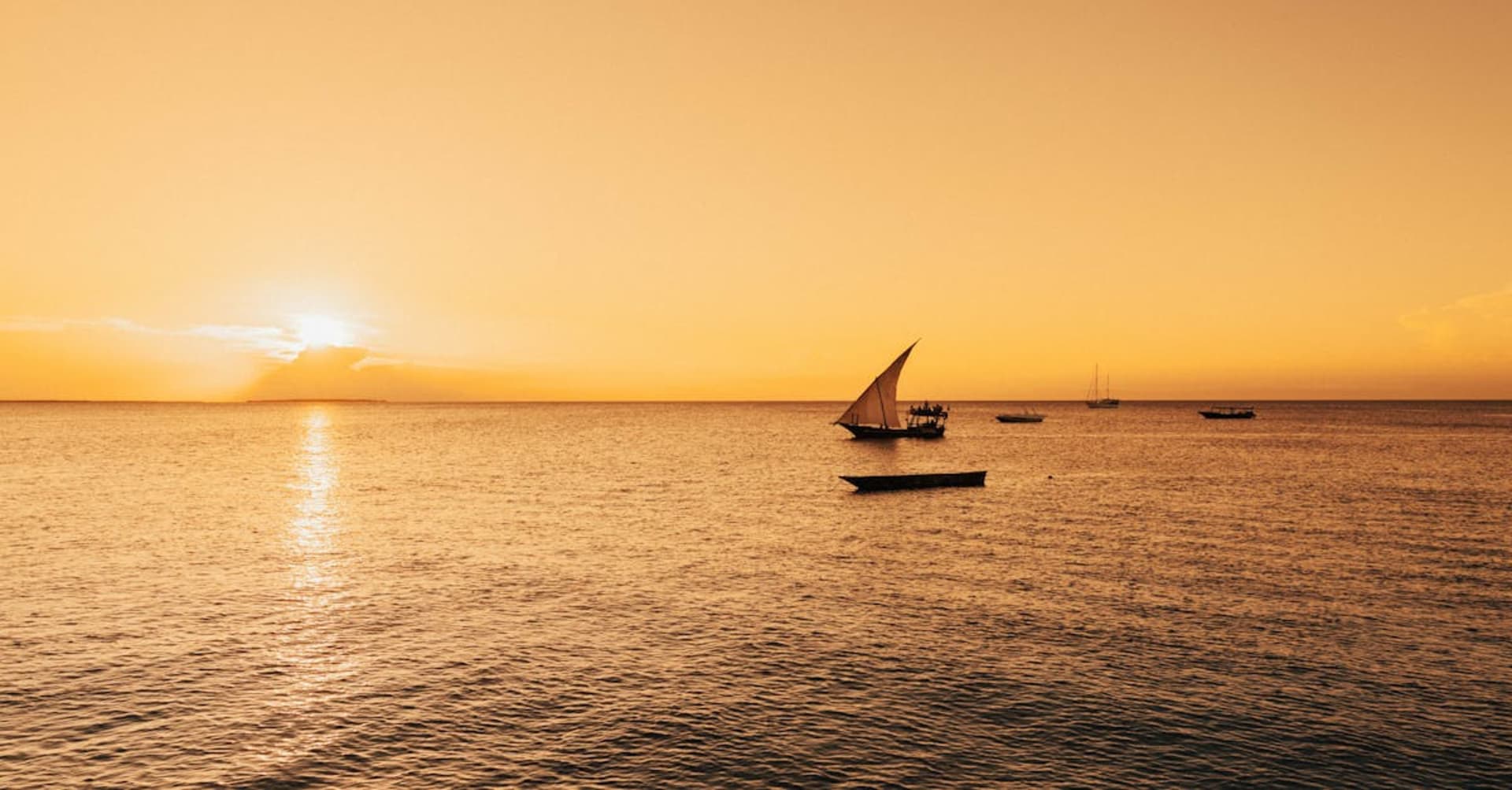
The dhow — the lateen-sailed wooden vessel that has plied these waters for a thousand years — remains the island’s defining silhouette. A sunset dhow cruise off the west coast, the sail catching the last of the afternoon wind, the crew passing around fresh fruit and spiced coffee, is one of those experiences that feels both ancient and entirely present. The dhows are not museum pieces. They are working boats, carrying cargo between islands, their design essentially unchanged since Arab traders first rode the monsoon winds to this coast.
A Convergence of Cultures
Zanzibar is not one culture but many, layered over centuries like the coral stone beneath its buildings. African, Arab, Indian, and Persian influences coexist in the food, the architecture, the music, and the faces of the people. You hear it in the taarab music drifting from a café — the oud and the qanun blending with African percussion. You taste it in the pilau rice fragrant with saffron, the biryani heavy with ghee, the coconut-based curries that belong to no single tradition but to all of them at once. The island’s history includes the darkest chapter of the East African slave trade, and that history is neither hidden nor forgotten — it is woven into the fabric of a place that has always been shaped by the movement of people across water.
When to go: June to October for dry season, cooling breezes, and the best diving visibility. December to February for hot beach weather between the short and long rains. The shoulder months of March and November can offer lower prices and fewer crowds, with only occasional afternoon showers.