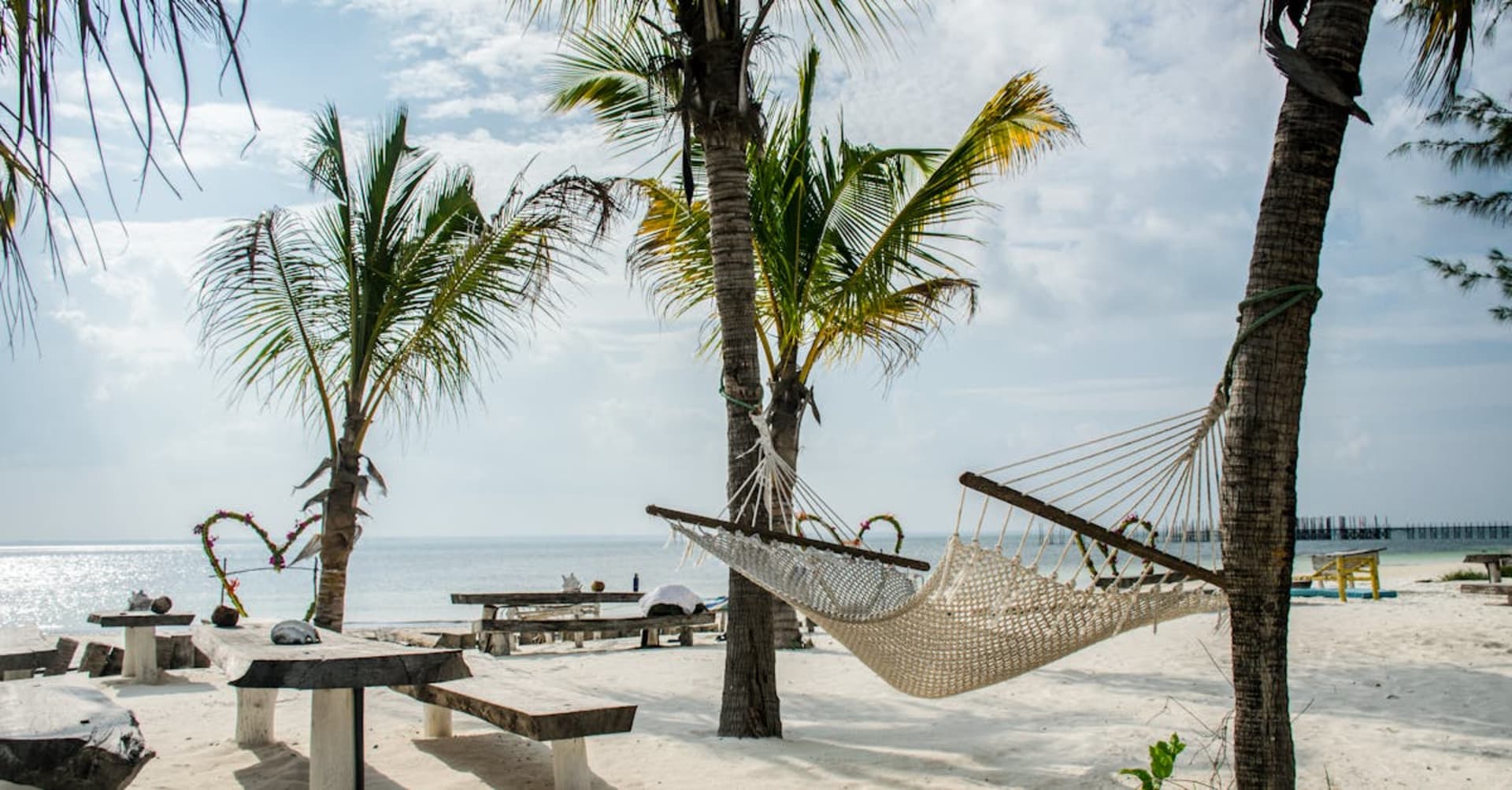
To reach Mafia Island is to step backward in time and sideways off the map. The small propeller plane from Dar es Salaam banks over a quilt of mangrove channels and turquoise shallows before touching down on a runway bordered by coconut palms, and from the moment you step onto the tarmac — if it can be called that — you understand that this is not Zanzibar. There are no resort towers, no nightclub touts, no cruise ships anchoring offshore. Mafia Island is what the entire Swahili coast was before the world found it, and the island wears its obscurity like a badge of quiet pride.
Beneath the surface, however, Mafia is anything but understated. The Mafia Island Marine Park encompasses 822 square kilometers of some of the healthiest coral reef ecosystem in the western Indian Ocean. Over 400 species of fish patrol gardens of staghorn, brain, and table coral that have escaped the bleaching events devastating reefs elsewhere. Hawksbill and green sea turtles glide through the channels. Octopuses pulse across the reef wall. Nudibranchs in improbable colors — electric blue, cadmium orange, neon violet — inch along the substrate like living jewels. For divers, this is not a consolation prize. It is the destination.
And then there are the whale sharks. From October to March, the plankton-rich waters of the channel between Mafia and the mainland draw aggregations of the world’s largest fish — gentle, spotted giants that can reach twelve meters in length. Swimming alongside one is an experience that dismantles language. The animal materializes from the blue like a slow-moving constellation, its mouth agape, its body dappled with a pattern as unique as a fingerprint, and for a few breathless minutes you are sharing the ocean with something so large and so indifferent to your presence that the encounter feels less like wildlife viewing and more like a visitation.
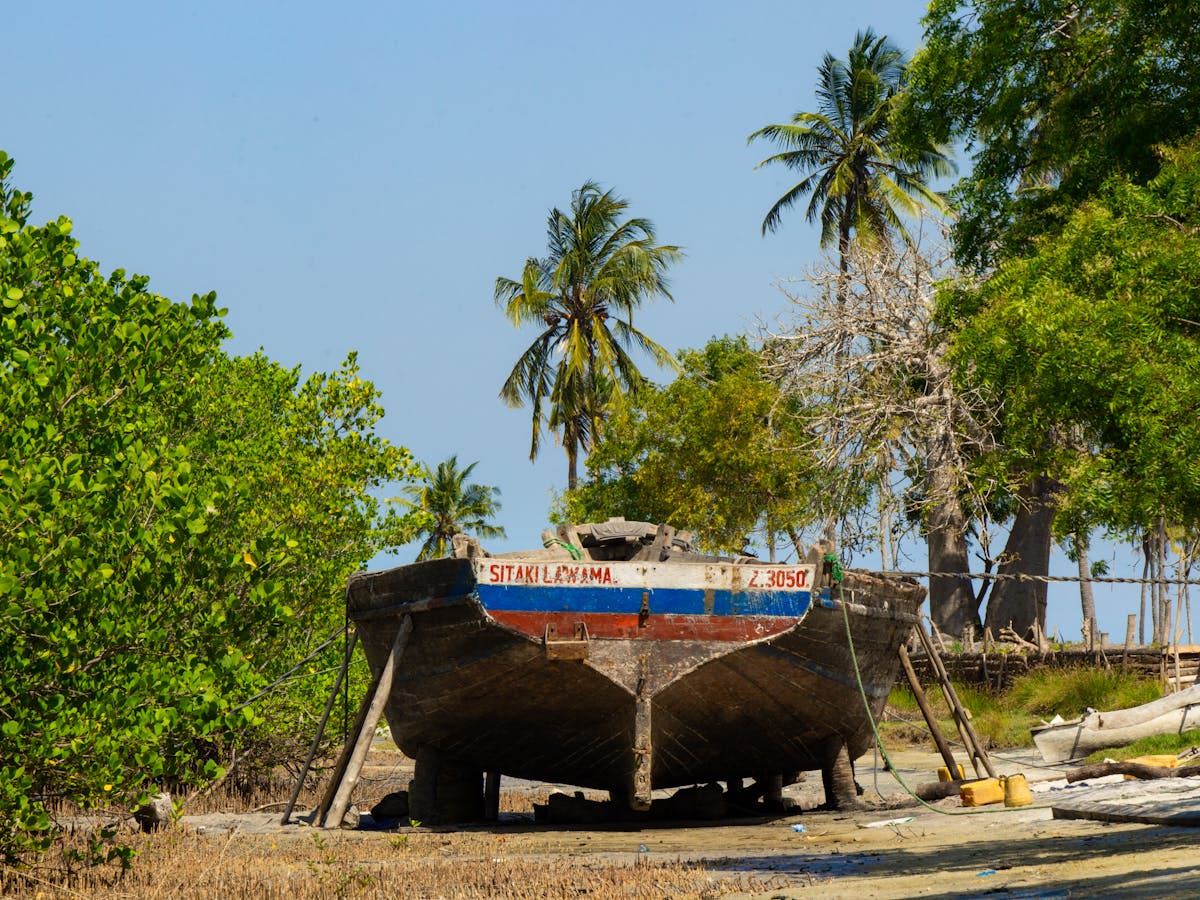
Above water, Mafia moves to a rhythm set by tides and fishing boats. The handful of lodges scattered along the coast are small, community-conscious operations — some running entirely on solar power, most employing local staff who grew up casting nets from dhows. The beaches are not manicured. They are wild, palm-fringed, and genuinely empty, the sand tracked only by ghost crabs and the occasional fisherman dragging his catch above the tideline. This is not luxury in the polished sense. It is luxury in the original sense: the extravagance of space, silence, and time that belongs to no one’s schedule.
A short boat ride across the bay brings you to Chole Island, where the atmospheric ruins of a nineteenth-century trading settlement are slowly being devoured by baobab roots and strangler figs. Crumbling coral-rag walls rise from the undergrowth, their doorways framing nothing but green. A former mosque stands roofless, its mihrab still visible beneath a canopy of vines. The ruins speak to a time when Mafia was a hub of the Indian Ocean trade — dhows carrying ivory, copal, and enslaved people passed through these waters — and walking among them carries a weight that the island’s present tranquility cannot fully dispel.
The snorkeling in Chole Bay requires no boat and no certification. Healthy coral begins in waist-deep water just meters from shore, and within minutes you are floating above a reef teeming with parrotfish, angelfish, and moray eels peering from crevices. It is the kind of snorkeling that turns casual swimmers into marine enthusiasts, and it is available every day, at any hour the tide permits, for nothing more than the cost of a mask.
When to go: October to March for whale shark season and the calmest seas. June to October brings dry weather but rougher water and reduced visibility. The island remains uncrowded in every season.