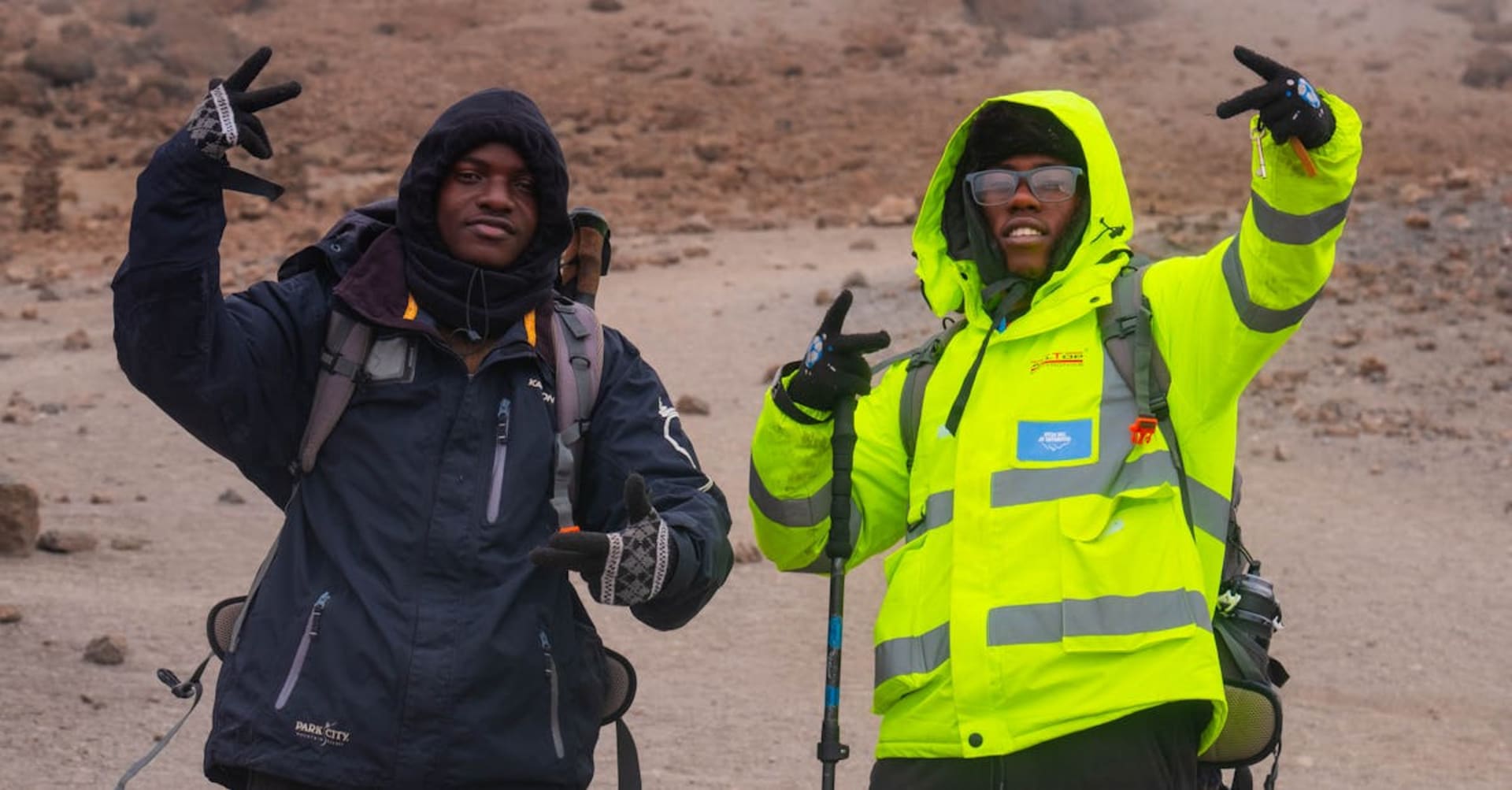
You can see Kilimanjaro from a hundred kilometers away on a clear morning — a white crown floating above the haze line, seemingly detached from the earth, belonging more to the sky than to the continent beneath it. At 5,895 meters, it is Africa’s highest point and the tallest freestanding mountain on the planet, rising from the Tanzanian savannah through five climate zones in a vertical journey that compresses a walk from the equator to the poles into less than a week.
The Climb Through Five Worlds
The journey begins in cultivated farmland, where banana groves and coffee plants give way to montane rainforest. This is Kilimanjaro at its most lush — black-and-white colobus monkeys swing through the canopy, moisture drips from every surface, and the trail is a corridor of green so dense the mountain above remains invisible. You could be anywhere in tropical Africa. You could not be further from where you are going.
The forest thins into heather moorland, a strange, open landscape of giant heathers and lobelias that look like relics from a botanical fever dream. The air cools. The views open. You begin to see the summit cone for the first time, impossibly far above, streaked with ice. Higher still, the moorland gives way to alpine desert — a stark, rust-colored moonscape where almost nothing grows and the wind carries a chill that makes you reach for another layer. The silence here has weight.
The Routes
The Machame Route — known as the “Whiskey Route” for reasons no one can fully explain — is the most popular path, and deservedly so. Its varied terrain and climb-high-sleep-low profile offer strong acclimatization, and the scenery shifts dramatically with each day. The Lemosho Route begins further west, adding an extra day through pristine, uncrowded rainforest before joining Machame’s path — it is the choice for those who want solitude in the lower zones. The Marangu Route, the oldest and only route with hut accommodation, follows a gentler gradient but offers less acclimatization time, and its reputation as the “easy” route is misleading. There is nothing easy about altitude.
Summit Night
The final ascent begins around midnight. You leave high camp in darkness, headlamp illuminating only the boots of the person ahead, and you climb. The cold is severe — minus fifteen, sometimes minus twenty Celsius — and the altitude strips you of the oxygen your body is screaming for. Each step is a negotiation between willpower and physiology. The scree shifts under your feet. Time distorts. An hour feels like three.
And then the sky begins to lighten. The horizon separates into bands of indigo, orange, and gold, and you realize you are above the clouds. The glaciers of the Northern Icefield catch the first light and glow a pale, impossible pink. You reach Stella Point on the crater rim, and the final forty-five minutes to Uhuru Peak are walked in a kind of stunned euphoria — exhaustion and elation braided together so tightly you cannot tell them apart.
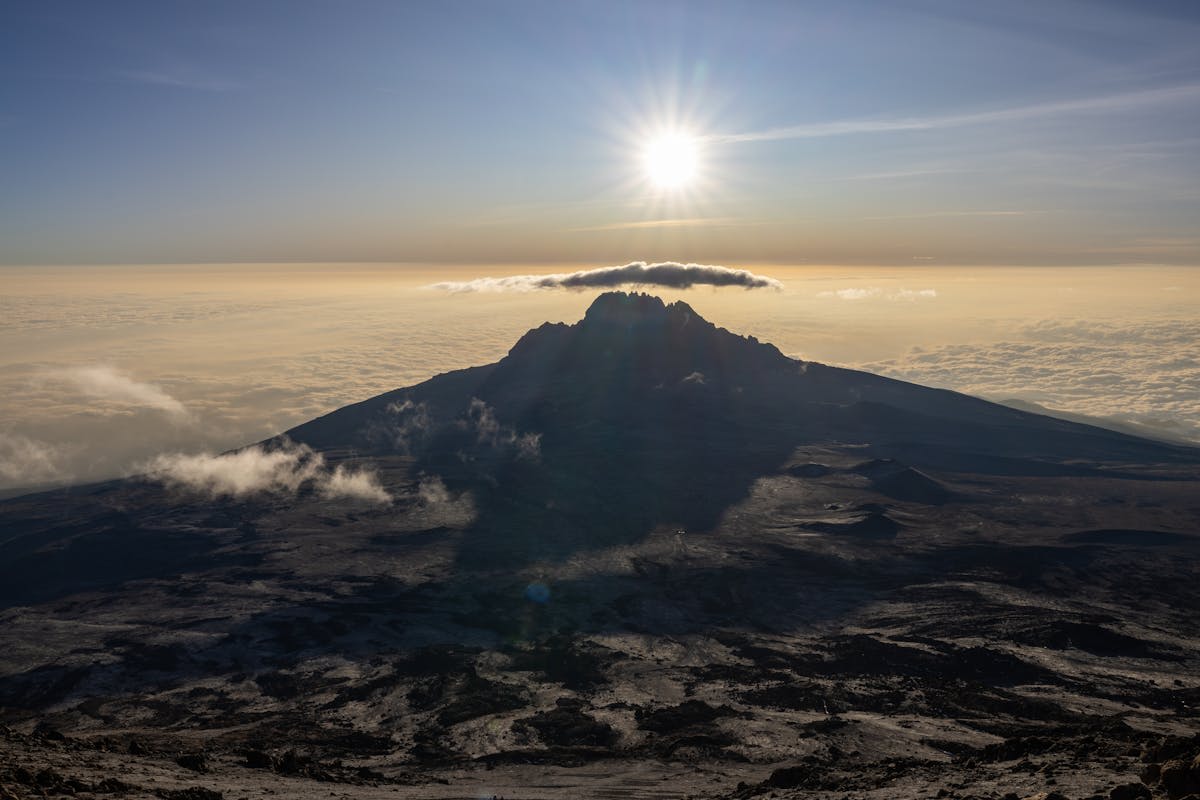
The Emotional Weight
Standing at Uhuru Peak, the painted wooden sign marking the roof of Africa, you are not thinking about conquest. You are thinking about the porter who carried your bag and sang while doing it. You are thinking about how small the world looks from up here — the curvature of the earth visible at the edges, the Amboseli plains shimmering far below, the crater’s inner glaciers cracking in slow motion toward their disappearance. Those glaciers are retreating year by year. Scientists give them decades, not centuries. The mountain you climb today is not the mountain your children will climb.
Kilimanjaro does not require ropes or crampons or technical skill. It requires something harder to train: the willingness to keep walking when every signal in your body says stop. The summit belongs to those who put one foot in front of the other long enough, and the lesson it teaches is as old as the mountain itself — that the extraordinary is reached not through talent but through persistence.
When to go: January to March and June to October offer the driest conditions and clearest skies. June to October is peak season with the best summit visibility. Avoid the long rains of April and May, when trails become treacherous and cloud cover obscures the views that make the suffering worthwhile.