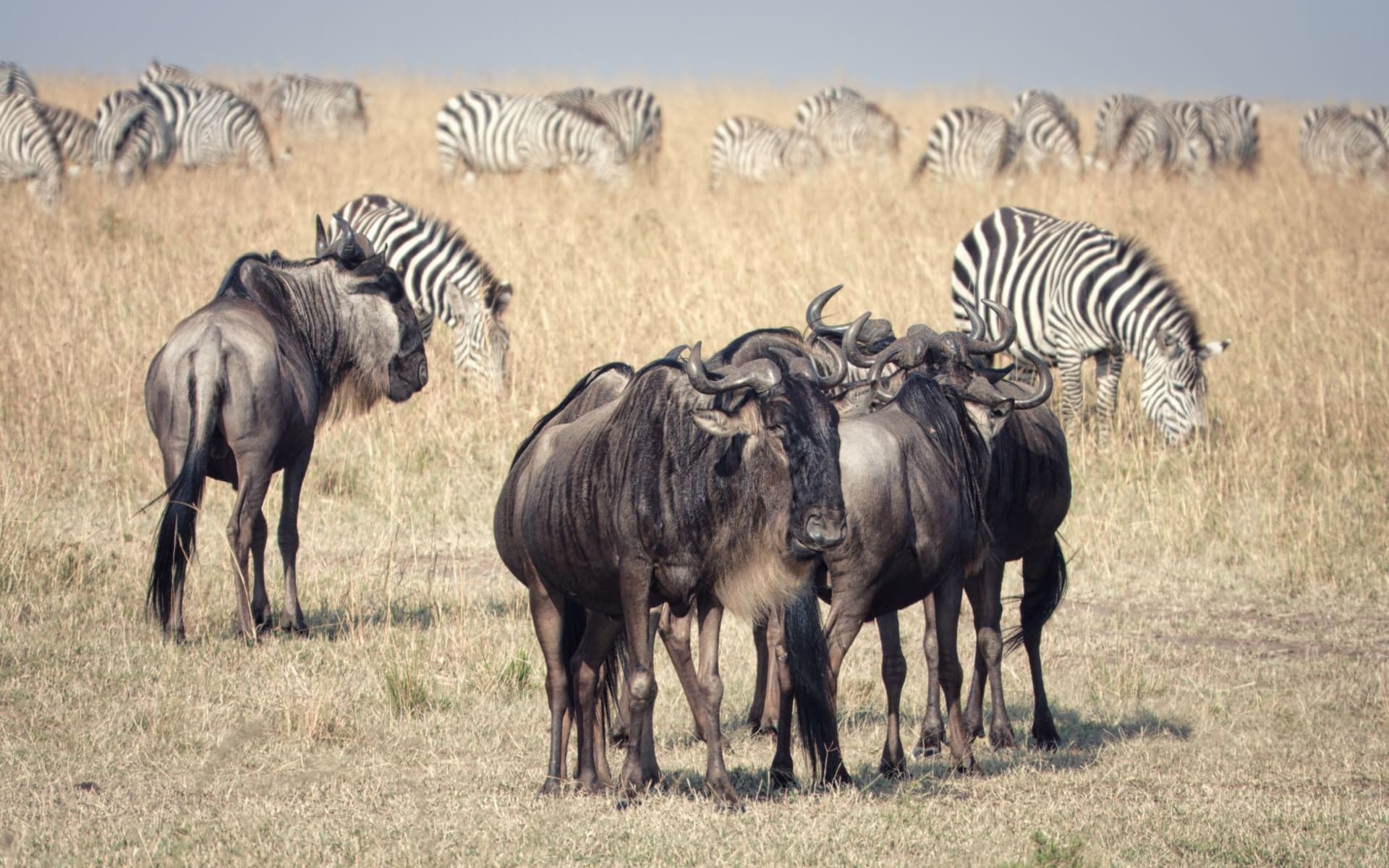
The great wildebeest crossing at the Mara River — a thundering spectacle unlike anything else on Earth.
We had been waiting on the riverbank for four hours when nothing happened, and then everything did.
That is the rhythm the Mara River imposes. The guides explain it carefully — the herd circles, it hesitates, it turns back — and you understand this intellectually while sitting in the jeep. Then the first wildebeest commits, and the sound hits you before the image makes sense. A low, sustained roar, like a stadium crowd collapsed into a single frequency. Lia grabbed my arm without looking at me. Her eyes were fixed on the water.
The Crossing Itself
The Mara is not wide. Fifty meters, perhaps sixty at the point near Kogatende where we watched the northern crossing. But the current is muscular and the crocodiles — Nile crocodiles, absurdly large, prehistoric in their patience — had been stationed there since before dawn. What the wildebeest plunge into is not simply water. It is a calculation that their biology makes for them, overriding whatever fear response fires in a mammal brain. They go because the animals beside them go. The ones at the front are not brave; they are just slightly more pushed than the rest.
The smell reaches you on the near bank: wet hide, stirred mud, something iron-tinged. I wrote “blood and river silt” in my notebook but that is too dramatic. It is earthier than that. It smells like what it is — a million large animals moving through a single corridor of grass and mineral-stained water.
What No Photograph Shows
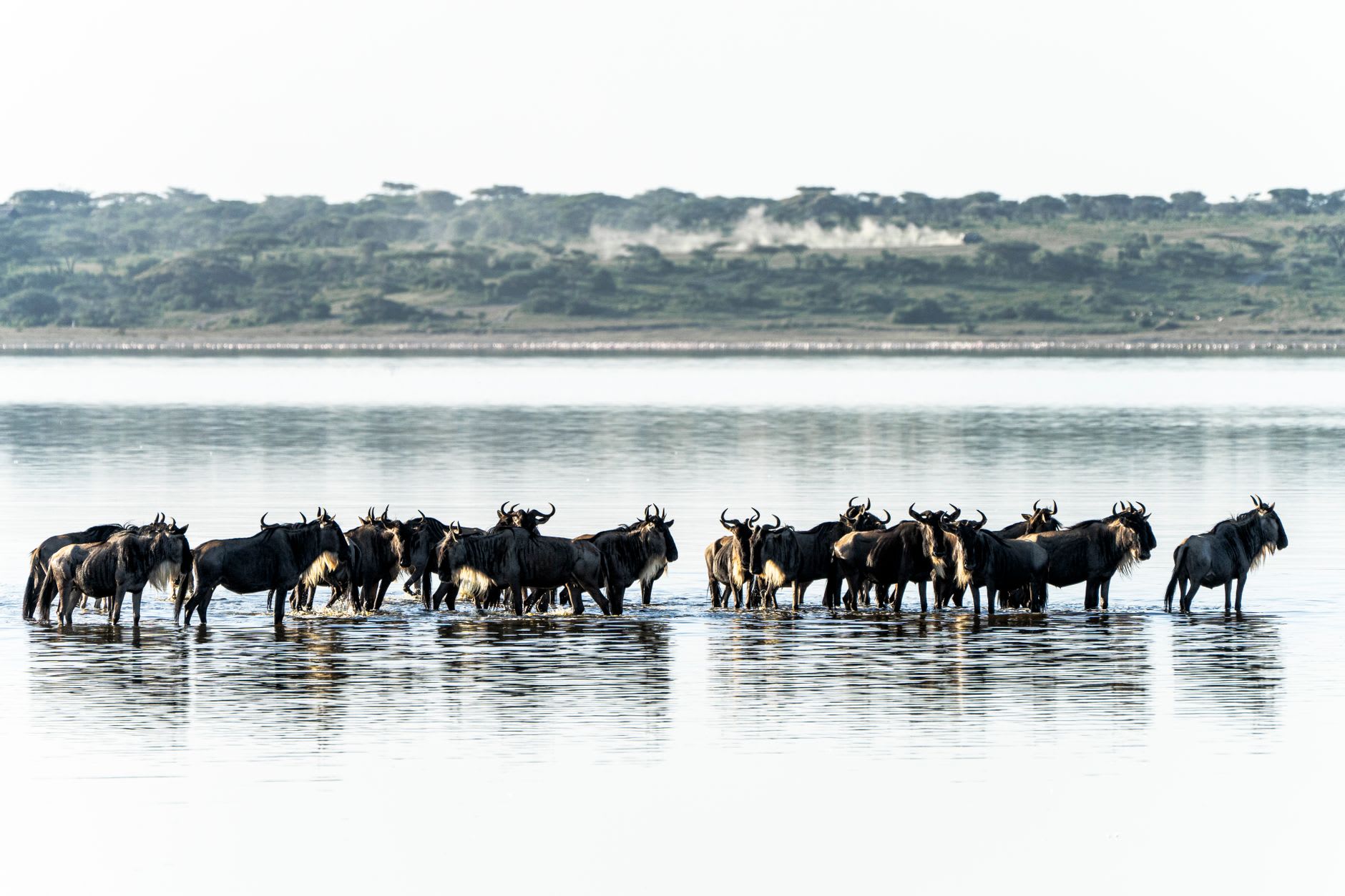
I had studied crossing footage for months before coming. I thought I knew what to expect. What I did not anticipate was the sound of the ones who turned back — a percussive scrambling on the clay bank, hooves finding no purchase, the herd reversing itself in a wave of panic that swept backward through the column. It happened twice before the third surge held. In those reversals, the scale of the thing became real. This is not a spectacle you observe. It is a pressure system you are briefly inside.
After
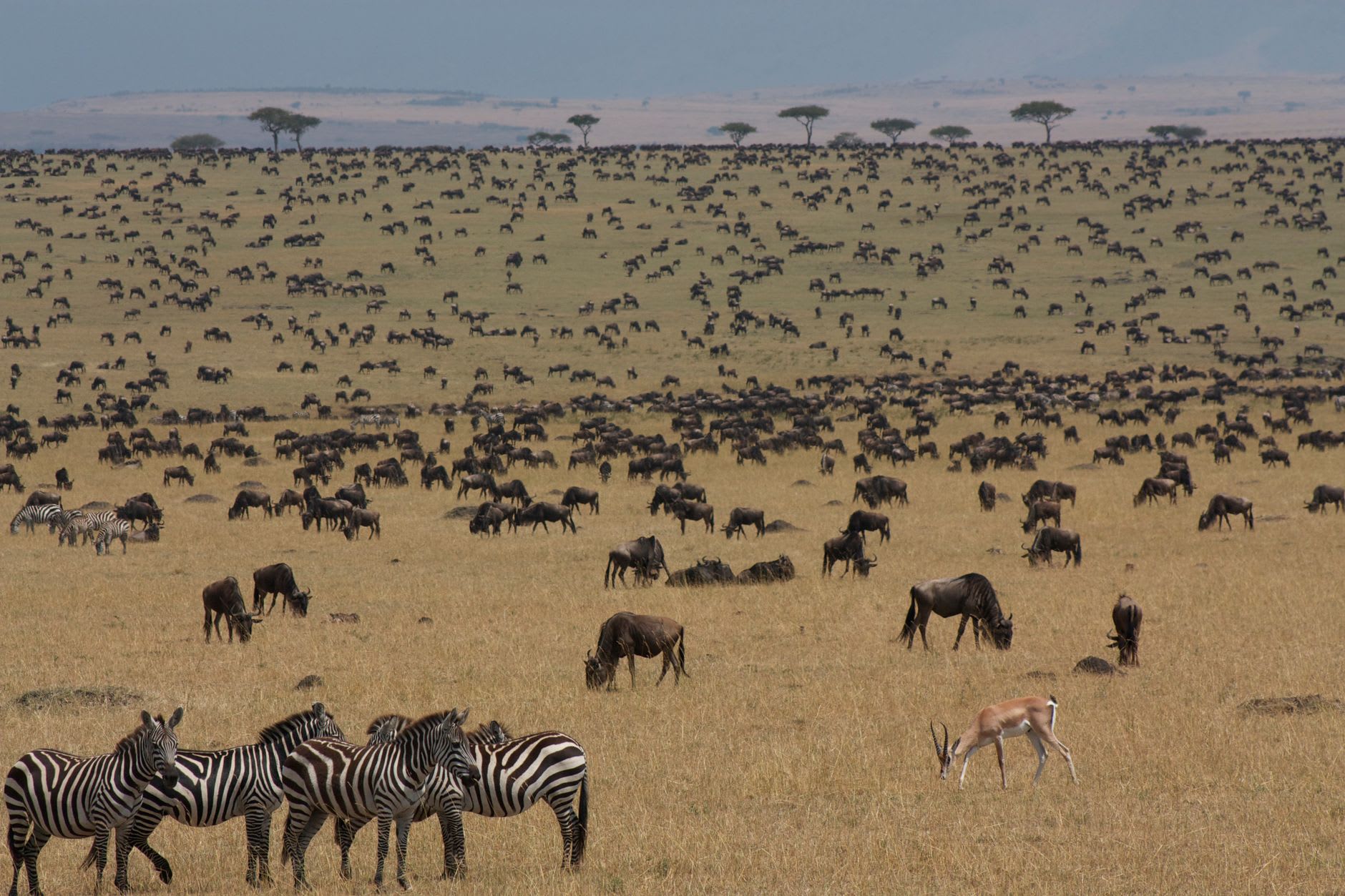
By late morning it was over. The river ran quieter. The crocodiles had disappeared into the deeper channels. The surviving animals grazed on the far bank as if nothing had occurred, as if the crossing were already erased, irrelevant to whatever comes next. I ate a packed lunch of cold chapati and mango slices and stared at the empty water for a long time, not quite ready to put language to it.
When to go: The northern Mara River crossings concentrate between late July and October, when the herds push up from the Serengeti into the Masai Mara and back. Peak crossings tend to fall in August and September — but no crossing is guaranteed on any given day, so plan for a minimum of three full days on the river.