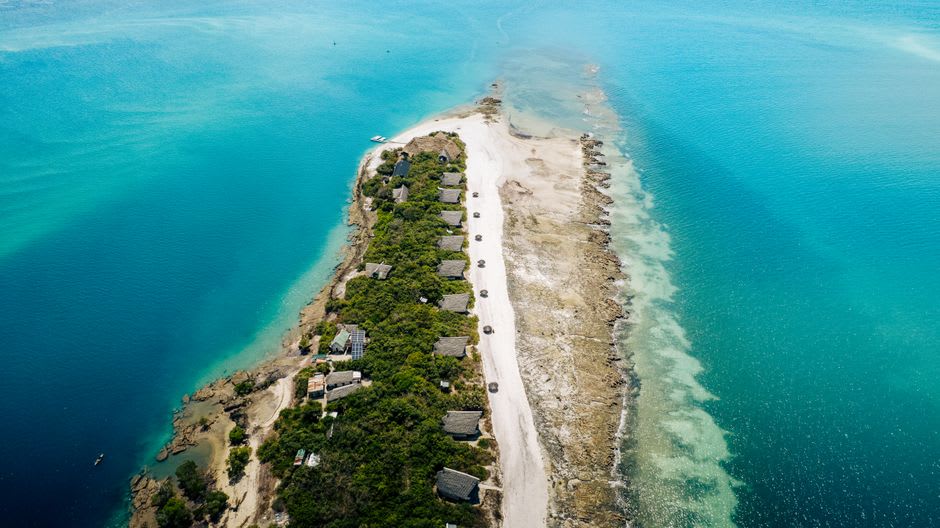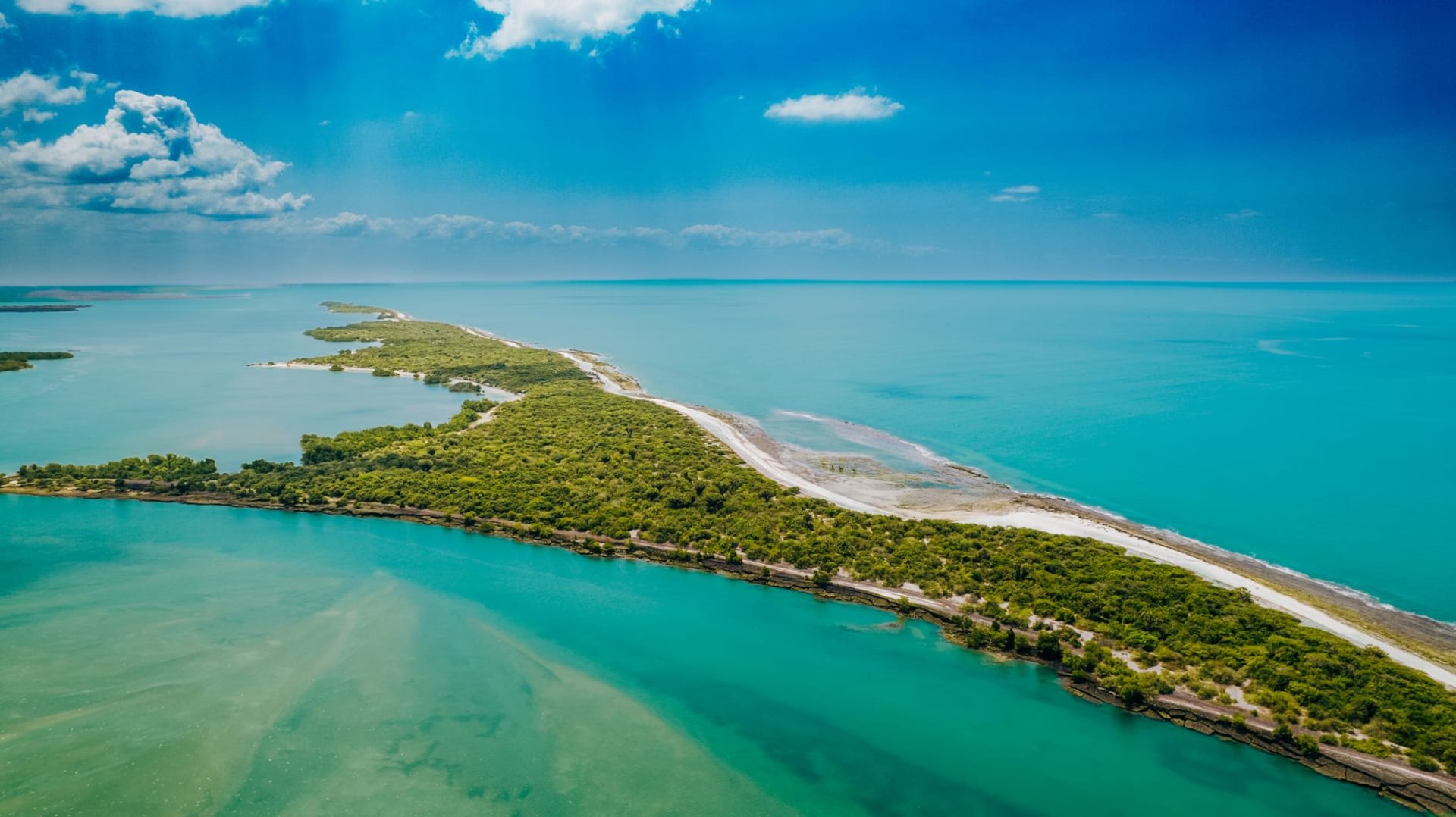
The forgotten sister of Zanzibar — clove-scented, lush, and surrounded by some of Africa's best diving.
The ferry from Zanzibar takes three hours and deposits you in a different century. Pemba has no Stone Town, no boutique rooftop bars, no Instagram-ready doorways. What it has is cloves — hundreds of thousands of trees blanketing the island’s red volcanic ridges in a canopy so thick it blocks out the equatorial noon sun. The smell hits before the boat docks: warm, spiced, faintly medicinal, like the inside of a kitchen drawer in a grandmother’s house. Pemba produces close to three-quarters of Tanzania’s entire clove harvest, and once the scent is in your clothes, it stays there.
The Island That Didn’t Want to Be Found
Chake Chake, the island’s main town, functions without performing. The covered market off Njia ya Soko sells dried fish, green bananas, and piles of cloves still on their stems. Old Omani merchant houses — most of them roofless now, colonized by bougainvillea — line the road down toward the port. There is a small museum in the old fort that no one was staffing the morning I arrived, so a man who turned out to be its unofficial guardian unlocked it for me and told me the history of each exhibit in slow, careful Swahili, pausing to search for English words he thought I would need. I did not have the heart to leave quickly.
Lia found us eventually, carrying a paper cone of fried cassava from a street cart near the bus stand. We ate standing in the shade of an acacia, watching a boy chase a plastic bottle down the hill.
Underwater Walls and the World Below
Pemba’s real reputation lives beneath the surface. The Pemba Channel — the deep-water trench separating the island from the mainland — creates upwellings that feed some of the richest reef ecosystems on the African coast. Mesali Island, a protected marine reserve twenty minutes offshore by local boat, has a wall dive that begins in four meters of water and drops into blue nothing at nearly fifty. The coral here is untouched in the way that only true obscurity can protect: sea fans the size of dining tables, humphead wrasse moving through the water with an authority that makes divers instinctively move aside.
What I did not expect was the bioluminescence. Our guide, a quiet man from Wete named Hamisi, mentioned it the night before a dawn dive as an afterthought. We went in before first light and the water around our fins ignited blue-green with every kick — millions of dinoflagellates, disturbed by movement, lighting up in cascades. I have dived in a dozen countries. I have never seen anything like it.
The Clove Harvest and What It Means
If the timing is right — October into November — the harvest is happening everywhere at once. Women in bright kangas spread canvas under the trees and beat the branches with long poles. The cloves fall like rain. Children sort them in the road. The whole island smells like Christmas and pharmacy and earth. There is no organized tour of this. It simply happens around you, and if you ask politely, people will usually let you help for a while and laugh at how slowly you go.
The best pilau I have ever eaten was in someone’s kitchen near Konde, in the north of the island, spooned from a blackened pot over rice. The woman who made it looked at me with the expression of someone who has never needed a review to know her food is good.
When to go: June through October is dry season, with calm seas ideal for diving. The clove harvest peaks in October and November — the island is at its most fragrant and most alive, though brief rains are possible toward the end.