
Yingge
"I went in planning to buy one mug. I left with a box that made the train conductor visibly concerned."
Taiwan's ceramics capital, where a single street is lined with pottery shops, a museum built from clay and glass, and kiln chimneys that once fired half the island's dinnerware.
Yingge is a strange town to describe to people who haven’t been, because on paper “a district known for ceramics” sounds like a single afternoon of polite browsing. In practice it swallowed most of our day, and I came out of it with an actual education in glazes I did not ask for but am grateful I received.
Pottery Old Street, One Kiln at a Time
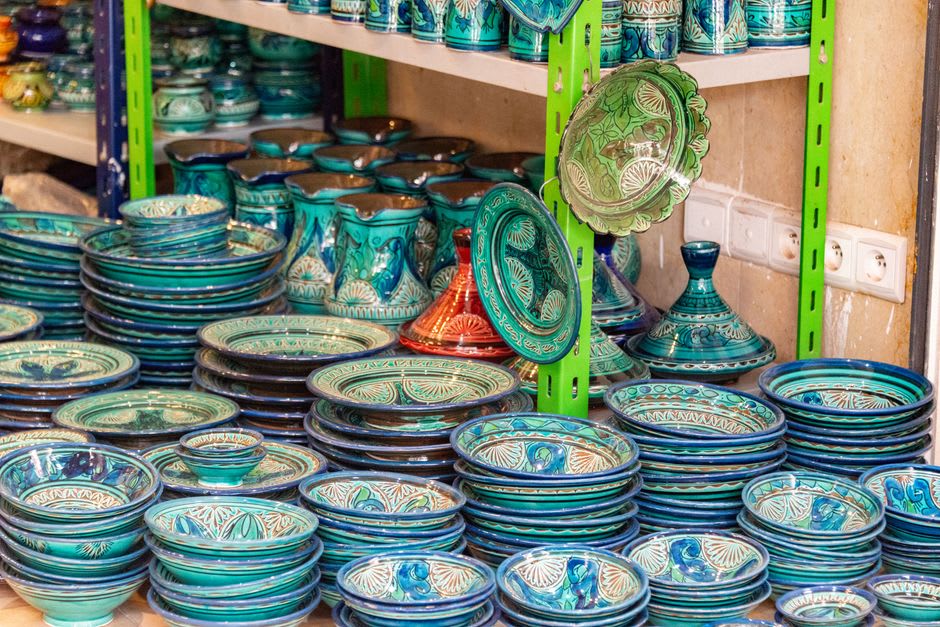
Yingge Old Street runs a few hundred metres, but nearly every shopfront on it sells pottery, and no two shops sell the same kind. One specializes in celadon tea sets so pale green they look lit from within. Another does nothing but rough, unglazed stoneware in the Japanese wabi-sabi style. A third, tucked down a side alley, turned out to be run by a third-generation potter who let Lia try the wheel while I photographed the resulting disaster — a bowl that came out looking more like a beret. He fired it anyway and mailed it to us weeks later, slightly lopsided and completely charming.
The town’s ceramics history goes back over two centuries, to settlers who found the local clay perfect for firing and built kiln after kiln along the Dahan River. You can still see one of the old brick chimneys standing behind the modern shopfronts, a tall, blackened relic from when Yingge’s kilns supplied dinnerware, roof tiles, and industrial ceramics to much of northern Taiwan.
The Museum That Looks Like Its Subject
The Yingge Ceramics Museum, a striking building of curved concrete, glass, and rusted steel designed to evoke the kilns themselves, does a better job than I expected of making the town’s industrial history genuinely interesting — exhibits trace everything from Qing-dynasty water jars to the factory-scale production lines that once ran twenty-four hours a day. Outside, a plaza of workshop spaces lets visiting kids and unreasonably competitive adults (me) try hand-building a pinch pot under supervision.

When to go: Year-round, since most of the appeal is indoors or under cover. Weekday mornings are quietest for browsing the old street without jostling other shoppers; the museum runs pottery workshops on weekends that are worth booking ahead if you want to actually get your hands dirty.