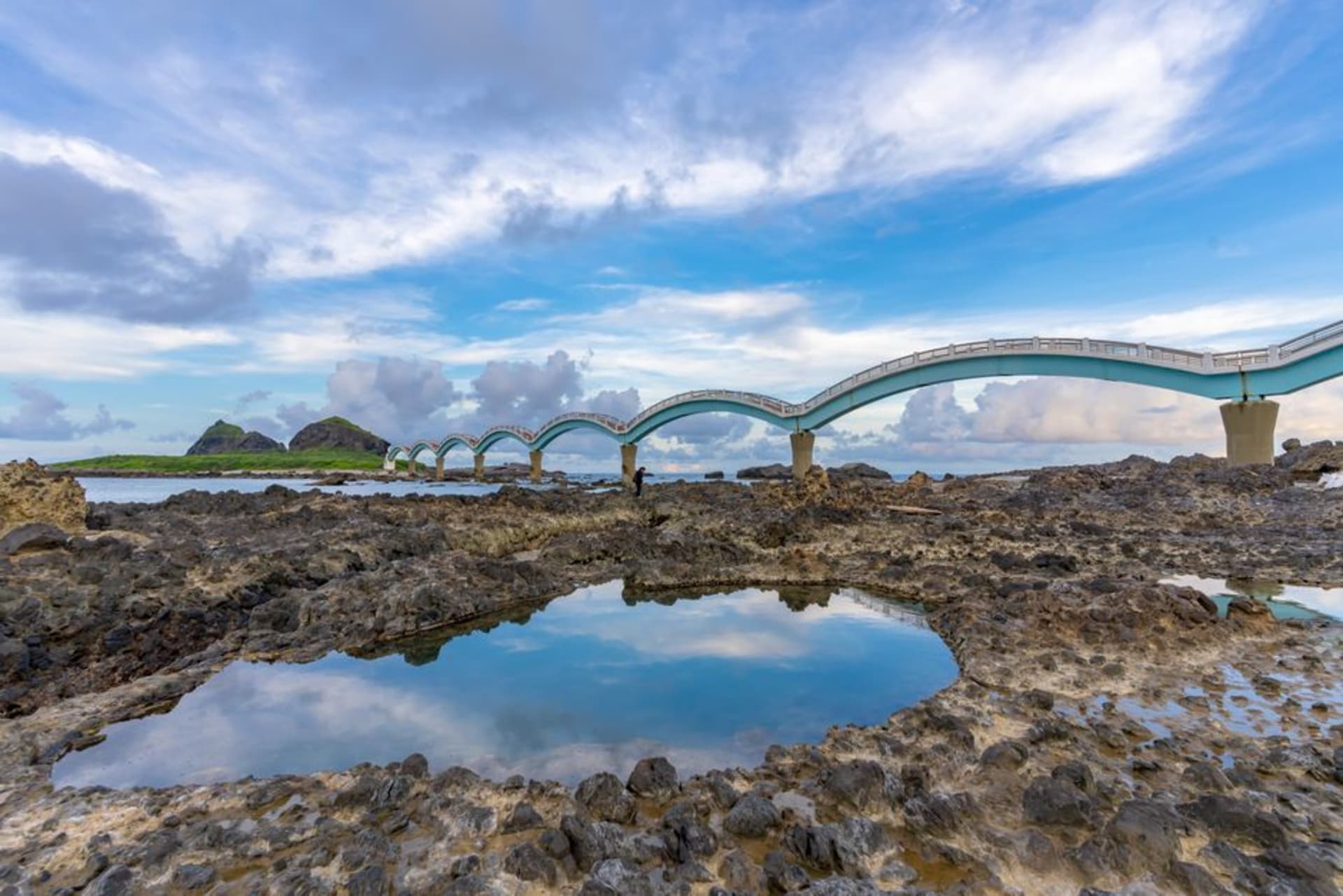
Sanxiantai
"I crossed that bridge expecting a photo opportunity and got a small argument with my own vertigo instead."
An eight-arched pedestrian bridge curling out to a rocky former island on Taiwan's east coast, named for three legendary immortals who supposedly rested here.
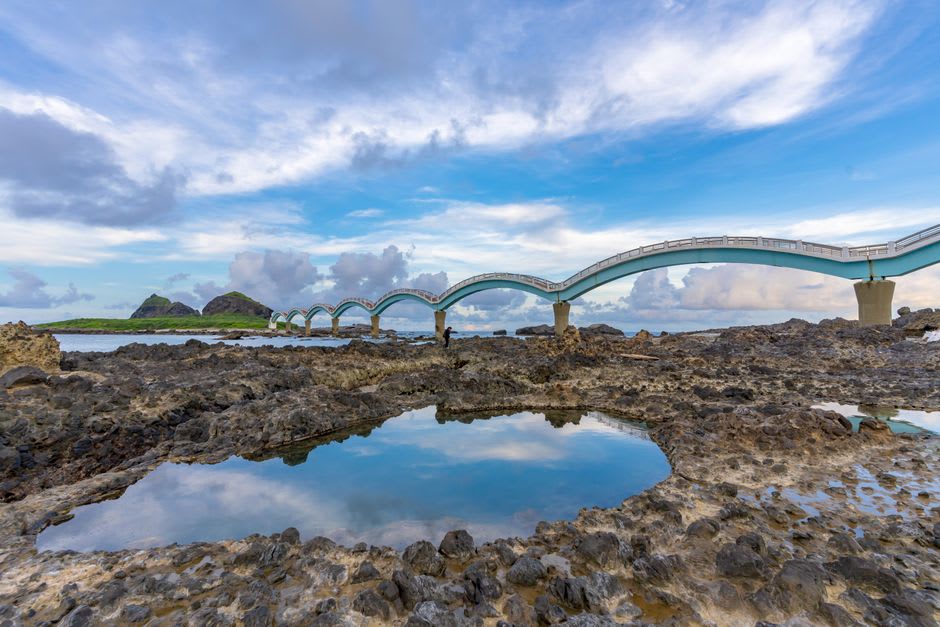
Sanxiantai sits on Highway 11 between Hualien and Taitung, and I nearly drove past it — the parking lot gives no hint of what’s behind the visitor center. Then the path opens onto the coast and there it is: a long, sinuous footbridge of eight stone arches, painted pale grey-blue, snaking out over the water to a rocky headland that used to be a genuine island before erosion and shifting sand connected it more loosely to the mainland.
Crossing the Bridge
The bridge itself is the main event, and it’s longer than photographs make it look — close to four hundred meters, rising and falling with each arch, the ocean visible straight down through the railings on both sides. Legend says three Taoist immortals rested on the rock formation here, leaving giant footprints in the stone, which is either charming or the kind of tourist-board mythology I usually treat with suspicion. Either way the crossing put a genuine flutter in my stomach at the highest points, especially with wind coming hard off the Pacific and pushing the handful of other walkers sideways.
The Rock Formations and Coastal Trail
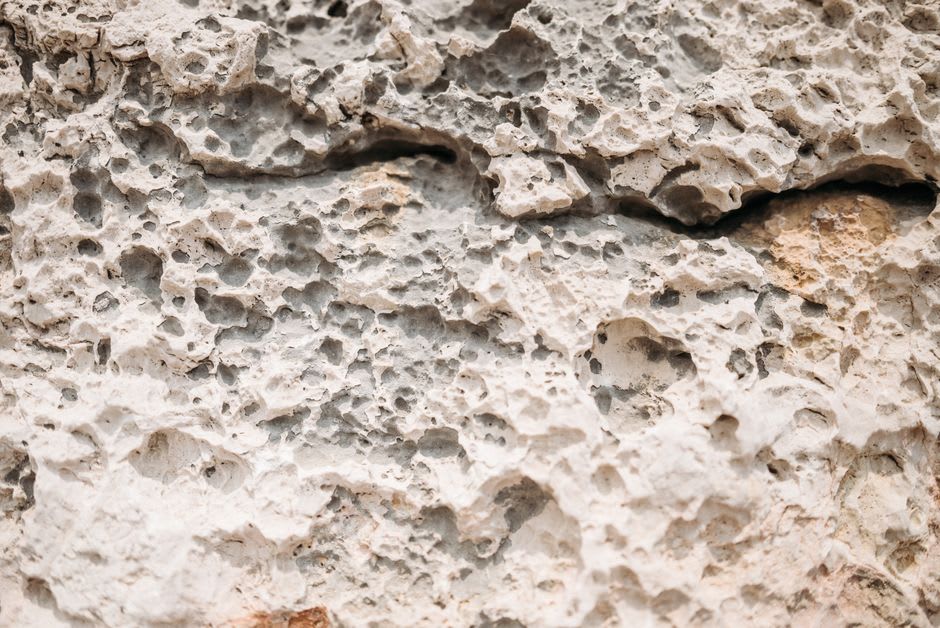
On the far side, a loop trail circles the former island past wind-carved coral limestone formations, tide pools, and a small lighthouse. The rock here has been shaped by decades of typhoon-driven surf into pockmarked, almost sponge-like textures, and at low tide I found small crabs working the pools with a confidence that suggested they’d never seen a human before. The trail isn’t long — maybe forty-five minutes at a relaxed pace — but the light in late afternoon, low and gold across the water, is worth timing your visit around.
When to go: Year-round, though October through April offers the clearest skies and most comfortable walking temperatures. Aim for late afternoon to catch the light on the bridge and avoid the midday tour bus crush; typhoon season (July–September) can close the bridge to foot traffic entirely when swells are dangerous.