Jingzaijiao Salt Fields
"I did not expect a salt field to be one of the most photogenic places I visited in Taiwan, and I was completely wrong to doubt it."
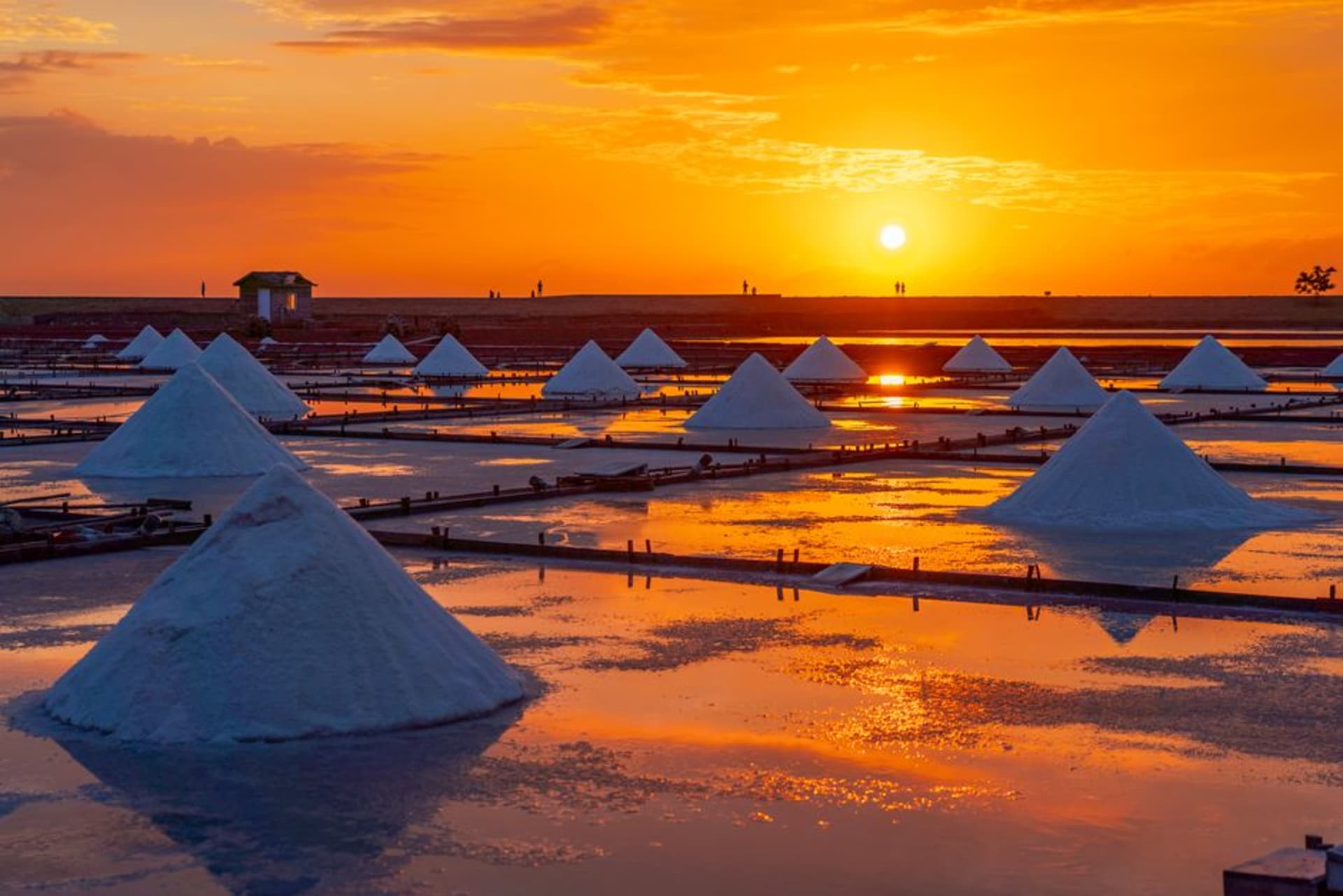
A grid of tile-paved salt pans on Tainan's northern coast, still worked by hand, where the pyramids of raw salt glow pink at sunset.
We drove out to Beimen, on Tainan’s northern coastal edge, on the strength of a single photo Lia had saved months earlier — pyramids of white salt catching a pink sunset, reflected in shallow water like something out of a dream sequence. I assumed it was heavily edited. It was not.
Tile Pans and Hand Labor
Jingzaijiao is unusual even among Taiwan’s old salt fields because the evaporation pans are lined with broken porcelain tiles rather than plain mud, a technique introduced in the 1950s to speed up crystallization and reduce the salt’s contamination with soil. Salt production here ended commercially decades ago as industrial salt imports made hand-harvesting unprofitable, but a portion of the pans have been kept in operation as a living demonstration, worked by local farmers who still rake the crystallizing brine into small conical mounds the traditional way. We watched one elderly farmer drag a wide wooden rake through ankle-deep water, gathering salt crystals with the same unhurried rhythm his family has presumably used for generations.
Sunset Over the Pans
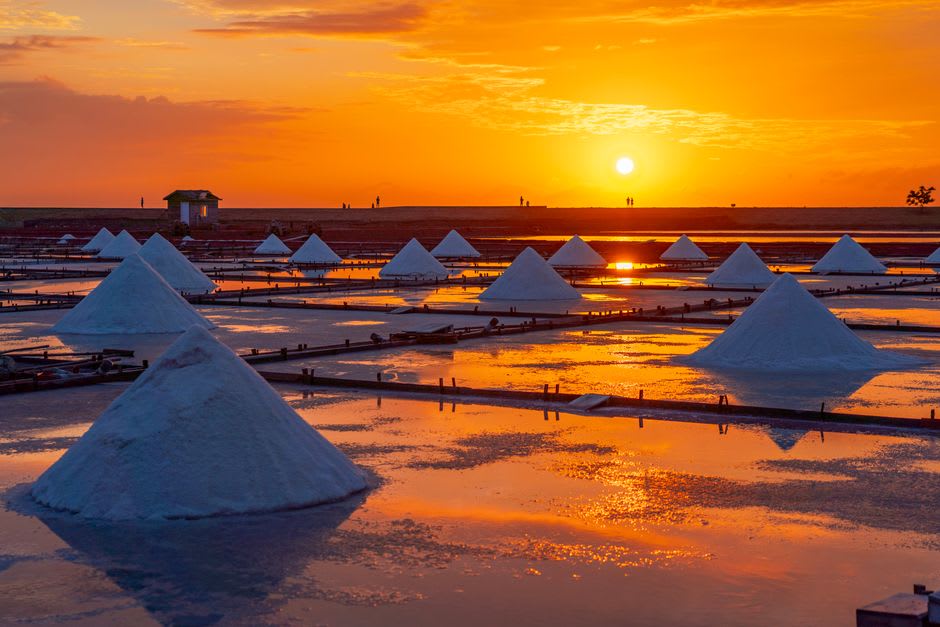
The real reason to time a visit for late afternoon is the light. As the sun drops toward the Taiwan Strait, the shallow brine in the unharvested pans turns into a mirror, doubling the sky in muted pink and orange, while the white salt pyramids catch the last direct light and seem to glow from within. Wind turbines line the horizon behind the flats, an odd but not unwelcome juxtaposition of old and new energy landscapes sharing the same reclaimed coastline. Lia spent a solid twenty minutes just walking the raised paths between pans with her camera, and for once I didn’t rush her.
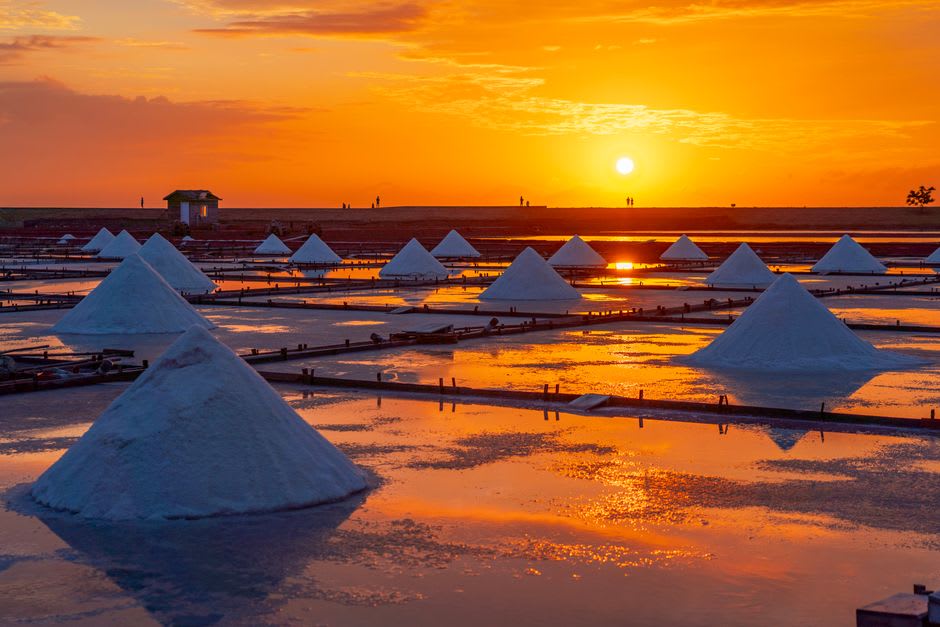
A small visitor center nearby sells salt-based ice cream, which sounds like a novelty item and mostly is, but it’s a pleasant way to sit and watch the light finish its work.
When to go: One hour before sunset, ideally on a clear, low-wind evening for the best reflections in the pans. Spring and autumn offer the most comfortable temperatures for walking the exposed, shade-free flats.