Fo Guang Shan
"Fo Guang Shan is scaled less like a temple and more like an argument for how big faith can get."
One of Taiwan's largest Buddhist monasteries, its hillside museum and Buddha statue rising above the countryside outside Kaohsiung.
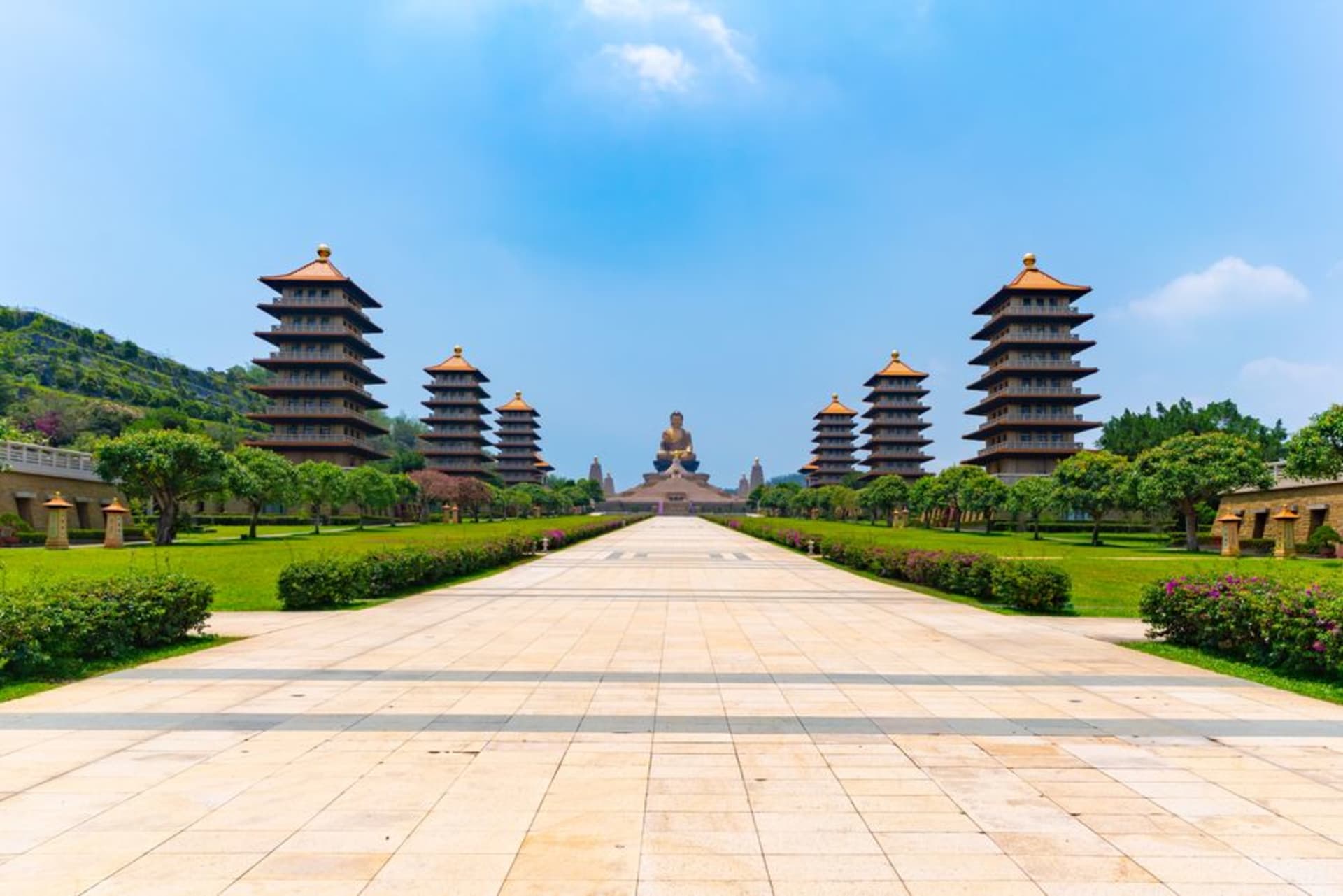
Nothing quite prepares you for the scale of Fo Guang Shan. We’d read “Buddhist monastery” and pictured something contemplative and modest — incense, a few monks, quiet halls. Instead the bus rounded a hill outside Kaohsiung and there it was: a 108-meter-tall golden Buddha seated on a hillside, visible from what felt like a full kilometer away, with a plaza of 480 smaller Buddha statues marching toward it in perfect symmetry. Lia actually laughed out loud, not derisively — it’s the kind of scale that provokes an involuntary reaction.
The Buddha Memorial Center
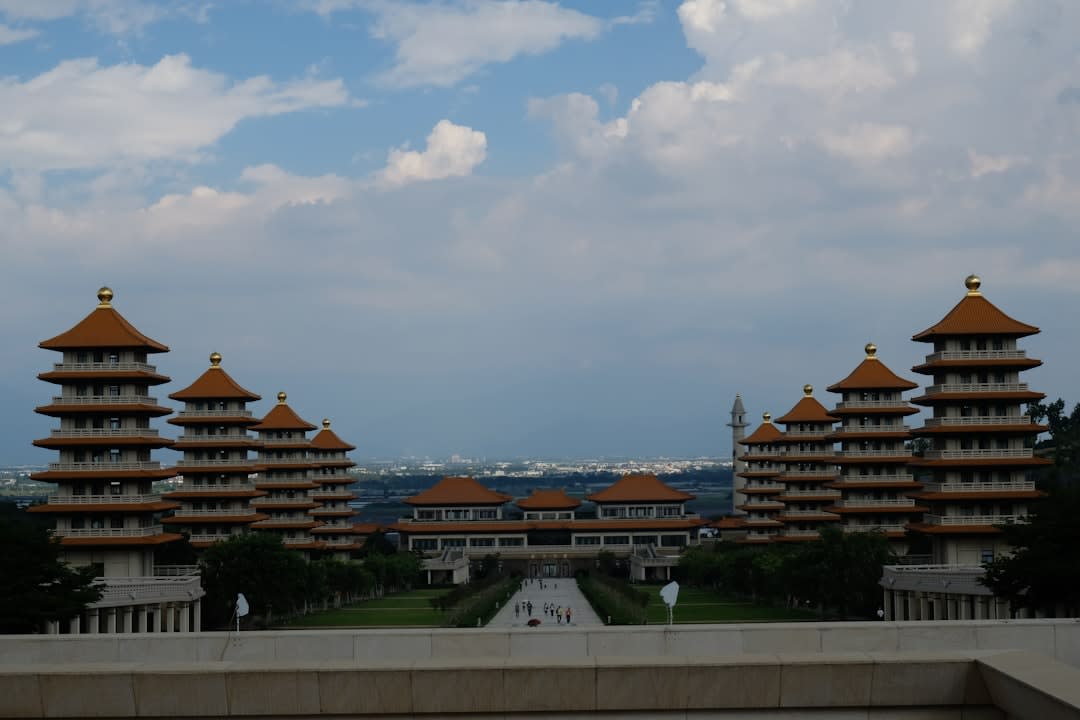
The approach to the main Buddha runs through the Buddha Memorial Center, a vast modern complex of eight pagodas that took over a decade to build and now functions as museum, monument, and working monastery all at once. Inside, one wing houses an actual tooth relic of the Buddha, brought from Tibet in 1998, displayed with a hush and security presence that makes clear this isn’t a replica for tourists — it’s the real reason half the pilgrims here have traveled from across Asia.
Inside the Old Monastery
Down the hill from the newer memorial complex sits the original Fo Guang Shan monastery, founded in 1967 by Venerable Master Hsing Yun, and it’s a calmer, older kind of grand — courtyards of carved stone, a Great Buddha Land with rows of statues under banyan trees, and monks moving between buildings in saffron and grey robes without a glance at the visitors photographing them. We ate lunch in the monastery’s vegetarian canteen, a cafeteria-style hall serving a set meal for a small donation, and it was some of the best plant-based cooking either of us had that whole trip — braised mushroom, stir-fried lotus root, a broth that tasted like it had been simmering since before we arrived.
A Note on Reverence
What stayed with me wasn’t the size of the statue — it’s the largest seated Buddha bronze in the world, if that number matters to you — but the fact that despite the crowds and the gift shops and the cable-car-adjacent tourist infrastructure, people were genuinely praying there. Whole families bowed in unison at the main hall while tour groups milled a few meters away. Fo Guang Shan somehow holds both modes without either one undermining the other.
When to go: Weekday mornings avoid the domestic tour bus crush; the site is open year-round, with October through April offering the most comfortable walking weather across its sprawling grounds.