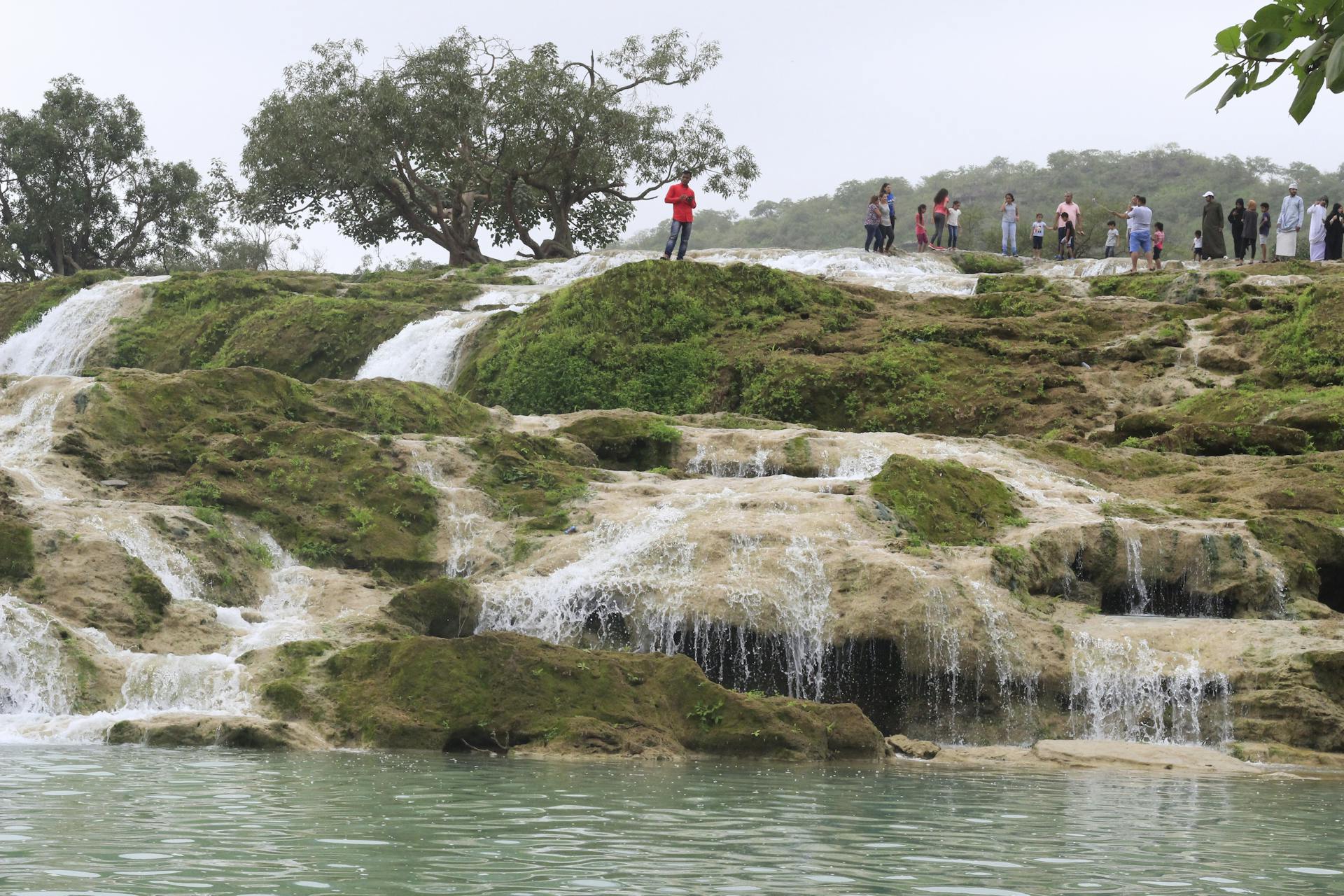
Visby
"A town where the thirteenth century never quite ended and the roses never stopped growing."
Visby’s ring wall is the best-preserved medieval fortification in Scandinavia — three and a half kilometres of limestone, punctuated by forty-four towers, encircling a town that looks almost exactly as it did seven hundred years ago. Walk through the gates and the streets are narrow, the buildings lean gently, and church ruins stand roofless against the sky, their stone arches framing nothing but clouds. Roses grow everywhere, climbing walls and spilling over fences in a profusion that seems impossible this far north. I arrived in late June, when the roses were at their peak, and every lane I turned down smelled like a garden and looked like a painting that no one would believe if you tried to describe it.
The town earns its UNESCO status effortlessly. The medieval warehouses along the harbour, the botanical garden built in a quarry, the narrow lanes that dead-end at the sea wall — every corner is composed without being self-conscious. I spent a morning at the Gotlands Museum, which tells the island’s history from Viking hoards to medieval prosperity with a clarity that puts many larger museums to shame. The picture stones — carved limestone slabs depicting ships, warriors, and Norse mythology — are among the finest in existence, and they sit in a quiet room where you can study them without a crowd breathing on your neck.
In August, Medieval Week transforms Visby into something between a festival and a time machine. For eight days, the entire town dresses in period costume — not in the half-hearted way of most historical reenactments, but with a commitment that borders on the obsessive. Jousting tournaments in the meadow below the wall, market stalls selling handmade pottery and blacksmith work, musicians playing hurdy-gurdies in the squares, and a population that seems to genuinely prefer the thirteenth century to the twenty-first. I watched a jousting match from the ramparts as the sun set over the Baltic, and the combination of horses, armour, medieval walls, and golden light was so perfectly composed that I checked to make sure I had not accidentally walked onto a film set.
The food in Visby has improved dramatically. The harbour restaurants serve the day’s catch — often Baltic herring, sometimes turbot — and the local saffron pancake, served with berries and cream, is a specialty worth seeking out. The cafes inside the wall are uniformly charming, and the evening tradition of walking the ramparts with an ice cream cone, watching the sun drop into the sea, is as close to a perfect Swedish moment as you will find.
Beyond the wall, the beaches stretch north and south — Tofta to the south is the most popular, with fine sand and shallow water that warms quickly in July. But the quieter coves accessible by bicycle, hidden below the limestone cliffs, are where I spent my best afternoons: swimming alone in water so clear the bottom seemed painted, drying on warm rocks, reading a book while the Baltic sparkled.
When to go: Medieval Week in early August is the highlight. June and July for roses in bloom and warm evenings along the harbour wall. September for quieter streets and golden light.