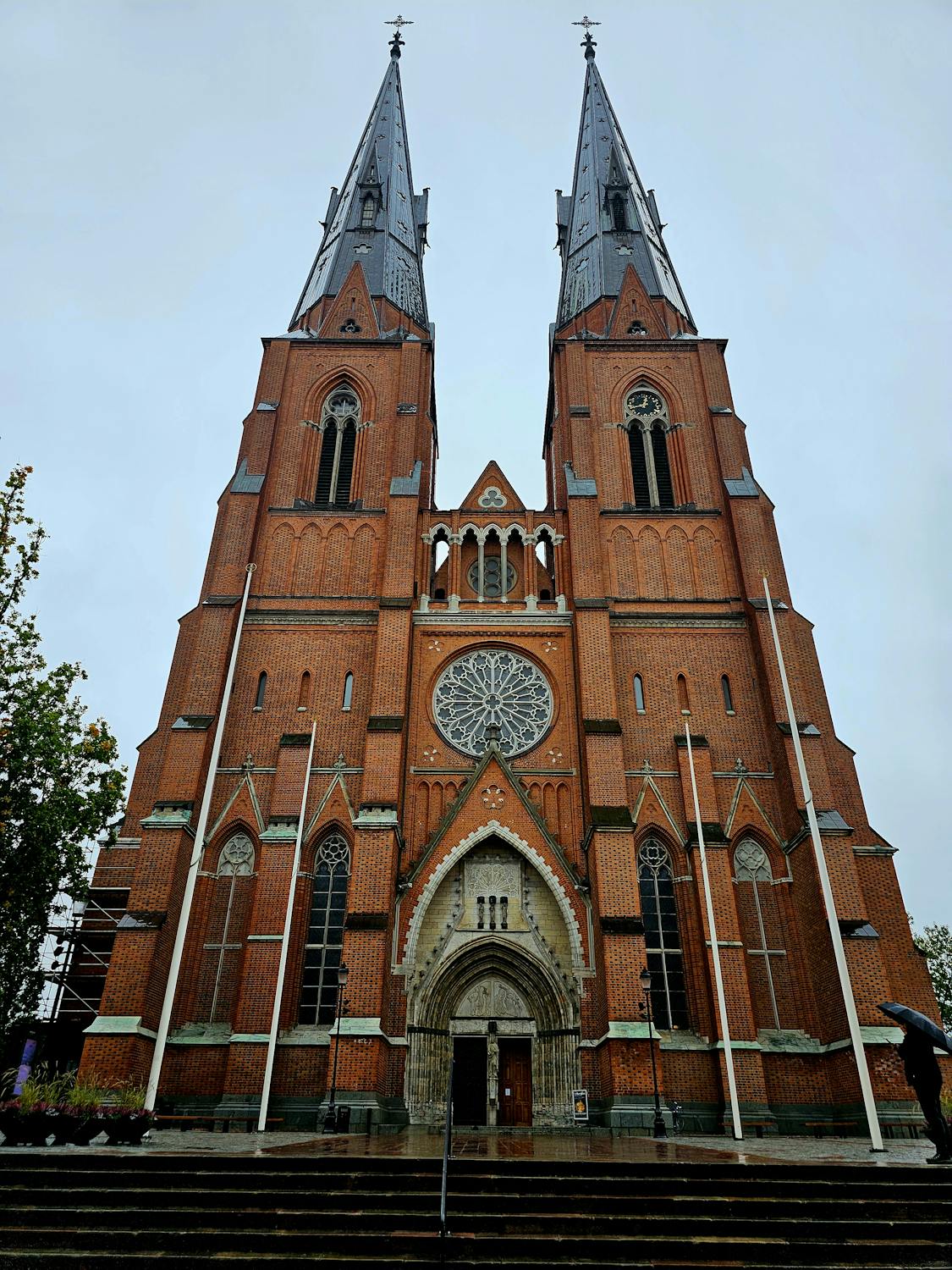
Uppsala holds more Swedish history per square metre than anywhere in the country. The cathedral — Scandinavia’s largest — took a hundred and seventy-five years to build and contains the tombs of kings and saints, including Gustav Vasa, the founder of modern Sweden, and Carl Linnaeus, the man who named every living thing. The interior is a forest of Gothic vaulting that makes Notre-Dame look compact, and the silence inside, even when the city is busy outside, has the quality of something that has been accumulating for six centuries. I sat in a pew for twenty minutes, not praying but listening to the building breathe, and I understood why medieval architects built cathedrals taller than they needed to: they were building containers for silence.
The university, founded in 1477, is the oldest in the Nordic countries, and its presence gives Uppsala a youthful energy that the medieval stones might otherwise deny. The Carolina Rediviva library holds the Silver Bible — a sixth-century Gothic manuscript written in silver and gold ink on purple parchment, the only surviving text in the Gothic language. It sits in a climate-controlled case, glowing faintly, and the guard told me that scholars still argue about its origins. Fifteen centuries of mystery in a glass box. Uppsala does this to you — it makes you aware of time as a physical substance, layered and visible.
A short bus ride south brings you to Gamla Uppsala — Old Uppsala — where three enormous burial mounds from the fifth and sixth centuries rise from a flat plain. This was the centre of pre-Christian Scandinavian worship, the place where, according to Adam of Bremen, sacrifices were hung from the branches of a sacred tree every nine years. The mounds are believed to hold legendary kings — Aun, Egil, Adils — names that belong to saga and myth but are attached to real earth and real bone. I walked to the top of the largest mound at sunset, the plain stretching in every direction, and the scale of what these people built — not from stone but from soil, carried by hand, shaped into monuments that have survived fifteen centuries — struck me with a force that the more famous pyramids, for all their grandeur, have never quite matched. Because these mounds were not built to impress. They were built to endure.
The small museum at Gamla Uppsala tells the story well, with reconstructed drinking halls and grave goods and a narrative that connects the pagan past to the Christian present without flattening either. But the mounds themselves, standing silent against the sky, tell it better. The church that sits beside them — deliberately built on the site of the old pagan temple — is one of Sweden’s oldest, and the juxtaposition of mound and steeple, sacrifice and sermon, is a conversation that has been going on for a thousand years and shows no sign of concluding.
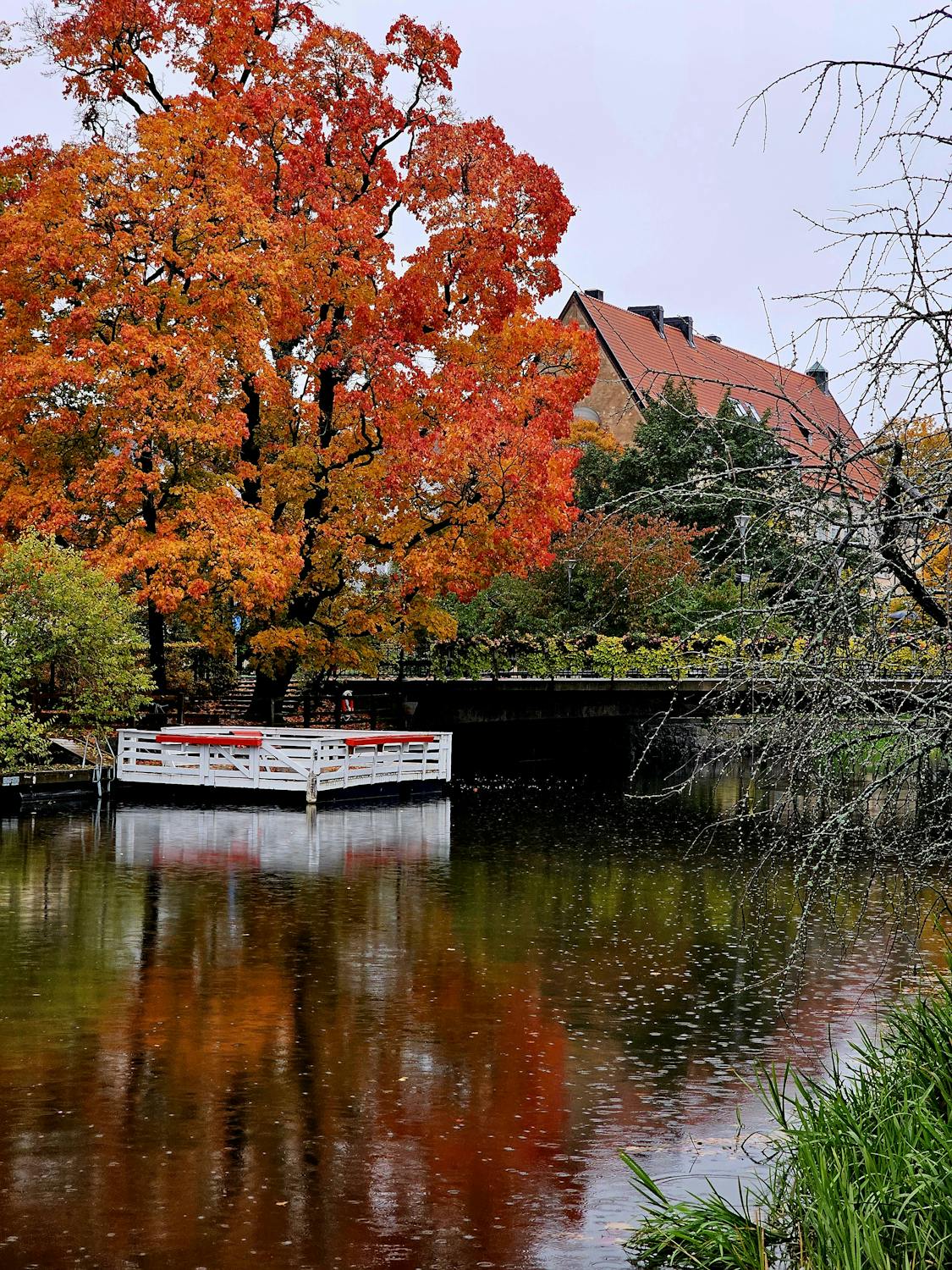
Back in the city, the Fyris River divides Uppsala into the academic west and the commercial east, and the walk along its banks in spring — when the cherry blossoms are out and the students are celebrating Walpurgis Night with bonfires and champagne and white caps thrown into the air — is one of Sweden’s most joyful experiences. Walpurgis on April 30th is Uppsala’s great tradition, and the entire city turns out to welcome the light after six months of Scandinavian darkness. I have celebrated the end of winter in many countries. None of them do it with as much relief, or as much champagne, as Uppsala.
When to go: April through June when the university is in session and the city is alive. Walpurgis Night on April 30th is Uppsala’s great tradition — bonfires, champagne, and the entire student body in white caps. September and October for autumn colour along the river.