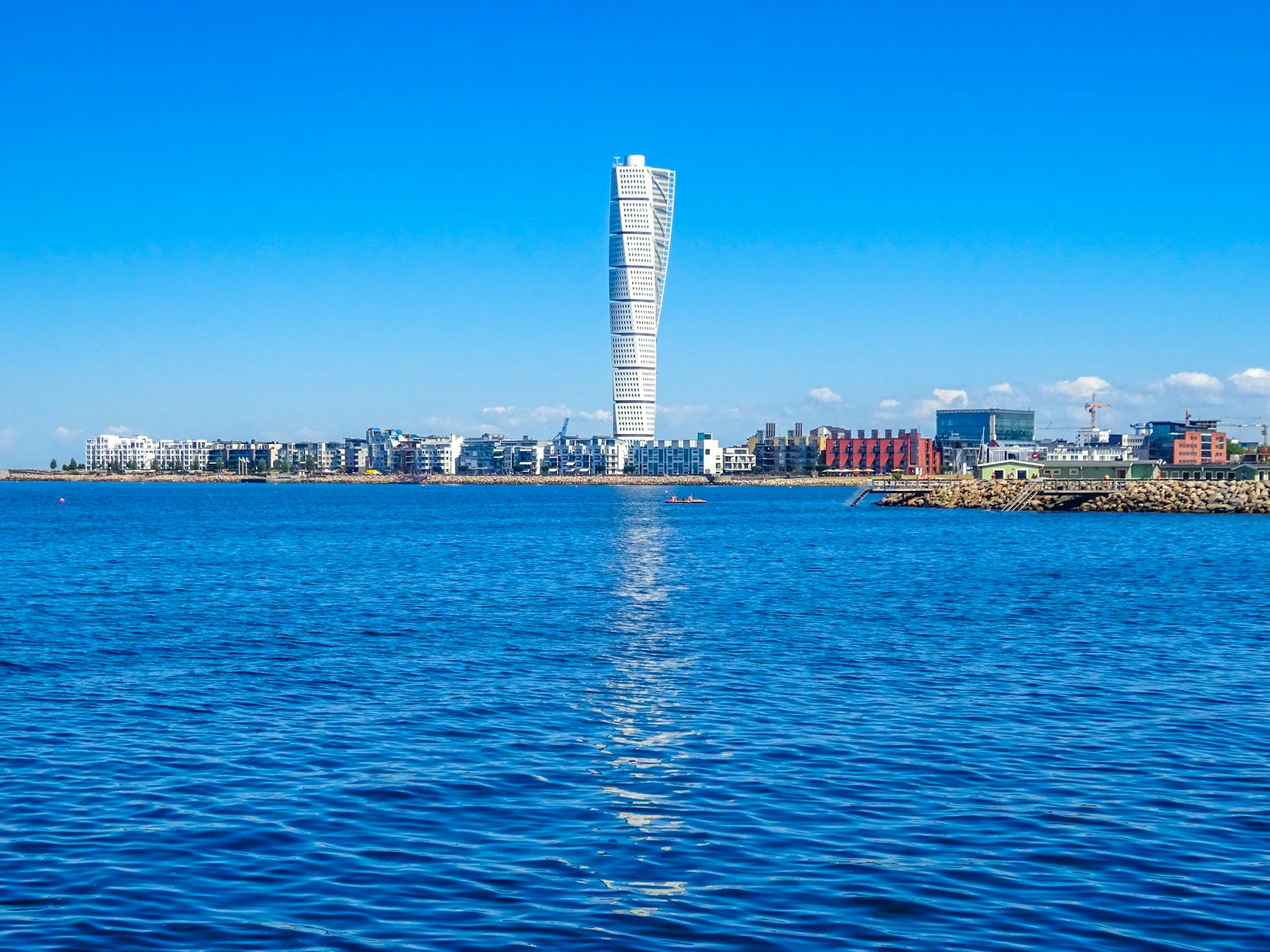
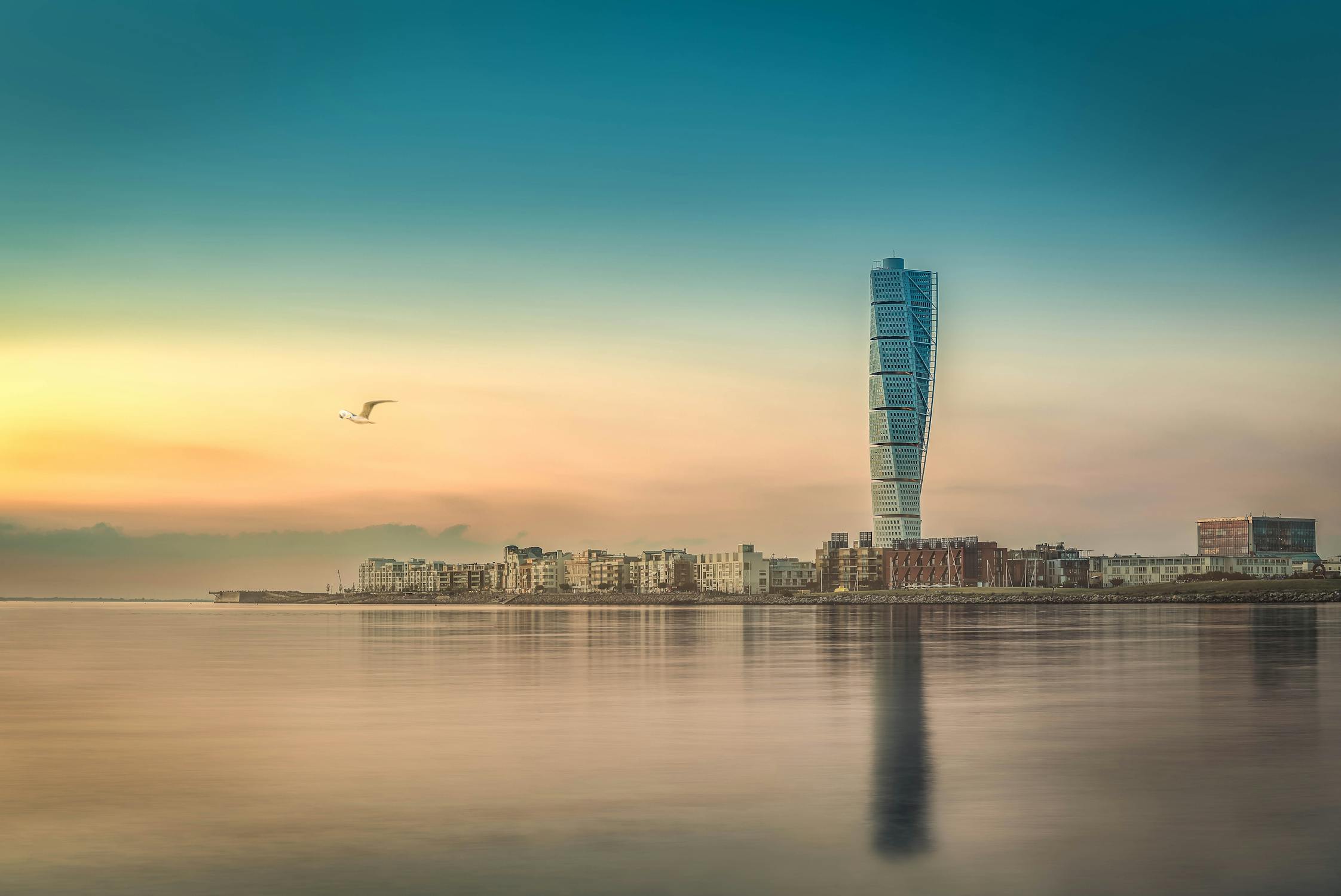
Malmo is Sweden’s most surprising city. Once an industrial port defined by shipyards and the smell of welding, it reinvented itself around the Turning Torso — Scandinavia’s tallest building, twisting above the Western Harbour like a spine mid-rotation — and the creative energy never stopped. The transformation is visible everywhere: former warehouses turned into design studios, abandoned docks converted into swimming platforms, a skyline that argues for the future while the old town clings to the past with cobblestones and copper spires.
The old town around Lilla Torg square is intimate and generous, with restaurants spilling onto the pavement and a Saturday morning energy that feels more Mediterranean than Scandinavian. Mollevangstorget, a few blocks south, hosts one of Sweden’s most diverse food markets — Middle Eastern bakeries beside Thai street food stalls beside a Kurdish falafel shop that has been perfecting its recipe for twenty years. I ate my way through Mollevangen over three visits and barely scratched the surface. Coming from Mexico, where market culture is sacred, I recognised something familiar in the noise and abundance and the unspoken rule that the best food is never in the fanciest building.
The Oresund Bridge connects Malmo to Copenhagen in thirty minutes, and the cross-pollination between the two cities is constant — Danes commute to Malmo for the cheaper rents, Swedes cross for the nightlife, and the cultural exchange has produced something neither city could have built alone. But Malmo deserves more than a day trip. The beaches at Ribersborg stretch along the coast with Kallbadhuset, a century-old open-air swimming bath where you alternate between sauna and the Baltic in a ritual that Swedes take as seriously as the French take wine. I did it in March. The water was four degrees. I have never felt more alive, or more certain that the Scandinavians are operating on a different frequency than the rest of us.
The food scene — driven by immigration and ambition in equal measure — punches far above the city’s modest size. Malmo has more restaurants per capita than Stockholm, and the best ones draw from the city’s fifty nationalities without flattening them into fusion. A meal here might be Scanian duck followed by Palestinian knafeh, and the combination makes perfect sense because Malmo is a city that has learned to hold multiple identities without contradiction.
The parks are generous — Slottsparken and Kungsparken wrap around the old castle in a green belt that feels more like countryside than city — and the cycling infrastructure makes a Parisian weep with envy. Malmo was designed for bikes long before it was fashionable, and the flat terrain means that even the laziest visitor can cover the entire city in an afternoon without breaking a sweat.
When to go: May through September for outdoor life and the beaches. The Malmo Festival in August is Scandinavia’s largest free festival. Winter is quiet but the Christmas market in Lilla Torg is genuinely cosy.