Kiruna
"Kiruna is moving its entire city for iron ore, which tells you everything about Swedish pragmatism."
A mining city above the Arctic Circle being physically relocated to save it from collapsing mines — and the birthplace of the world-famous ICEHOTEL.
There is a place on Earth where the ground is worth more than the town above it, and the Swedes have responded to this problem with the same measured efficiency they bring to everything: they are simply moving the city. Not a few buildings. The entire city. Church, townhall, apartment blocks, Hjalmar Lundbohmsgatan and all. Three kilometres east, away from the subsidence zones creeping beneath the old centre like slow catastrophe. Kiruna does not panic. It relocates.
I arrived in January, when the sun clears the horizon for roughly an hour before retreating, and the air has a particular quality — not just cold, but crystalline. Sound travels differently. The snow doesn’t crunch so much as squeak under your boots, the way it does only below minus twenty. The mines of LKAB, Europe’s largest iron ore operation, have been extracting magnetite from this mountain since 1898. The reddish dust that settles on the snow in the morning light is oddly beautiful.
The Hotel Built From a River
The ICEHOTEL is fifteen minutes outside town in Jukkasjärvi, beside the Torne River whose water is harvested each spring to rebuild it. I had expected something kitschy — a novelty for Instagram. What I found was stranger and more compelling. Each suite is carved by a different artist, and the quality of the work is genuinely high: vaulted ceilings with bas-reliefs of reindeer migrations, walls carved to look like folded fabric. The temperature inside holds at minus five degrees regardless of what happens outside. Lia and I slept on reindeer hides atop blocks of ice, zipped into thermal sleeping bags, and I woke at three in the morning to silence so complete it had texture. I stepped outside. The sky was on fire.
The City That Packs Itself
What surprised me most was not the aurora or the ICEHOTEL but the practical surrealism of urban relocation. On Hjalmar Lundbohmsgatan, the old main street, buildings stand empty or mid-demolition. A block away, the new Kiruna takes shape around Kristall, the angular new townhall designed by Henning Larsen Architects. The old church — a dark timber structure that Swedes once voted the country’s most beautiful building — was lifted onto a platform and transported on a system of rails in 2023. They moved a church. On rails. The Kiruna mine tour makes clear that none of this is dramatic to the locals. It is logistics.
The food is correct for the latitude: blood pudding with lingonberries at Landströms Kök, reindeer stew dense and aromatic, and coffee served with cardamom buns at every hour as though caffeine is the thing holding the permafrost together. I ate very well and very heavily, which felt appropriate.
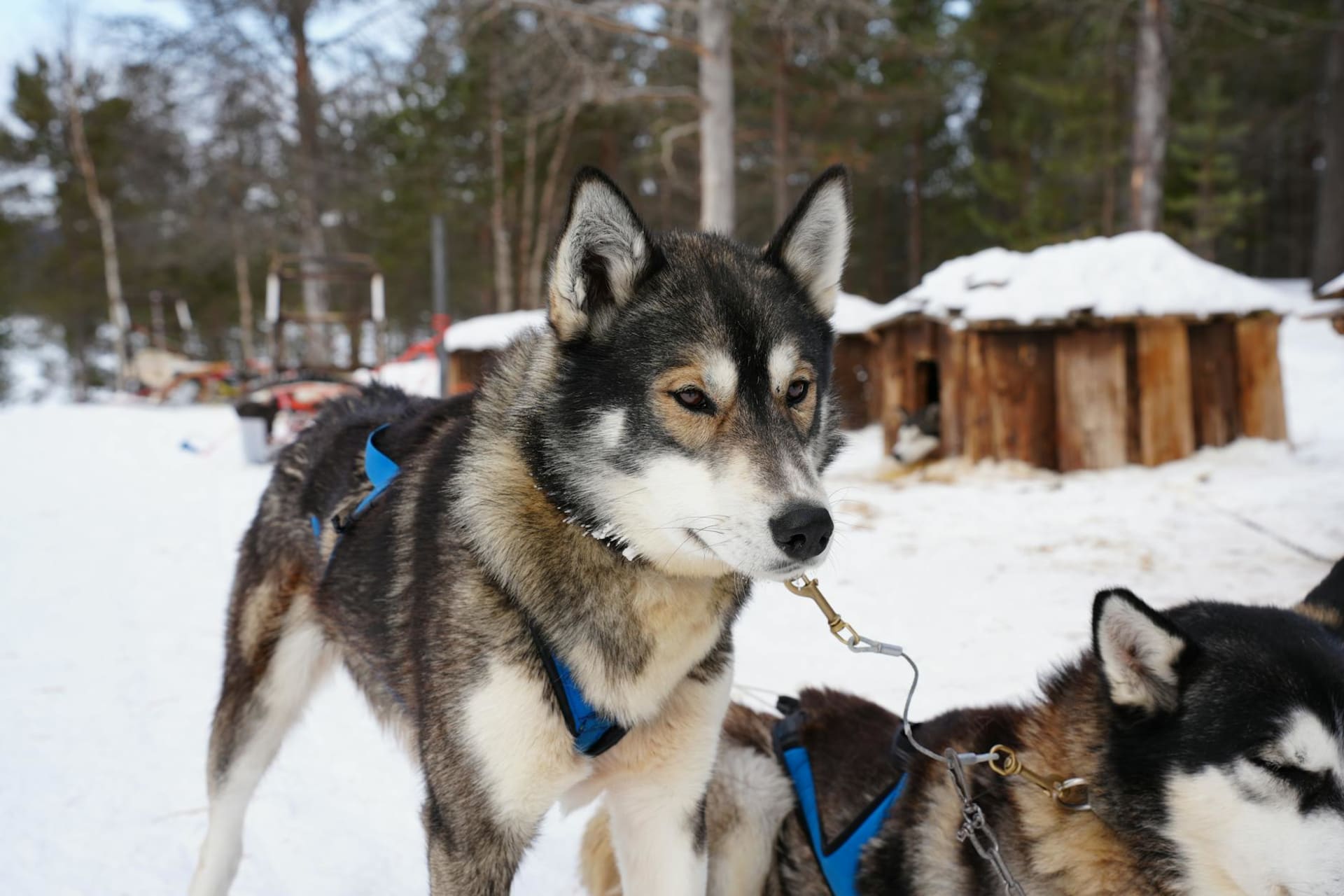
When to go: Mid-November through March for northern lights and the full Arctic winter experience, including the ICEHOTEL at its peak. The hotel opens in December and runs through April. Dog-sledding and snowmobile tours operate February through March when daylight returns but snow remains deep.