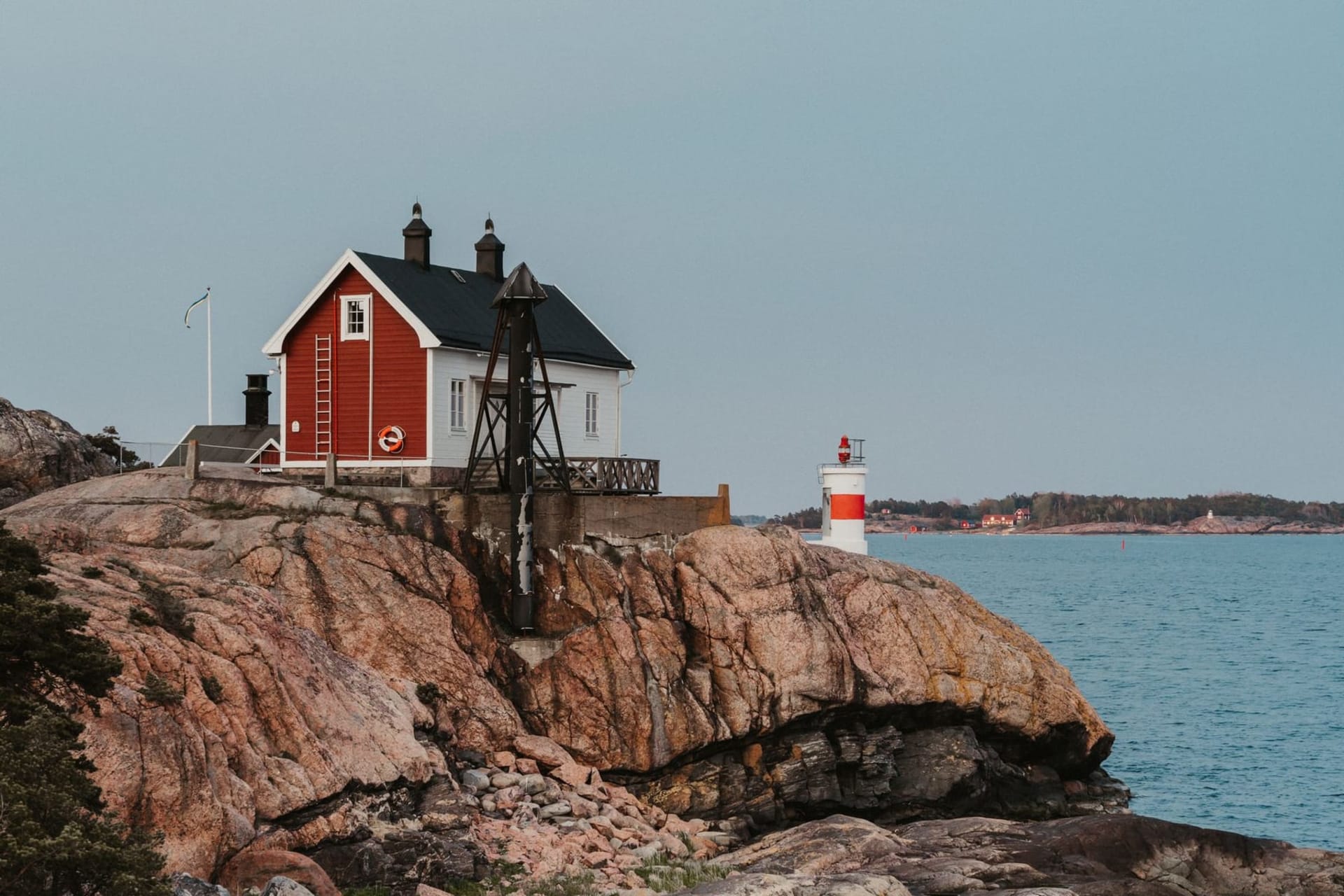
A UNESCO world heritage coastline where the land is still rising from the last Ice Age, with dramatic fjord-like inlets.
There is a particular quality of light on the High Coast in early evening — flat, pewter-grey, arriving at a low angle across the water — that makes the cliffs look like they are glowing from within. I stood on the suspension bridge at Ångermanälven, the longest river in Sweden spilling into the Gulf of Bothnia below me, and felt something I rarely feel at the start of a trip: genuine smallness. Not tourist smallness. Geological smallness.
A Coast Still in Motion
The Höga Kusten — the High Coast — is a UNESCO World Heritage Site for one of the stranger reasons I have encountered: the land here is rising. When the last ice sheet retreated, it had pressed the earth down nearly 800 metres under its own weight. Now, freed of that burden for 10,000 years, the land is rebounding at roughly eight millimetres per year. Old fishing villages that were once at sea level are now perched on hillsides. Former island harbours are landlocked meadows. The coast is literally being born, in slow motion, in front of you.
I learned this from a hand-lettered sign at the Naturum visitor centre in Härnösand, and I remember reading it twice, then looking out the window at the water, trying to recalibrate what I was seeing.
The Cliffs and the Silence
Lia and I hiked the trail up to Skuleberget — a 294-metre granite massif that drops almost vertically into the fjord-like inlet below — on a Tuesday morning when we were entirely alone on the path. The spruce forest smelled of resin and cold stone. At the summit, a raven watched us from a boulder without moving. The inlets below us — Norafjärden, dark and narrow as a scar — looked exactly like Norwegian fjords, but they were formed by that same glacial rebound, not by glacial carving. A different geology, a different logic, the same silence.
Lunch afterwards was pytt i panna at a roadside café near Ulvöhamn: diced potato and onion fried in butter, topped with a fried egg and pickled beetroot. Simple, heavy, exactly right.
The Unexpected Thing
What surprised me was how empty it was. This is a World Heritage coastline in one of the world’s wealthiest countries, and in three days we encountered almost no one. A German couple with kayaks. Two Swedish retirees with a dog. The High Coast exists at a frequency most tourists never tune into — which is, of course, the best possible recommendation.
When to go: Late June through August for long Nordic light and passable sea temperatures for swimming; late September for the birch trees turning gold against the dark granite, and near-total solitude.