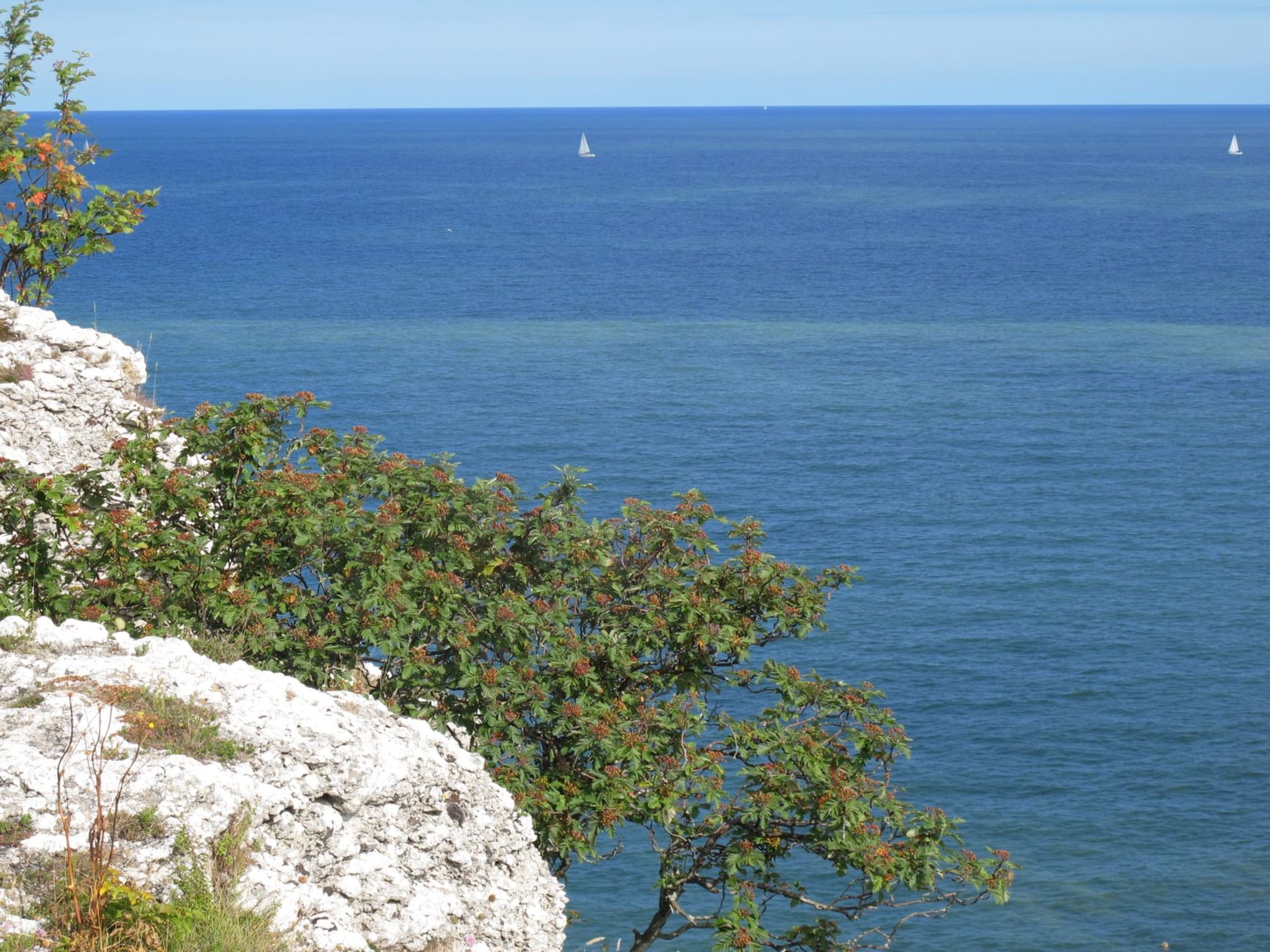
Ingmar Bergman's island off northern Gotland with limestone sea stacks, empty beaches and a summer ferry queue.
The ferry crossing from Fårösund takes twelve minutes. Twelve minutes to cross the narrow sound that kept Fårö separate from the rest of Gotland for centuries — and still does, in every way that matters. I stood at the bow while the engine churned up grey-green Baltic water, watching the limestone flats of the island approach, and felt something I could not quite name. Not excitement. Something quieter. Anticipation, maybe, of a particular kind of solitude.
The Raukar at Langhammars
The sea stacks at Langhammars are the first thing everyone talks about, and they deserve every word. I had seen photographs, but photographs flatten them. In person, at low tide in the early morning, the raukar rise from the shingle like monuments to geological patience — some three, four metres tall, sculpted by ten thousand years of wave and wind into shapes that seem almost intentional. Heads. Cloaks. Ancient, indifferent faces. Lia walked among them without speaking for a long time. She does that when something strikes her as genuinely extraordinary. I followed her lead and said nothing either.
The light on Fårö in summer is unlike anything I have encountered. It does not arrive so much as it lingers, horizontal and amber from six in the morning until well past nine at night. Bergman understood this. He built his house here, at Hammars, and shot Scenes from a Marriage, Autumn Sonata, and Saraband in this light. Standing on the beach at Digerhuvud, looking north toward open sea, I felt I understood something about his films I had never quite grasped watching them in cinemas.
Bergman’s Island, Quietly
The Bergman Center in Fårösund — technically just before you board the ferry — holds his old editing equipment, his private letters, reconstructions of his sparse working life. But the real Bergman experience is the drive up Route 148, past sheep grazing on limestone pavements, past the old church at Fårö kyrka where he is buried alongside his wife Ingrid. The grave is unmarked by any monument. Just two flat stones. I almost missed it.
The unexpected discovery came at Broa harbor, where a woman selling smoked Baltic herring from a wooden kiosk told me, in excellent French, that she had been doing this every summer for thirty-one years and had once sold fish to Bergman himself. She described him as polite but hurried, always distracted, always looking slightly past you toward the horizon. I bought two portions and ate them on the dock with dark rye bread and butter. They were exceptional.
When to go: June and July bring the best light and warmest water, though the ferry queue from Fårösund can stretch long on midsummer weekends. Late August offers calmer crossings and a quieter island, the summer families gone, the raukar and the silence returned to themselves.