Pangani
"The ferry across the Pangani river costs the same as it has cost for as long as anyone remembers."
I came to Pangani by mistake the first time, diverted from the Tanga road by a bus that needed to drop a bag of rice at a junction six kilometers off the main route. By the time the driver had finished the delivery and we’d reached Pangani, I’d already decided to stay. Sometimes the logistical detour is the point.
Pangani sits at the mouth of the Pangani River, one of the major Tanzanian river systems, where it meets the Indian Ocean between sandbanks and mangrove channels. It’s small enough that you walk it in an afternoon — a German colonial administrative quarter on the north bank, a separate Arab quarter with coral-stone merchant houses, a fish market by the ferry landing, and a long empty beach stretching south. The river crossing is done by a flat-bottomed wooden ferry that runs on shouted negotiation and physics.
The German Town
Tanzania’s colonial history runs German then British, and the German period left a particular architectural stamp — solid, administrative, tropical-adapted versions of European municipal buildings, built to last and then partially eaten by the equatorial climate. Pangani has several of these in various states of arrested decay: the old boma (administrative fort), a former customs house with a wide veranda overlooking the river mouth, what was once a district officer’s residence now occupied by families who’ve adapted it in layers of corrugated iron and painted plaster.
Walking through the German quarter in the late afternoon when the river light is good and the shadows are long feels genuinely cinematic in a way that has nothing to do with tourism. These buildings are simply aging in the presence of people going about their lives, and the coexistence of the colonial hulk and the present day is unstaged and therefore interesting.
The Arab Quarter
On the other side of the small town center, the Omani Arab merchant houses from the nineteenth century are built in a different idiom — coral stone with carved plaster finials, shuttered windows with internal woodwork, a logic that came down the coast from Muscat via Zanzibar and settled here at the river mouth because this was a valuable place to control. A few of the houses are still occupied. Most are being used for storage or have been subdivided.
The oldest mosque in Pangani is in this quarter, small and plain from the outside, with a prayer hall that has been in continuous use for well over a century. I went in early one morning — having asked the caretaker’s permission — and sat at the back for a few minutes while two elderly men performed the fajr prayer. The light came through a high window and made a bar across the floor. I felt entirely like I was somewhere I wasn’t supposed to be, which I wasn’t, but the feeling was part of the experience.
The Beach and the River
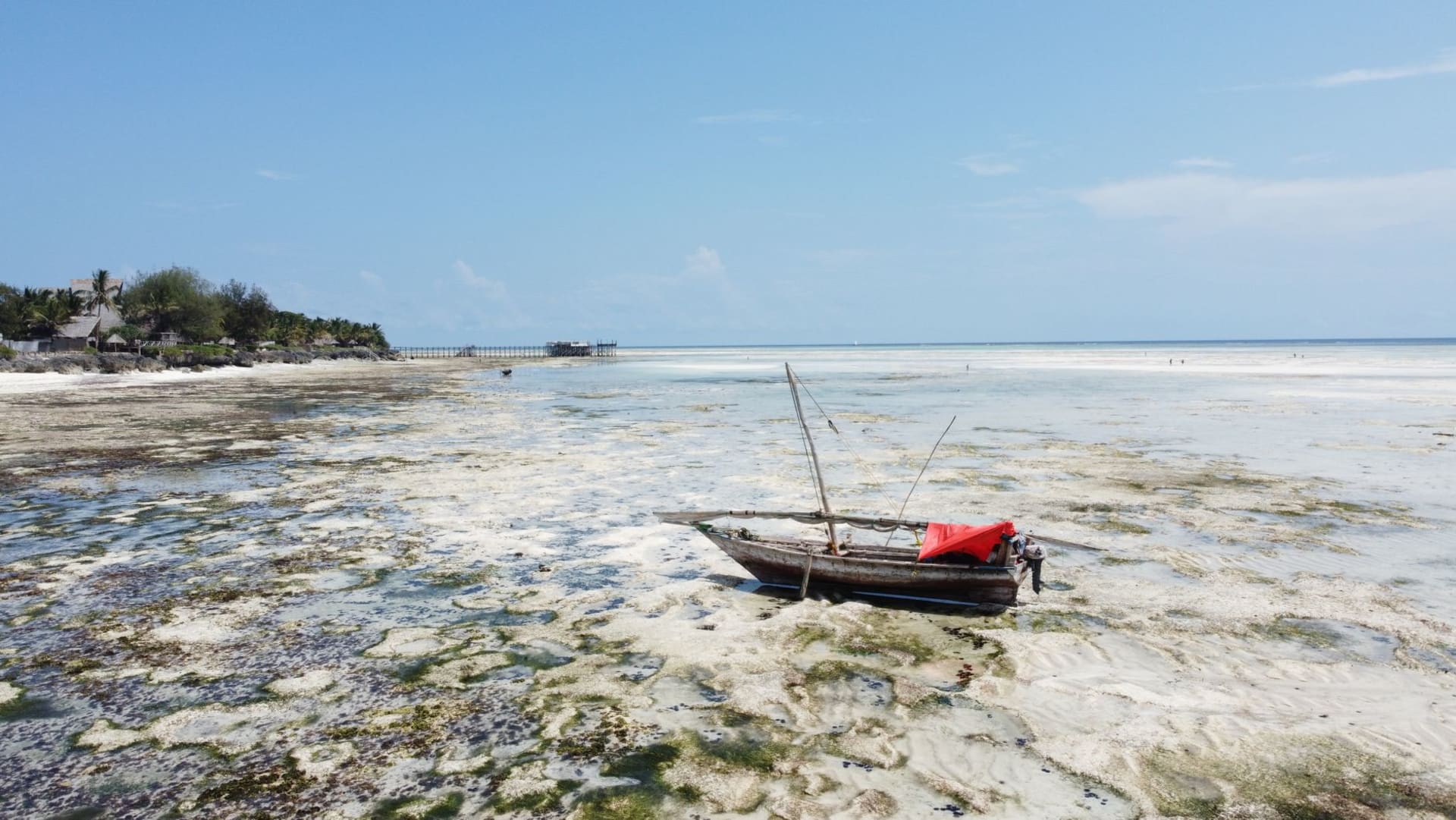
The beach south of town is long, curved, and almost entirely empty on weekdays. The river mouth produces a sandbar that shifts with the season, and local fishermen navigate it by knowledge rather than instruments, reading the water in ways they learned from people who read it before them. Snorkeling is possible off the headland to the south when the sea conditions cooperate — the reef here isn’t Mafia or Mnemba, but it’s uncrowded and the fish populations benefit from the reduced pressure.
River trips up the Pangani can be arranged with local operators — into the mangrove channels, past egret roosts and kingfishers, as far as the first set of river farms where women carry water from the bank in plastic containers. The river at midday turns the color of strong tea and reflects the mangroves in a way that makes the whole scene look like a painting that doesn’t know it’s being looked at.
The Town’s Rhythm
Pangani’s daily rhythm is defined by the ferry and the fish market. The morning ferry from the north bank brings people and produce; the afternoon ferry takes them back. The fish market by the landing distributes the catch through the town in about twenty minutes of efficient chaos. By nine in the morning, everyone has been somewhere and come back, and the rest of the day proceeds slowly, with tea.
When to go: June through October for dry, pleasant weather and the clearest river and ocean water. January and February are also good, with the northeast monsoon keeping temperatures manageable. Avoid April and May when the Pangani River can swell and the beach access road occasionally floods.