Malindi
"I did not expect to eat the best pasta of my year in a Kenyan beach town. Malindi did not warn me."
There is a coral-and-limestone pillar on a headland at the edge of Malindi that Vasco da Gama erected in 1499 on his return from India. It still stands. This is worth sitting with: a navigational monument put up by a Portuguese explorer on his way back from proving that Europe could get to Asia by sea without asking anyone’s permission, still standing on a small Kenyan promontory while everything around it has changed six or seven times. It’s about the size of a street lamp and the cross at the top is original. The wind coming off the Indian Ocean is constant.
Malindi is a complicated town. On one level it’s a standard beach resort destination — package tourists, jet skis, resorts with swim-up bars. On another level it has a genuinely strange and interesting character built from the convergence of its ancient Swahili trading history, its colonial past, a large Italian expatriate community that arrived in the 1980s and apparently decided to stay permanently, and a marine park with a reef system that somehow survived the dynamite fishing that gutted most of the Kenyan coast.
The Portuguese Remnants
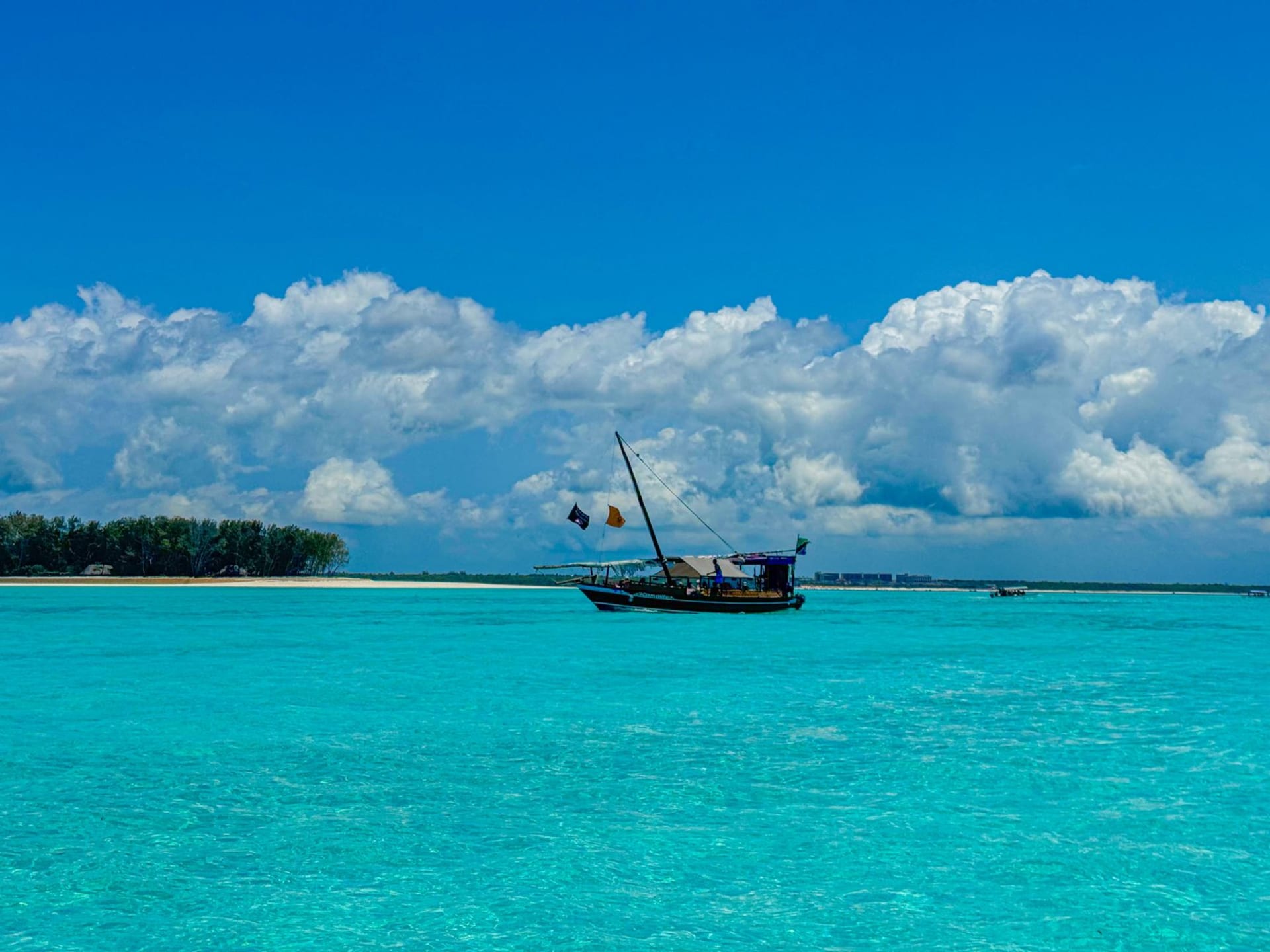
The Vasco da Gama Pillar and the adjacent ruins of the first Portuguese church built in sub-Saharan Africa sit together on the headland south of the main beach. The church ruins are older than any Portuguese building remaining in India, and the headland view — fishing dhows in the channel, Malindi Bay curving north, the reef visible as a color change in the water — is exactly the view da Gama would have seen. The pillar was declared a national monument in Kenya’s first years of independence, which suggests someone understood the argument it makes about the age of things on this coast.
The Malindi Museum in town is small but has a reasonable collection of Swahili period artifacts and explains the town’s trading history (Malindi was a rival power to Mombasa and at various points allied with the Portuguese to counter Mombasa’s influence) in terms that make the Portuguese chapel location politically legible.
The Marine Park
Malindi Marine National Park is divided between a national reserve and a smaller core protected area, and the reef inside the protected zone is in dramatically better condition than the coral outside it — an object lesson in what marine protection actually does given time. Glass-bottom boat trips are the standard approach, but snorkeling over the coral heads in the morning before the boat traffic builds is substantially better.
I rented fins and a mask from a guesthouse near the park gate and spent two hours in the water. Crown-of-thorns starfish in the shallower sections, schools of sergeant major fish in formation around the coral outcrops, a stonefish I almost put my hand on and would not have enjoyed. The visibility was perhaps fifteen meters. I came out with the specific mild elation of having been somewhere cold and alive.
The Italian Question
The Italian community in Malindi is large enough that there are Italian delis, Italian bakeries, an Italian-language newspaper that has been running since the 1990s, and restaurants that serve genuinely good pasta. I have no complete explanation for this. The migration began in the early resort-development era and compounded over decades until Malindi acquired a character unlike anything else on the Kenyan coast — part Swahili port town, part East African beach resort, part inexplicable corner of provincial Italy.
The pizza I ate on my third night was better than most pizza I’ve eaten in France. Lia, who has strong opinions on these things, confirmed this and immediately asked where the recipe came from. The cook declined to specify.
Gedi Ruins
Fifteen kilometers south of Malindi, the ruins of Gede sit in a forest that has been growing through them since the fifteenth century. The city was abandoned — no one knows quite why — and the baobabs and figs have been eating the coral-stone walls ever since. Walking the site at dawn, before the tour buses, with monkeys in the trees and the damp morning air, is one of the stranger experiences available on this part of the coast.
When to go: November through April is driest and clearest — peak whale shark season (October to March) adds the option of snorkeling with whale sharks at Watamu, forty kilometers south. June to August is cooler but can be overcast. Avoid April-May long rains.