Lamu
"The only engine sound I heard in three days was the ferry leaving without me."
I missed the boat once. Not metaphorically — I literally missed the wooden motorboat that connects Lamu island to the mainland, and I spent an unplanned extra night in a town with no cars, no motorbikes, and somehow, no real urgency about anything. It was one of the better accidents I’ve made while traveling.
Lamu Old Town sits on an island off the northern Kenyan coast, and it has been continuously inhabited since the fourteenth century. The Swahili civilization that built it traded ivory and mangrove poles with Arabia, India, and Persia, and the architecture absorbed all of it — coral stone walls with intricate plasterwork, ceilings of mangrove poles darkened by generations of cooking smoke, and those doors. Every carved wooden door in Lamu is a thesis on imported ornament: geometric Islamic patterns competing with Hindu lotus motifs and Portuguese-era brass studs. I photographed seventy-three of them before Lia told me she was going to find lunch with or without me.
The Weight of the Old Town
The streets in Lamu’s UNESCO-listed core are not quite wide enough for two donkeys to pass each other comfortably, which is roughly the main traffic problem in this town. You navigate by sound — the clop of hooves on flagstone, the call to prayer bouncing off coral walls at intervals that make the whole island seem to breathe. The light in the late afternoon turns the white buildings gold, then amber, then a deep copper that lasts about twelve minutes before the Indian Ocean swallows the sun in a single gulp.
The Lamu Museum, housed in a former colonial district commissioner’s office overlooking the harbor front, has one of the best collections of Swahili material culture I’ve seen anywhere — siwa horns, ivory chairs inlaid with silver, and ship models that explain the entire trading logic of this coast more clearly than any textbook. I stayed longer than I meant to.
On the Water
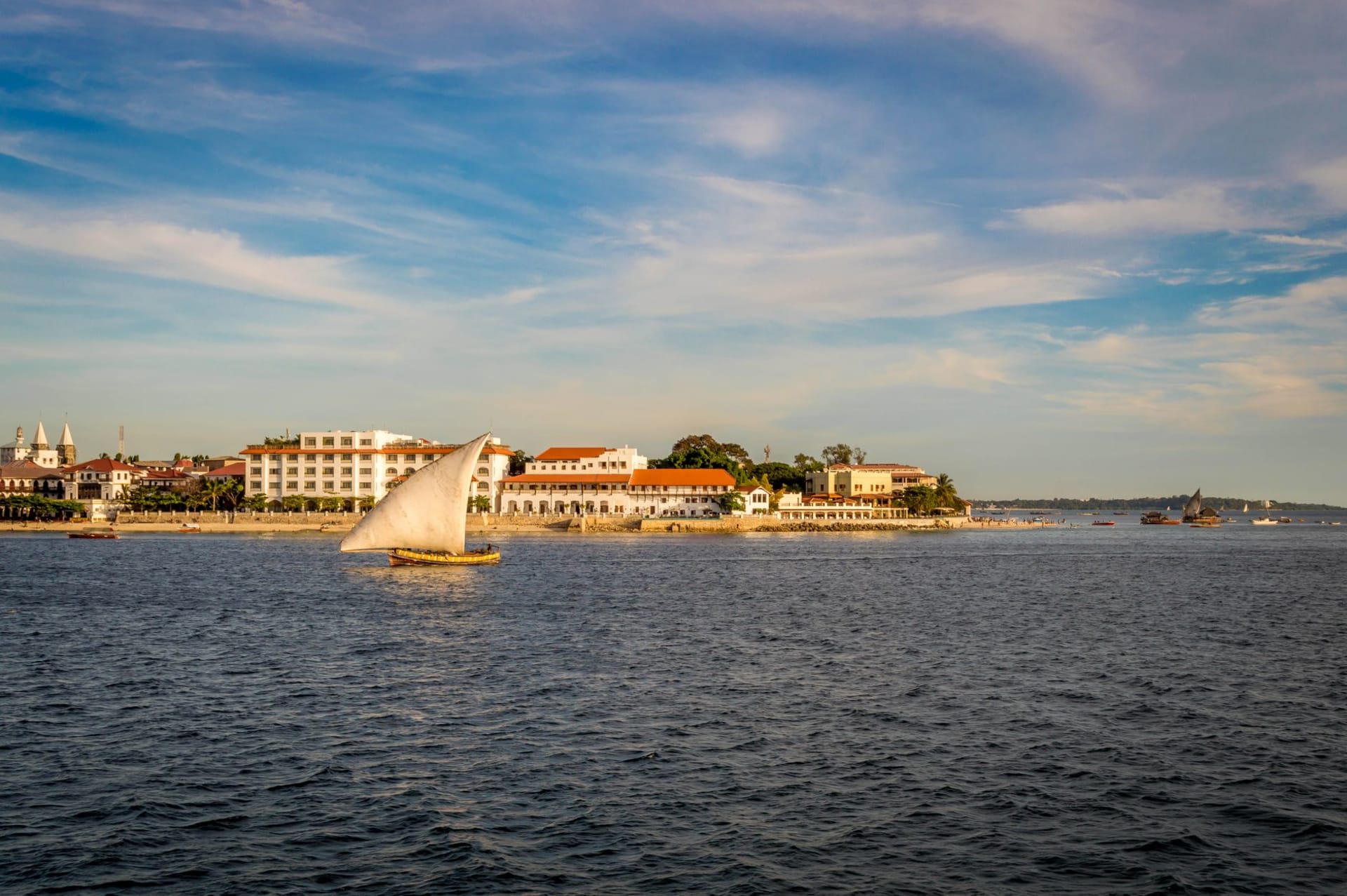
The harbor front is where Lamu’s social life actually happens. Fishermen mend nets in the blue shade of bougainvillea. Old men play bao on boards worn smooth over decades. Boys dive off the sea wall into the channel water while dhow captains argue over tide times. I hired a traditional jahazi dhow for a morning — it costs almost nothing and the captain, a man named Musa who spoke four languages with the same casual authority, took me to Manda Island opposite, where mangrove channels weave between sandbars and the water turns the color of oxidized copper at low tide.
There’s also Shela, a quieter village about forty minutes’ walk down the beach from the main town, with a grand Friday mosque and a long empty beach backed by sand dunes. This is where the boutique guesthouses cluster. It’s beautiful and slightly manicured in a way Lamu town itself resolutely is not.
What You Actually Eat
Swahili cooking at its best is this: biryani with whole spices still rattling in the rice, grilled reef fish with a tamarind and coconut sauce, mandazi doughnuts fried in coconut oil for breakfast, and chai so sweet and cardamom-heavy it functions less as a beverage than as a commitment. The restaurants along the waterfront serve this without fanfare and at prices that feel vaguely dishonest. I ate the same grilled snapper three lunches in a row and didn’t consider changing.
When to go: November through March is the dry northeast monsoon season — calm seas, reliable dhow sailing, and manageable heat. July and August bring the Lamu Cultural Festival, which fills the town with Swahili music, donkey races, and dhow competitions. Avoid April and May when the long rains make the roads to the mainland genuinely difficult.