Kilwa Kisiwani
"Nothing humbles you quite like finding out you'd never heard of the most important city on the medieval Indian Ocean."
I’ll be honest: I didn’t know much about Kilwa before I went. I knew it was ruins, I knew it was on a small island, I knew it was UNESCO-listed. What I didn’t know — what nobody had told me — was that this was once the dominant port city of the entire western Indian Ocean, a medieval commercial empire that controlled the gold trade from Zimbabwe’s interior mines to the Arabian Peninsula and India, and that the Portuguese explorer Vasco da Gama, arriving here in 1498, described it as one of the finest cities he had ever seen. Then they destroyed it.
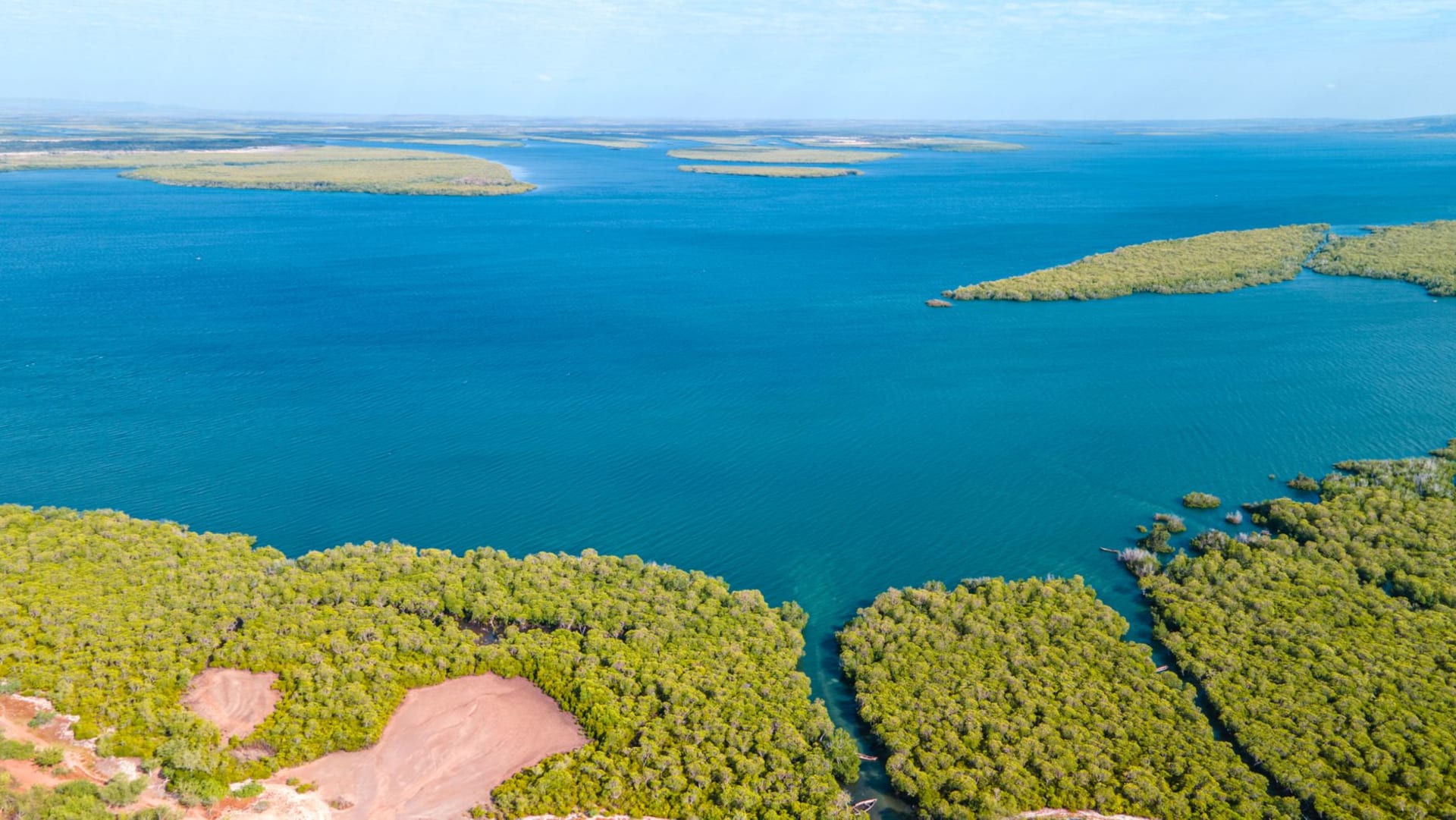
The approach sets the tone. From Kilwa Masoko on the mainland, a short boat ride across a shallow mangrove-fringed channel brings you to Kilwa Kisiwani island, low and green, with the first ruins visible above the treeline before you land. The boatman doubles as guide. His name was Rajabu and he walked through the ruins with the particular satisfaction of someone showing you something the rest of the world has neglected to pay attention to.
The Great Mosque
The Great Mosque of Kilwa is the largest pre-colonial mosque in sub-Saharan Africa and one of the architectural achievements of the medieval Swahili world. The coral stone columns support a system of domes that have been partially restored, and in the afternoon light the interior spaces move between deep shade and sharp patches of sunlight in a way that feels deliberately theatrical. The mihrabs — the niched prayer directions — are carved with a precision that still registers as skill, not just craft.
The mosque was built in stages between the eleventh and fifteenth centuries, each Sultanic dynasty adding a new section. Walking through it is walking through a timeline, and the shifts in construction technique between periods are legible even to someone without an architecture degree. I sat in the old section, the oldest part, for a while. Wind through the gaps in the walls. A bird somewhere in the coral stone. The silence has weight here.
Husuni Kubwa
A fifteen-minute walk through the bush from the mosque brings you to Husuni Kubwa, the great palace of Sultan al-Hasan ibn Sulaiman, built in the 1320s. It is enormous and almost entirely unrestored — walls standing to head height, the octagonal swimming pool inexplicably intact, a trading warehouse the size of a modern aircraft hangar with its roof gone and trees growing through the floor. The view from the palace’s eastern face overlooks the channel, the mainland visible as a green smudge, and the logic of the site becomes obvious: you could see everything coming.
Kilwa Kisiwani at its height in the fourteenth century was minting its own currency and taxing the gold that moved through this channel from the interior kingdoms of southern Africa to the Arab dhow captains waiting offshore. The coins are in the Kilwa museum on the mainland, and the National Museum in Dar es Salaam, and the British Museum in London. Some things go where the power goes.
The Journey to Get Here
Kilwa Masoko is not easy to reach. It’s roughly six hours by bus from Dar es Salaam on a road that is improving but has not yet improved, or you can fly to Kilwa on a small aircraft that runs when it runs. The town itself is small, the guesthouses are basic but functional, and the resident population is entirely uninterested in manufacturing an experience for you. This is, in my experience, a good sign.
I stayed two nights, went to the island twice, and spent one afternoon in the Kilwa Museum on the mainland, which is small and needs a budget it hasn’t received but contains enough information to contextualize everything you’ll see on the island. The combination is worth every hour of the bus ride.
When to go: June through October is driest and most reliable for boat crossings to the island. January and February also work well. Avoid the April-May long rains when the channel can become rough and the mainland roads to Kilwa Masoko are seriously degraded. Hire a guide from the mainland — the ruins are more legible with context and Rajabu, or someone like him, will make it matter.