Bantimurung Waterfall
"Somewhere between the roar of the falls and a butterfly landing on my arm, I stopped checking my watch."
A 15-meter curtain of water inside a butterfly-thick national park, an hour from Makassar, where Wallace once chased wings with a net.
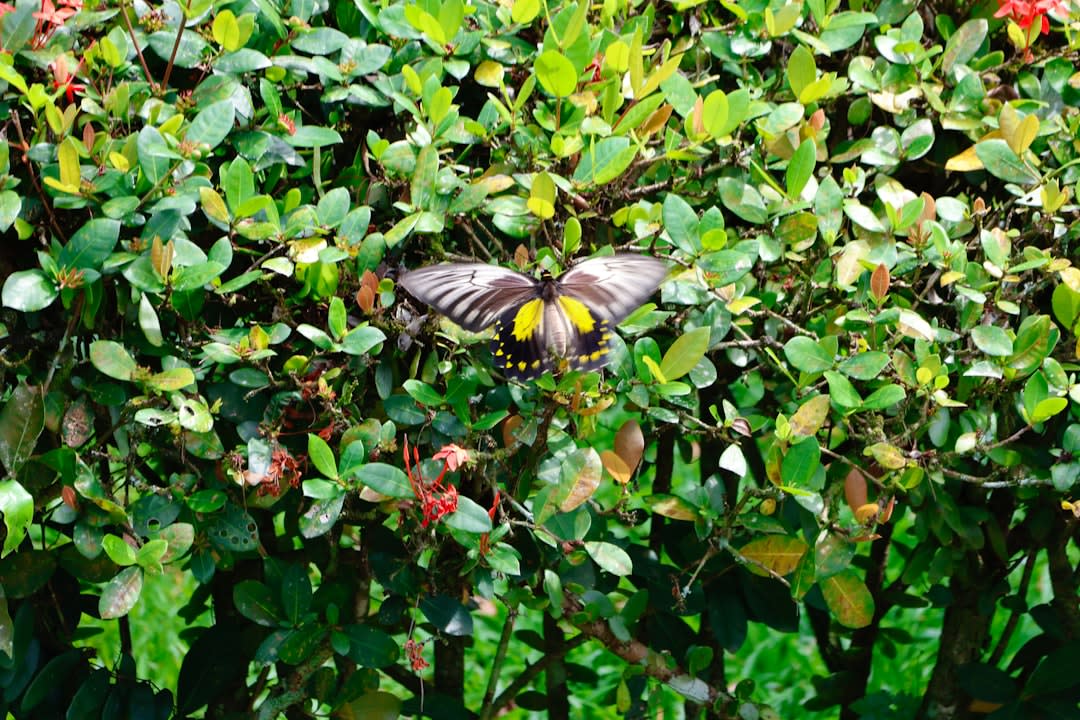
We drove out from Makassar a little after seven, before the heat set in, and it still took the better part of two hours to cover the fifty-odd kilometers to Maros. Lia had read about Bantimurung-Bulusaraung National Park the night before and kept repeating “Kingdom of Butterflies” like a mantra, half convinced I’d exaggerated it for effect. I hadn’t. The moment we stepped past the entrance gate, they were everywhere — not a handful for a photo op, but a genuine cloud of them drifting over the parking area, landing on backpacks, on shoulders, on the rim of my coffee cup. I kept thinking about Alfred Russel Wallace, who spent weeks in this exact patch of forest in the 1850s with a net and an insatiable curiosity, cataloguing species most of Europe had never seen. Standing there swatting nothing away because I didn’t want to, I finally understood why he never left.
The waterfall itself announces itself with sound before sight — a steady, thickening roar as the path curves through limestone walls. Bantimurung drops about fifteen meters over a rock face twenty meters wide, broken into tiers that catch the light differently depending on where you stand. We climbed onto the wet rocks flanking the main pool, and I remember gripping Lia’s hand a little too hard on one slick step, both of us laughing about it after.
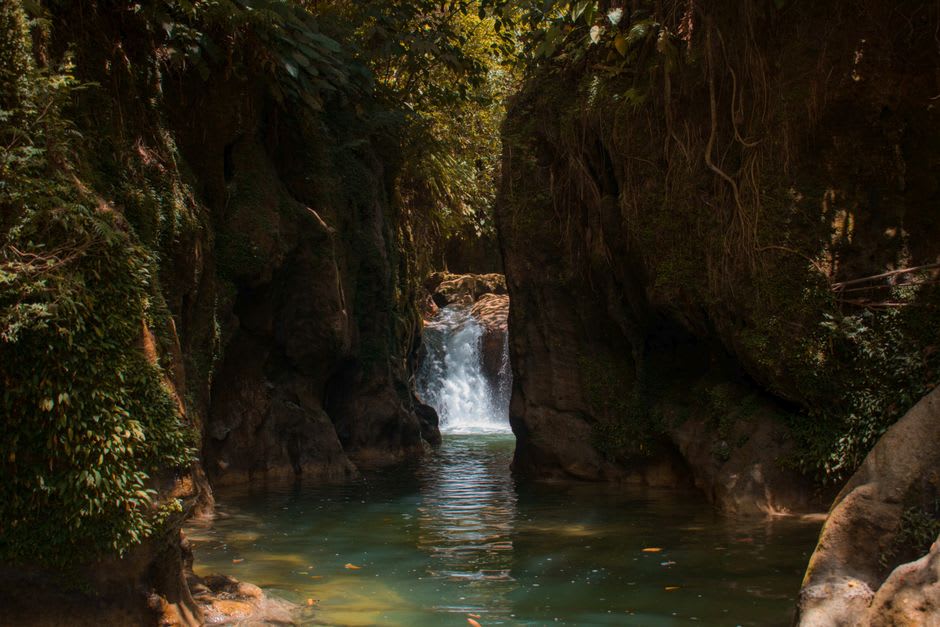
By late morning we’d worked up enough heat to justify the natural swimming pool at the base of the falls, where local families were already splashing around fully clothed, kids shrieking every time spray hit them. The water was colder than I expected, almost shocking, and it cut straight through the humidity that had been clinging to us since Makassar. Afterward we wandered the butterfly-watching trails that thread into the forest, where the guide pointed out species I’ll never remember the names of but whose colors I still see when I close my eyes — electric blues, a yellow so saturated it looked painted on. The park protects around 250 recorded species across its 43,750 hectares, and somewhere in those same hills sit limestone caves lined with stalactites and stalagmites, part of one of the largest karst landscapes outside China. We only had time to poke into the entrance of one cave before the light started to fade, and I’ve already told Lia we’re coming back to do it properly.
What stayed with me longest wasn’t the waterfall, spectacular as it was, but the strange sensation of walking through a landscape that a 19th-century naturalist had already fallen in love with a century and a half before us, for exactly the same reasons.
When to go: Aim for the dry season, roughly April through October, when butterfly activity is at its liveliest and the rocks around the falls are far less treacherous underfoot.
Keep exploring
More from Sulawesi
 sulawesi
 Bunaken
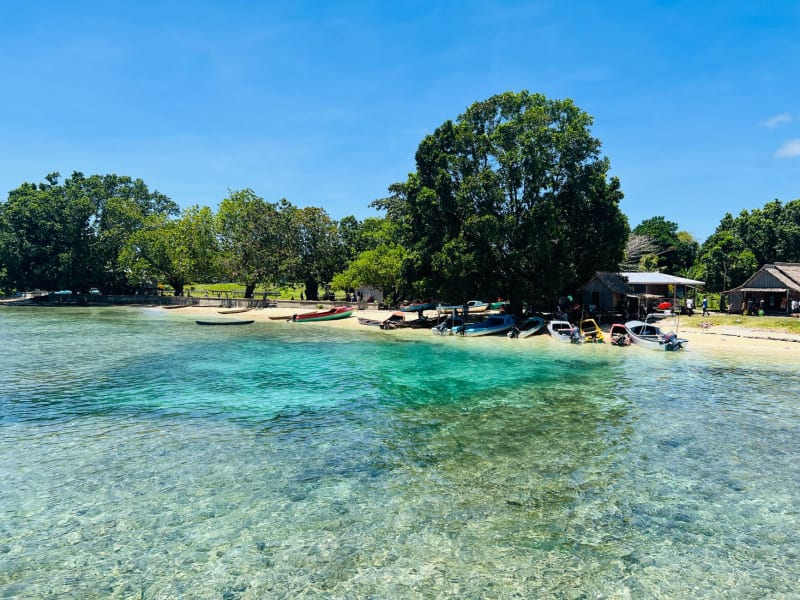
A marine park off North Sulawesi where reef walls drop to invisible depths and schools of fusiliers block the light like a moving curtain.
Explore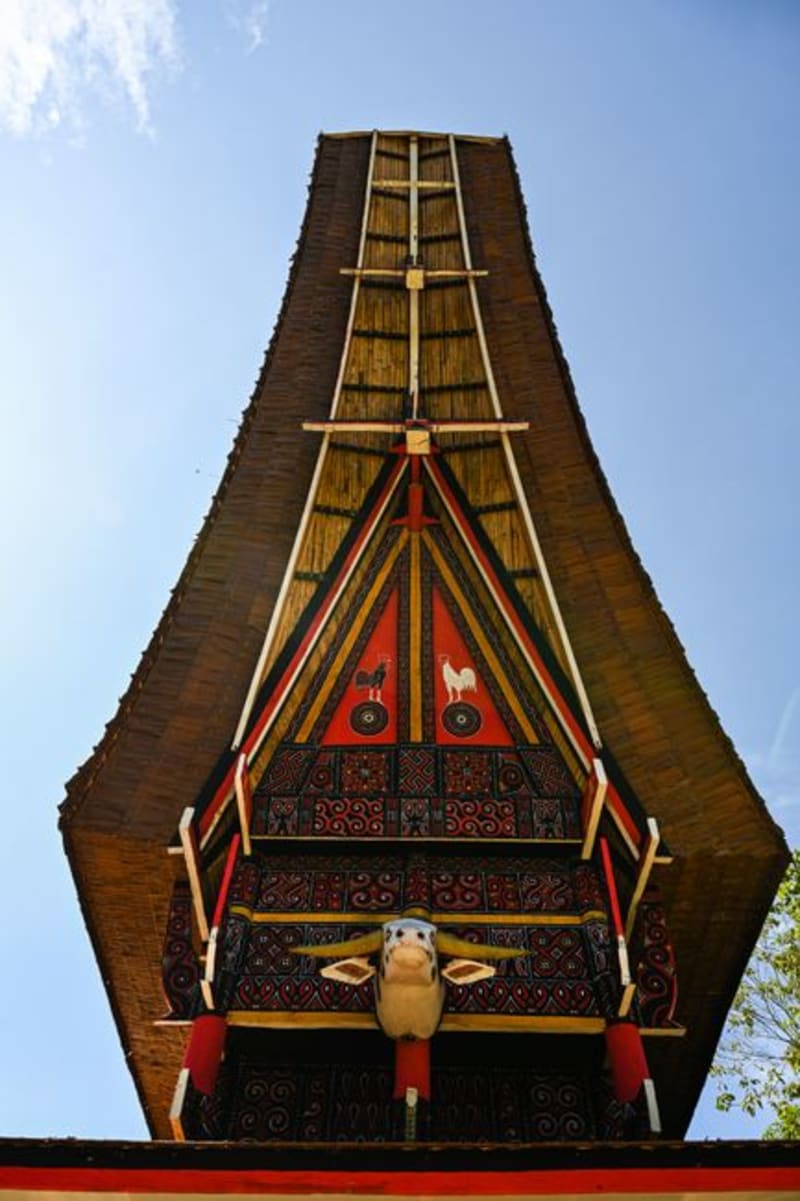 sulawesi
 Kete Kesu
A 400-year-old Torajan village where coffins hang from a limestone cliff and wooden effigies still watch over the dead.
Explore sulawesi
 Lake Poso
A highland freshwater lake in Central Sulawesi where the water is clear enough to read the bottom at depth, and the silence arrives fast and stays.
Explore sulawesi
 Lore Lindu
A national park in Central Sulawesi's highlands, where ancient megalithic stones of unknown origin stand at the edges of rice fields, and the forest holds animals found nowhere else on earth.
Explore sulawesi
 Makassar
South Sulawesi's port capital, where a Dutch fort meets a Bugis harbor, grilled banana costs next to nothing, and the sunset over the strait is communally observed every evening.
Explore sulawesi
 Manado
North Sulawesi's port capital, where smoked skipjack is breakfast, churches outnumber mosques, and the surrounding sea holds some of the best diving in Asia.
Explore