Kandy Perahera
"Kandy's Perahera is the kind of spectacle that makes you understand why ancient civilisations built cities around festivals."
The annual Esala Perahera festival sends a hundred caparisoned elephants through Kandy's torchlit streets.
We arrived in Kandy two days before the Perahera without a plan, without a hotel, and without a single friend who had witnessed it before. That turned out to be the right way to arrive. Kandy during Esala is not a city that rewards careful itineraries. It rewards surrender.
The Night the Streets Belong to Something Older
The procession moves along Dalada Veediya, the broad avenue that rings the Temple of the Tooth, and it begins just after dark with a sound you feel in your sternum before you hear it with your ears. The hewisi drums — a low, insistent pulse — come first, then the conch horns, and then the whip-crackers opening a corridor of noise through the crowd. Lia grabbed my arm somewhere around the third elephant and didn’t let go for an hour.
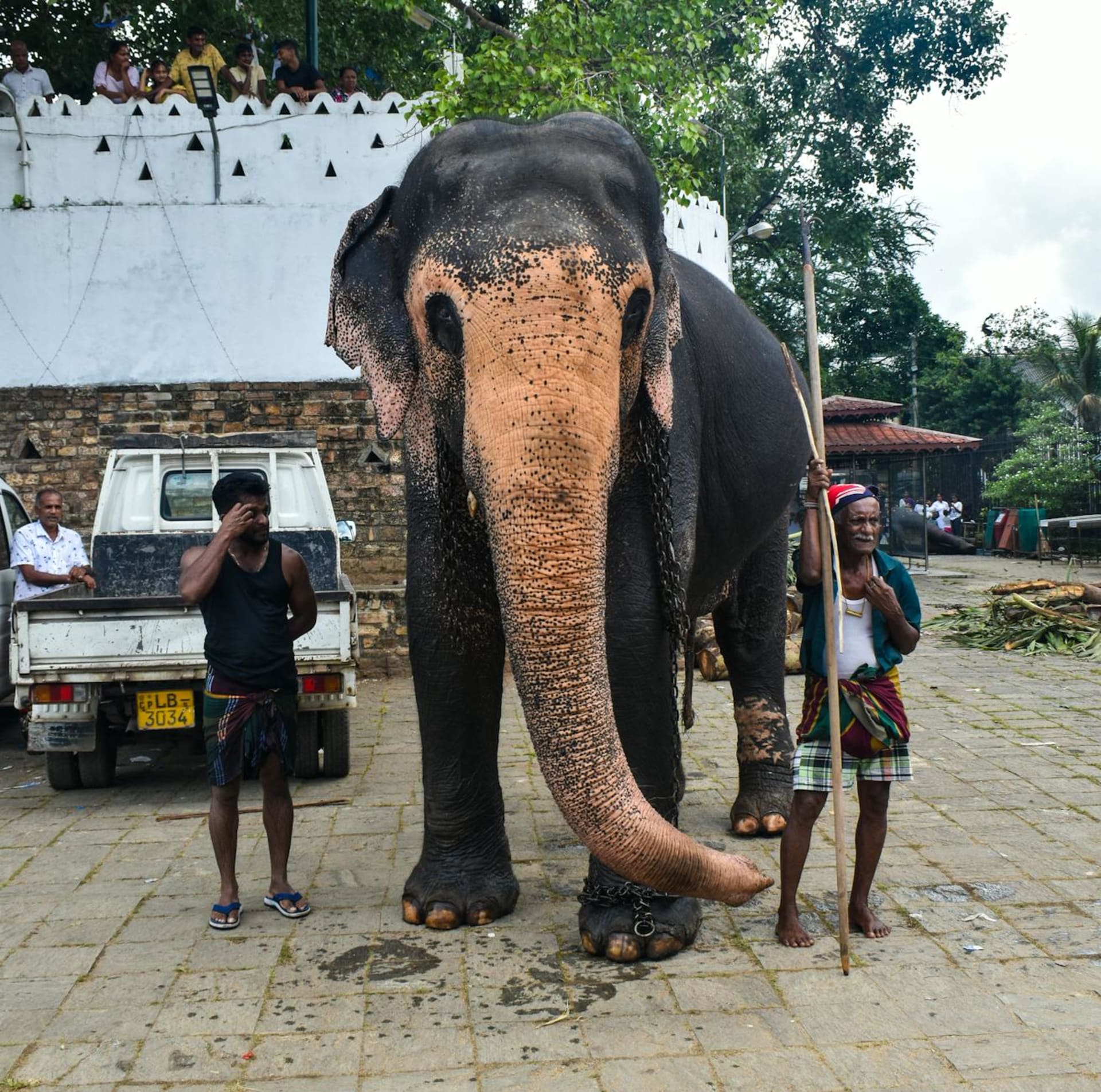
The elephants themselves are dressed in jewelled regalia that catches the light of the gas torches carried by the perahera men — tassels of orange and crimson silk, faceplates of worked gold, headpieces strung with electric bulbs that flicker as the animals walk. One hundred of them, in ten nights of processions. Up close the ground shakes with each footfall. You smell them before you see them: something warm and vegetal and ancient, cutting straight through the woodsmoke and incense.
The Detail Nobody Told Me About
What I hadn’t expected — what no photograph prepares you for — is the human architecture of the thing. Between each elephant contingent come the Kandyan dancers, their headdresses fanning three feet above their heads, their footwork impossibly precise on cobblestones slick with heat and crowd-sweat. And woven between them, almost invisible, are the men carrying the casket replica of the sacred tooth relic itself. The whole procession is a cosmology in motion: sky, earth, the sacred, and the profane moving in the same direction at the same pace.
I ate the wrong kottu roti somewhere near the Natha Devale shrine — too much chilli, clearly a tourist-facing version — and it didn’t matter at all. Nothing felt trivial that night.
After the Drums Stop
By midnight the avenue empties with a speed that feels theatrical. Within twenty minutes of the final elephant passing, the street vendors are folding their carts and the city settles back into something resembling quiet. Lia and I walked the empty stretch of Dalada Veediya alone at half past twelve, still not speaking much. Sometimes a thing asks you to stay inside it a little longer before you reduce it to words.
When to go: The Esala Perahera runs for ten nights each July or August, culminating on the Nikini full moon — the exact dates shift with the lunar calendar, so check the Kandy Maligawa Temple’s published schedule for the year you travel. The Randoli Perahera nights, roughly the final five, are the grandest.