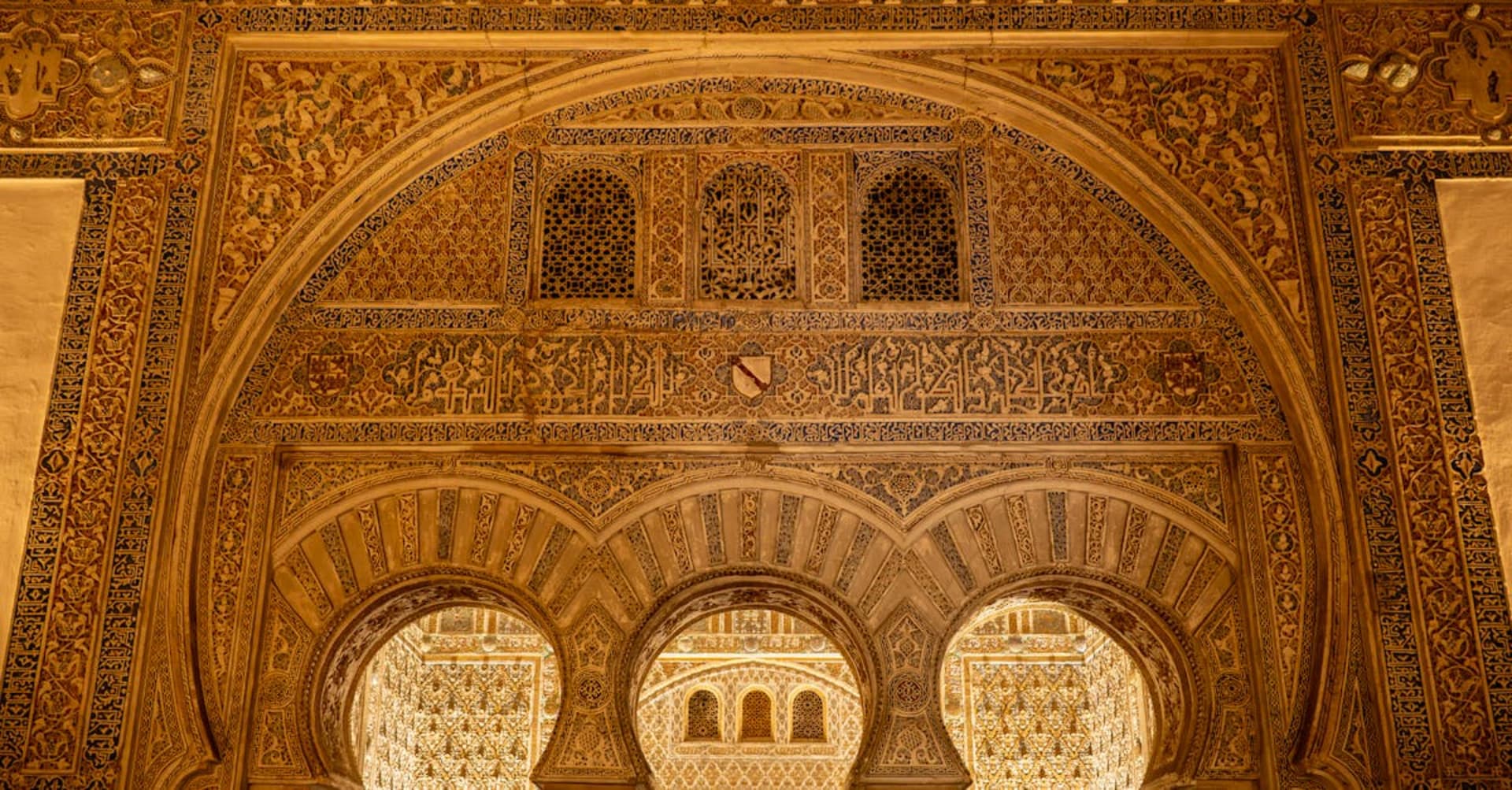
Seville is a city that lives in the senses. The scent of orange blossom in spring, so thick it follows you down every street like a second companion. The sound of palmas — rhythmic handclaps — drifting from a flamenco tablao in Triana at eleven at night. The sight of the Alcázar’s tilework catching afternoon light in patterns that seem to shift and breathe with a mathematical beauty that the Moors understood eight centuries ago and that contemporary architects are still trying to decode. Everything here is slightly too much, slightly too beautiful, slightly too intense — and that is precisely the point. Seville does not believe in restraint. It believes in living at volume.
The Cathedral and the Alcázar
The cathedral is the largest Gothic church in the world — a fact that sounds like a guidebook statistic until you stand inside and feel the scale press down on you. Columbus’s tomb hangs above the nave, carried by four bronze kings. The Giralda tower — originally a Moorish minaret, converted after the Reconquista, its ramp wide enough that a man on horseback could ride to the top — offers a view across the city’s rooftop terrace landscape, a sea of terracotta and white broken by church spires and the glint of the Guadalquivir.
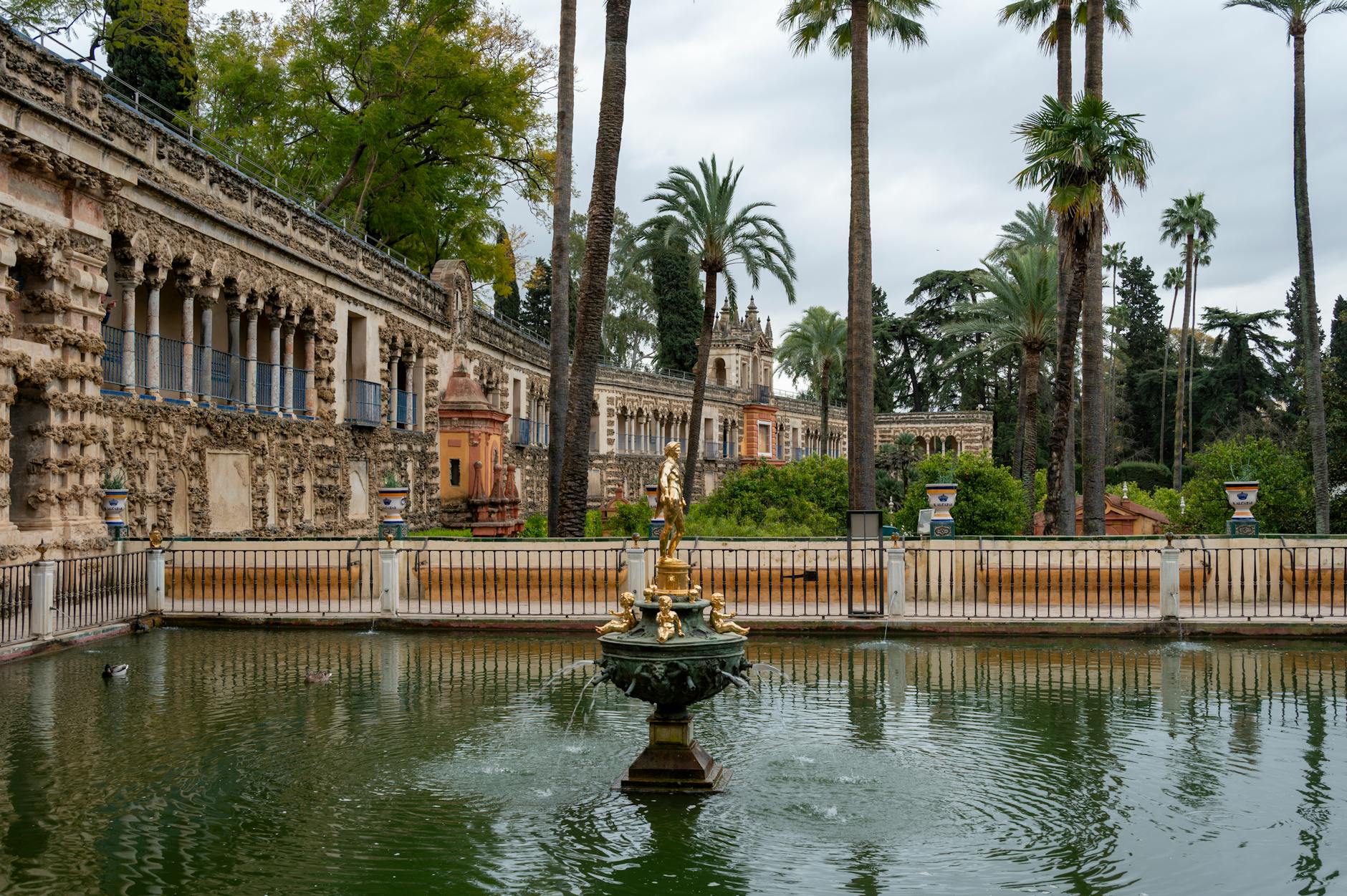
The Real Alcázar next door is where my heart stays. A palace built by Christian kings using Moorish craftsmen, it is a layered masterpiece of mudejar architecture — tilework in blues and greens and golds, carved wooden ceilings, gardens where peacocks strut between fountains and the scent of jasmine is so strong you carry it on your clothes for hours. The Hall of Ambassadors alone, with its cedar dome of interlocking stars, is worth the trip. The gardens are where Game of Thrones filmed its Dorne sequences, and the resemblance to paradise is not accidental — these gardens were designed by people who took the Quranic description of heaven and attempted to build it on earth.
Triana and the Barrios
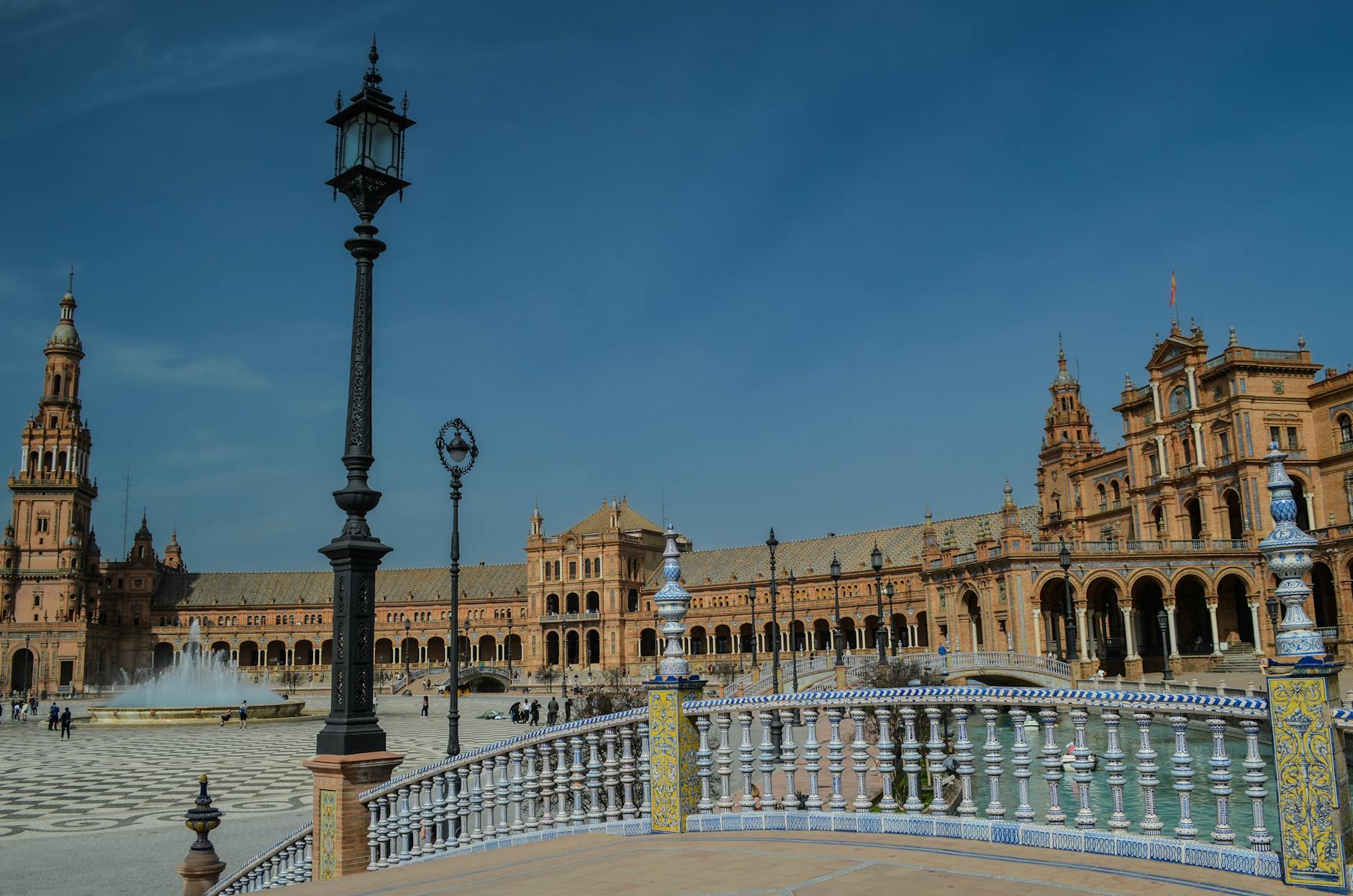
Triana, across the river, is the soul of Seville. Historically the neighbourhood of potters, sailors, bullfighters, and flamenco artists, it retains a working-class pride that the gentrified centre has lost. The ceramic workshops along Calle Alfarería still produce the painted tiles that decorate half the city. The Mercado de Triana, built on the ruins of the Inquisition’s castle, sells produce so fresh the tomatoes are still warm from the field. At night, the bars along Calle Betis face the river and the floodlit Torre del Oro, and the reflection on the water turns the whole scene into something a nineteenth-century painter would have composed if they had been talented enough.
Santa Cruz, the old Jewish quarter, is a labyrinth of flower-draped alleys so narrow you can touch both walls with outstretched arms. The Alameda de Hércules, once rough and now the centre of Seville’s nightlife, is where the evening starts at midnight and the terraces stay full until the light comes back. I sat there once, at three in the morning on a Tuesday, watching a group of university students break into spontaneous flamenco on the pavement — clapping, singing, a girl dancing with a precision and fury that suggested years of practice disguised as impulse. Nobody stopped to watch. In Seville, this is simply what happens.
Semana Santa and the Feria
If you can time your visit for Semana Santa — Holy Week, the week before Easter — you will witness one of Europe’s most extraordinary spectacles. Hooded penitents carry towering pasos, gilded floats bearing statues of the Virgin and Christ, through the streets in processions that last from afternoon until dawn. The atmosphere is not solemn but electric — saetas, improvised flamenco laments, ring out from balconies as the floats pass below, and the city vibrates with a devotion that is equal parts sacred and theatrical. Two weeks later, the Feria de Abril swings the mood entirely — a week of dancing, sherry, and horse-drawn carriages in a temporary city of striped tents where the whole of Seville dresses in flamenco attire and celebrates the act of being alive with a commitment that makes other festivals feel half-hearted.
When to go: March through May for Semana Santa and the Feria de Abril, and for temperatures that allow walking without suffering. October is golden and quiet. Avoid July and August absolutely — Seville regularly exceeds forty degrees Celsius and the city empties except for tourists and the pigeons who pity them.