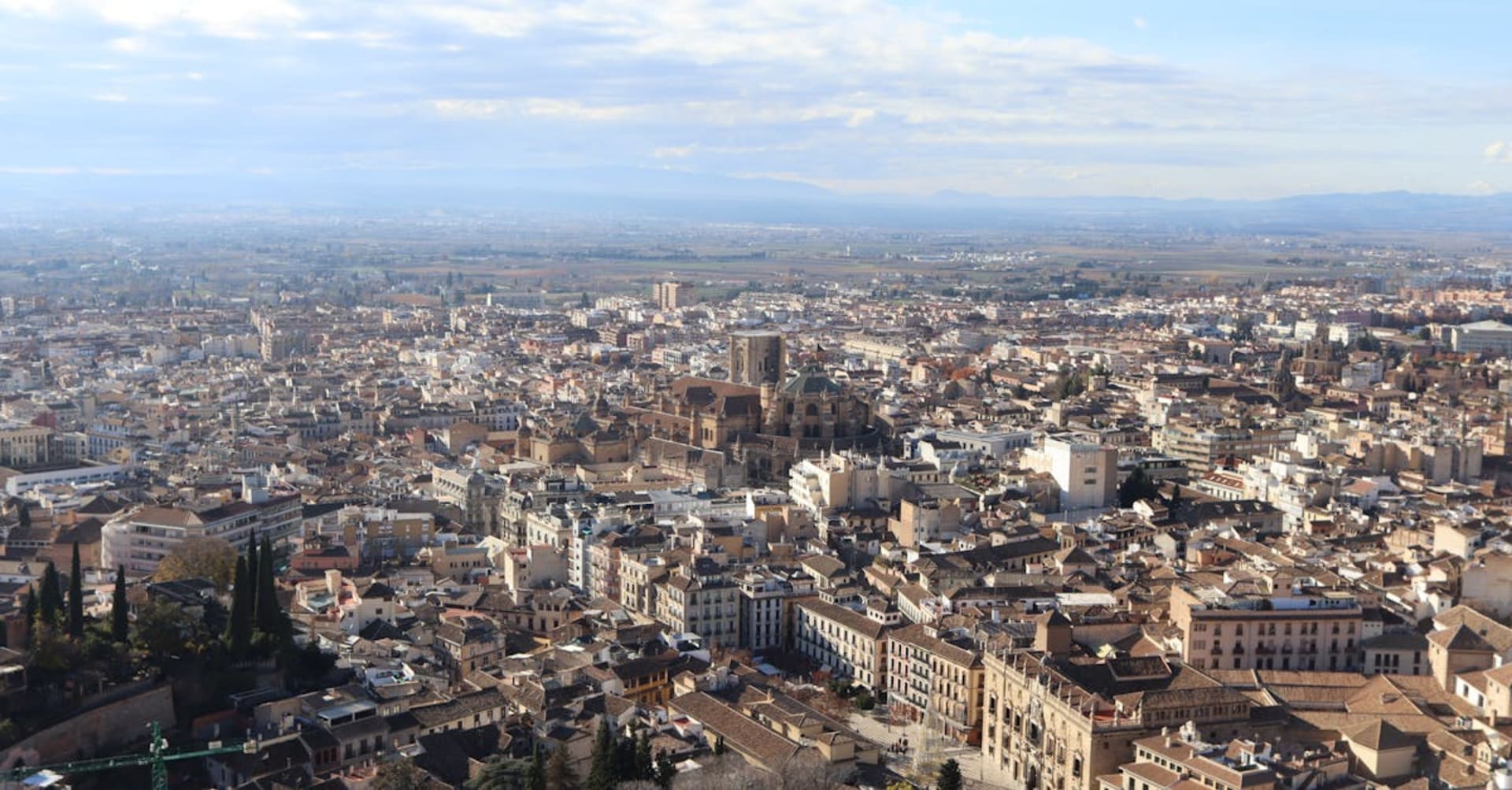
Granada is dominated by the Alhambra — and rightfully so. But the relationship between the city and the palace is more complicated than the guidebooks suggest. Granada lives in the shadow of its most famous building the way a younger sibling lives in the shadow of a prodigy: proudly, but with an insistence on being seen for everything else it does well. And it does many things well. The tapas are free and generous. The university fills the streets with energy. The Albaicín at dusk is one of the most beautiful urban landscapes in Europe. And the Sierra Nevada rises behind everything like a reminder that this city exists at the intersection of the Mediterranean and the mountains, the Moorish and the Christian, the ancient and the stubbornly alive.
The Alhambra
The Nasrid Palaces are among the most beautiful spaces ever created by human hands. I am not being hyperbolic — I have seen the Taj Mahal, the temples at Angkor, the ceiling of the Sistine Chapel, and none of them produce quite the same effect as walking from the Court of the Myrtles into the Court of the Lions in the late-afternoon light. The stucco work on the walls is carved so intricately it seems to breathe — geometric patterns that repeat and evolve and fold in on themselves with a mathematical precision that is also, somehow, sensual. The ceilings are muqarnas, honeycomb vaults that fragment light into a thousand facets, and the sound of water — channelled through every room, every courtyard, every garden — creates a coolness that is both physical and psychological.

Book tickets months ahead. This is not a suggestion but a requirement — the Nasrid Palaces admit a limited number of visitors per half-hour slot, and peak-season tickets sell out within days of release. Go in the late afternoon if you can, when the tour groups have thinned and the light turns the limestone from white to gold. The Generalife gardens above — the summer palace, with its water staircases and cypress-lined walks — deserve an hour of their own. Bring nothing to read, nothing to listen to. The Alhambra asks for your full attention, and it deserves it.
The Albaicín and Sacromonte
Below the palace, the Albaicín climbs a facing hill in a maze of whitewashed houses, tea shops serving sweet mint tea on kilim-covered terraces, and miradores offering views back toward the Alhambra that stop conversation mid-sentence. The Mirador de San Nicolás at sunset is the famous one — and justly so, the view is staggering — but the crowds can be thick. Walk five minutes further to the Mirador de San Cristóbal for nearly the same panorama with a fraction of the people.
The Sacromonte neighbourhood beyond is the traditional home of Granada’s Roma community, where flamenco is performed in candlelit caves carved into the hillside. I went to one of these shows on a Thursday night — not a tourist tablao but a smaller, rougher gathering where the singer was a woman in her sixties who closed her eyes and sang with a pain so genuine it silenced the room. The palmas — the rhythmic handclaps — came from three men who seemed to be holding a conversation with the music rather than accompanying it. This is not the flamenco of the tourist brochures. This is something closer to prayer.

The Tapas Trail
Granada is one of the last Spanish cities where tapas come free with your drink — order a caña of beer or a glass of wine and a plate arrives, unasked, ranging from a simple bowl of olives to a generous portion of migas, or patatas bravas, or a slice of tortilla thick enough to constitute a meal. The result is that every bar crawl becomes an accidental feast. Start on Calle Navas, move to the bars around Plaza Nueva, then climb into the Albaicín for a final glass on a terrace as the Alhambra lights up below. The bill will astonish you — three people can eat and drink their way through an evening for thirty euros, a number that feels like a rounding error compared to Barcelona or Madrid.
When to go: April through June or September through October. Winter brings skiing in the Sierra Nevada, just thirty minutes away — you can ski in the morning and eat tapas in shirt sleeves by evening, a combination that feels like cheating.