The Basque Country does not feel quite like Spain, nor quite like France, nor quite like anywhere else. It has its own language — Euskara, unrelated to any other language on earth, its grammar a puzzle that linguists have spent centuries failing to classify — its own flag, its own weather, and a culinary tradition that has quietly become one of the most celebrated on the planet. I arrived in Bilbao on a rainy September afternoon, and within an hour I was standing at a pintxo bar in the old town eating a salt cod croqueta that was, without exaggeration, one of the finest things I have ever put in my mouth. The Basque Country does this to you. It announces its priorities immediately, and those priorities are food, landscape, and a fierce, quiet pride in being exactly what it is.
Bilbao and the Guggenheim
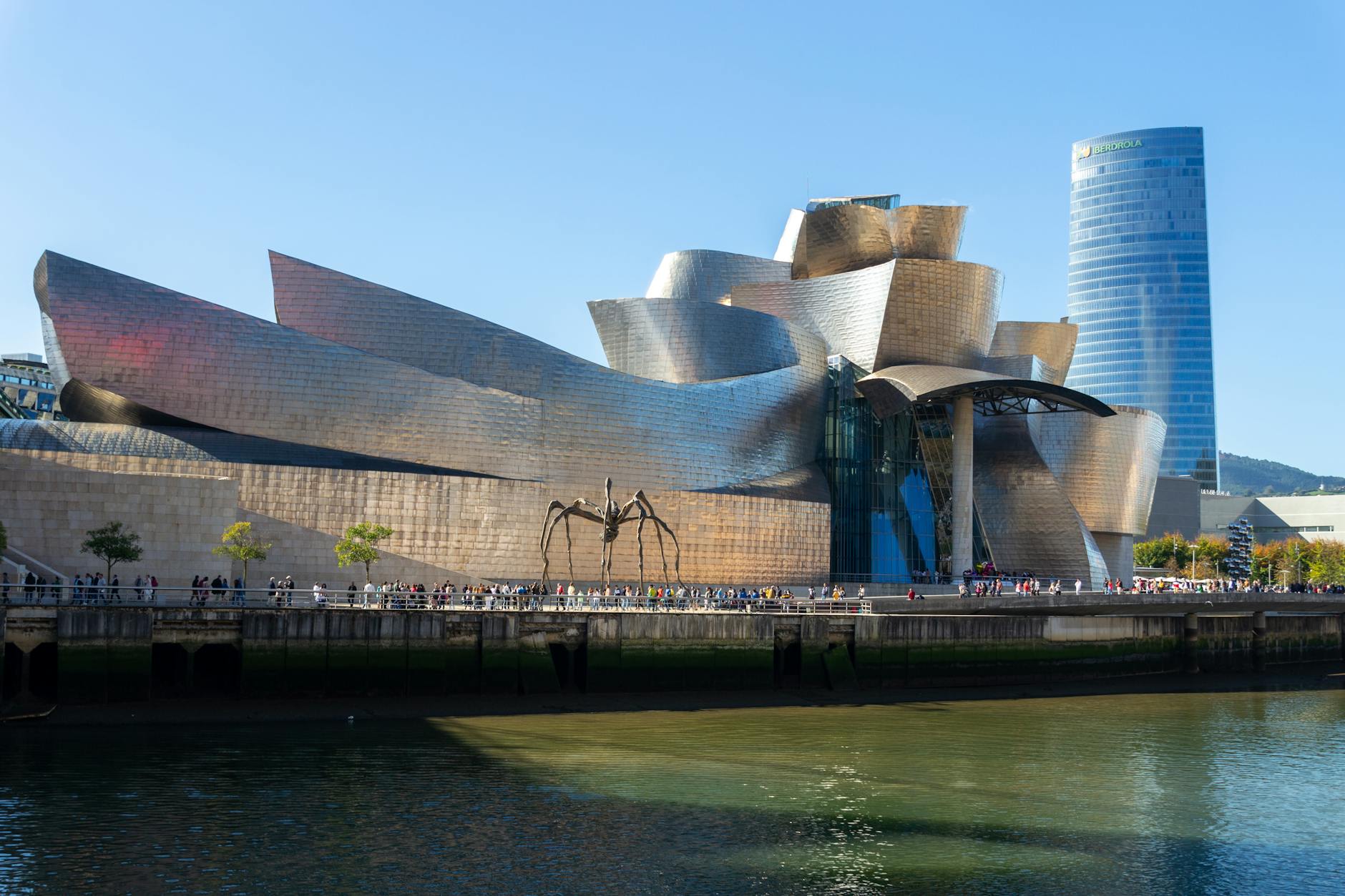
Bilbao was reborn when the Guggenheim arrived in 1997, its titanium curves designed by Frank Gehry to look different from every angle — fish, flower, ship, explosion — and succeeding so completely that the building has become shorthand for the transformative power of architecture. The museum changed an industrial port city into a cultural destination, and the effect is visible in the restaurants, the galleries, and the general confidence of a city that used to apologize for itself and now does no such thing.
But Bilbao beyond the Guggenheim is what I love. The Casco Viejo — the old quarter — is a grid of seven original streets, each named for a trade: Sombrerers (hatmakers), Carnicería Vieja (butchers), Tendería (shopkeepers). The pintxo bars here are serious places where the food on the counter changes every hour and the locals move from bar to bar in a ritual that functions as both dinner and social infrastructure. The Mercado de la Ribera, the largest covered market in Europe, sits on the river and supplies the restaurants with produce that arrives from farms you could drive to in twenty minutes.
The Coast and the Fishing Villages
The real Basque Country lives along the coast, in the fishing villages that cling to the cliffs between Bilbao and the French border. Getaria is where the txakoli vineyards slope down to the sea and the restaurants grill whole turbot over charcoal on the harbour — the fish comes off the boat in the morning and is on your plate by lunch, and the simplicity of the preparation is a form of respect for the ingredient. Mundaka has one of the best left-hand river-mouth waves in Europe, and the surfers here are a quiet, dedicated tribe who sit in the lineup at dawn while the fishing boats head out past them.

Lekeitio is the village I would live in if I could — a working fishing port with a Gothic church, a beach that reveals a tidal island at low water, and a harbour-front bar where the old men drink kalimotxo (red wine and cola, a combination that sounds appalling and tastes inexplicably right) and argue about pelota scores. The interior is all steep green valleys, farmhouses with red shutters, and cider houses — sagardotegiak — where the cider is poured from barrels at great height into your glass and the menu is always the same: salt cod omelette, steak, cheese with walnuts, and as much cider as you can catch.
The Food Culture
I need to be clear about this: the Basque Country has more Michelin stars per capita than anywhere on earth. San Sebastián alone — a city of 180,000 people — holds more stars than cities ten times its size. But the genius of Basque food culture is not in the starred restaurants. It is in the txokos — private cooking clubs, traditionally male-only, where members buy their own ingredients and cook elaborate meals for each other, and where the culture of food as communal act rather than consumer product has been preserved for generations. It is in the pintxo bars where the counter is a gallery of miniature compositions — anchovy on toast with guindilla pepper, spider crab tartlet, idiazábal cheese with quince paste — each one a two-bite argument for the proposition that small things, done perfectly, are enough.
When to go: June through September for the best weather, though rain is always possible — bring a layer. July brings the running of the bulls in nearby Pamplona. October is gorgeous, with the vendimia (grape harvest) in the txakoli vineyards and mushroom season in the interior forests.