Andalucía is the Spain of the collective imagination — flamenco, bullfighting, tapas, Moorish palaces — and the remarkable thing is that the reality surpasses the cliché. I have driven through this region three times, always in spring, always with the windows down and the scent of orange blossom filling the car like a drug you did not know you needed. The light here is different from the rest of Spain — harder, more golden, the kind of light that makes white walls glow and casts shadows so sharp they look painted on the ground. Painters have been coming here for centuries to chase it, and I understand why. It makes everything look like it matters more than it should.
The Pueblos Blancos
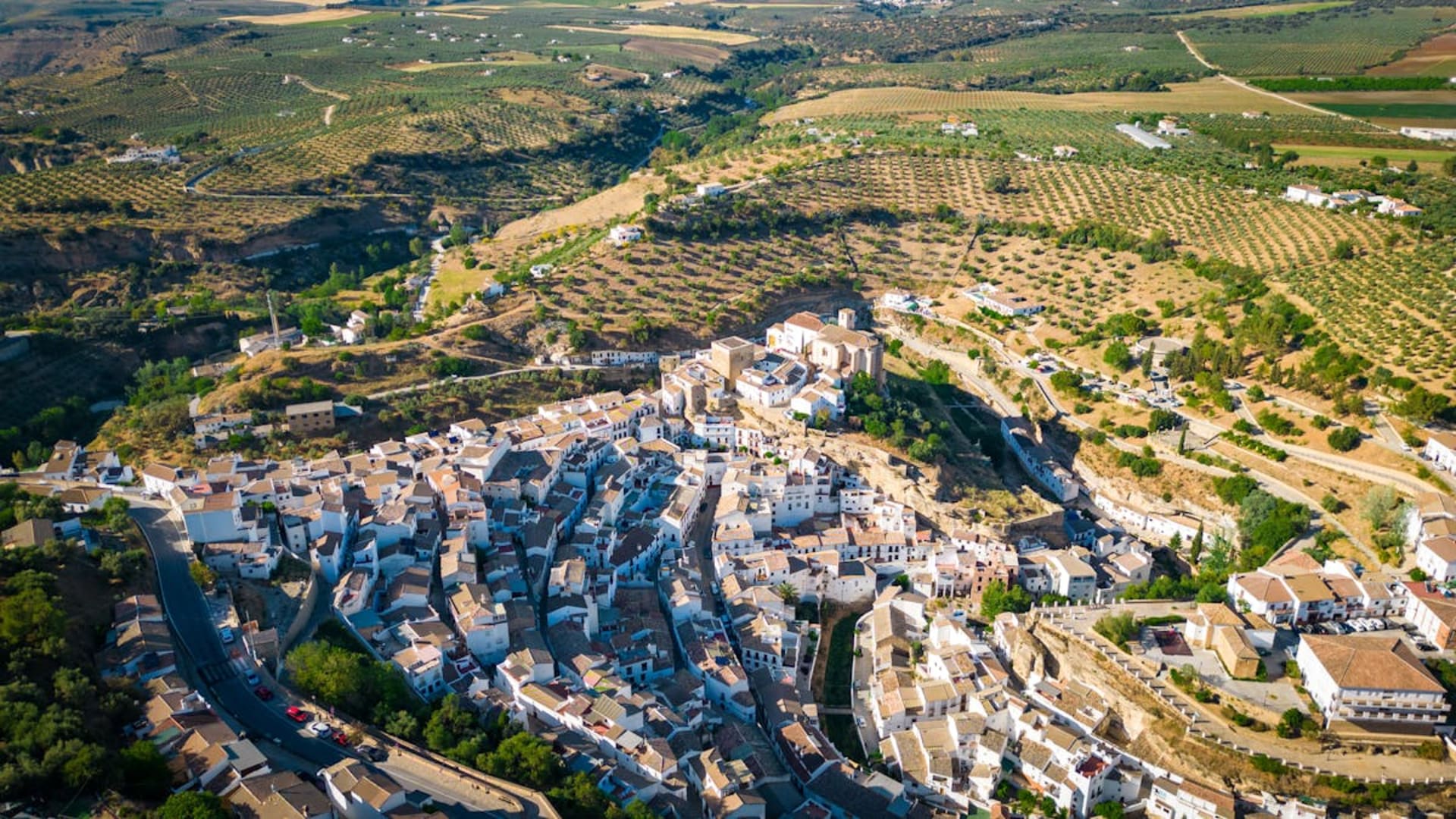
The white villages are what you came for, even if you didn’t know it. They scatter across the hills of the Sierra de Grazalema and the Alpujarras like sugar cubes tossed by a careless god — Ronda perched above its impossible gorge, the Puente Nuevo bridge spanning the gap like a dare; Frigiliana tumbling down a mountainside in cascades of white and cobalt blue; Zahara de la Sierra reflected in its reservoir with a ruined Moorish castle on the ridge above. Each village has a bar in the plaza, and each bar has a terrace in the shade, and each terrace has a view that would cost a fortune in real estate anywhere else but here is simply where people eat their lunch.

The roads between them are the point. You drive through olive groves that stretch to every horizon — Jaén province alone has sixty million olive trees, a number so large it stops meaning anything until you see them, row after row after row, silvery-green under the sun, producing oil so extraordinary that bread becomes a vehicle for it rather than the other way around. Stop at a roadside mill and taste the new-season oil, peppery and bright and green as fresh-cut grass, and you will never buy supermarket olive oil again.
The Coast and the Interior
The coast below stretches from the wild beaches of Cabo de Gata — a volcanic national park where the cliffs are ochre and the water is transparent and the nearest tourist resort feels like another country — to the chiringuitos of Málaga, where sardines are grilled on skewers stuck in the sand and the beer comes in glasses so cold they fog in the heat. The Costa de la Luz, facing the Atlantic, is windswept and unspoiled, a surfer’s coast where Tarifa sits at the narrowest point of the strait and on clear days you can see Morocco.

Inland, Córdoba hides one of the world’s most extraordinary buildings — the Mezquita, a mosque turned cathedral turned architectural palimpsest, its forest of red-and-white-striped arches creating a space that feels infinite and intimate at the same time. I walked through it for an hour and kept discovering new perspectives, new light, new proof that the Moors who built it understood something about space and repetition and the relationship between geometry and the divine that Western architecture has spent centuries trying to recapture.
The sherry triangle — Jerez, El Puerto de Santa María, Sanlúcar de Barrameda — is where fino and manzanilla are poured cold with plates of jamón and the afternoon dissolves into evening without anyone noticing or caring. Sherry is the most underrated wine in the world, and drinking it where it is made, in bodegas that smell of oak and time, is one of those experiences that permanently recalibrates your palate.
When to go: March through May, when wildflowers bloom and temperatures are gentle. Autumn is equally lovely, with harvest festivals and golden light. Avoid July and August in the interior, when Córdoba and Seville regularly hit forty-five degrees and the streets empty by noon.