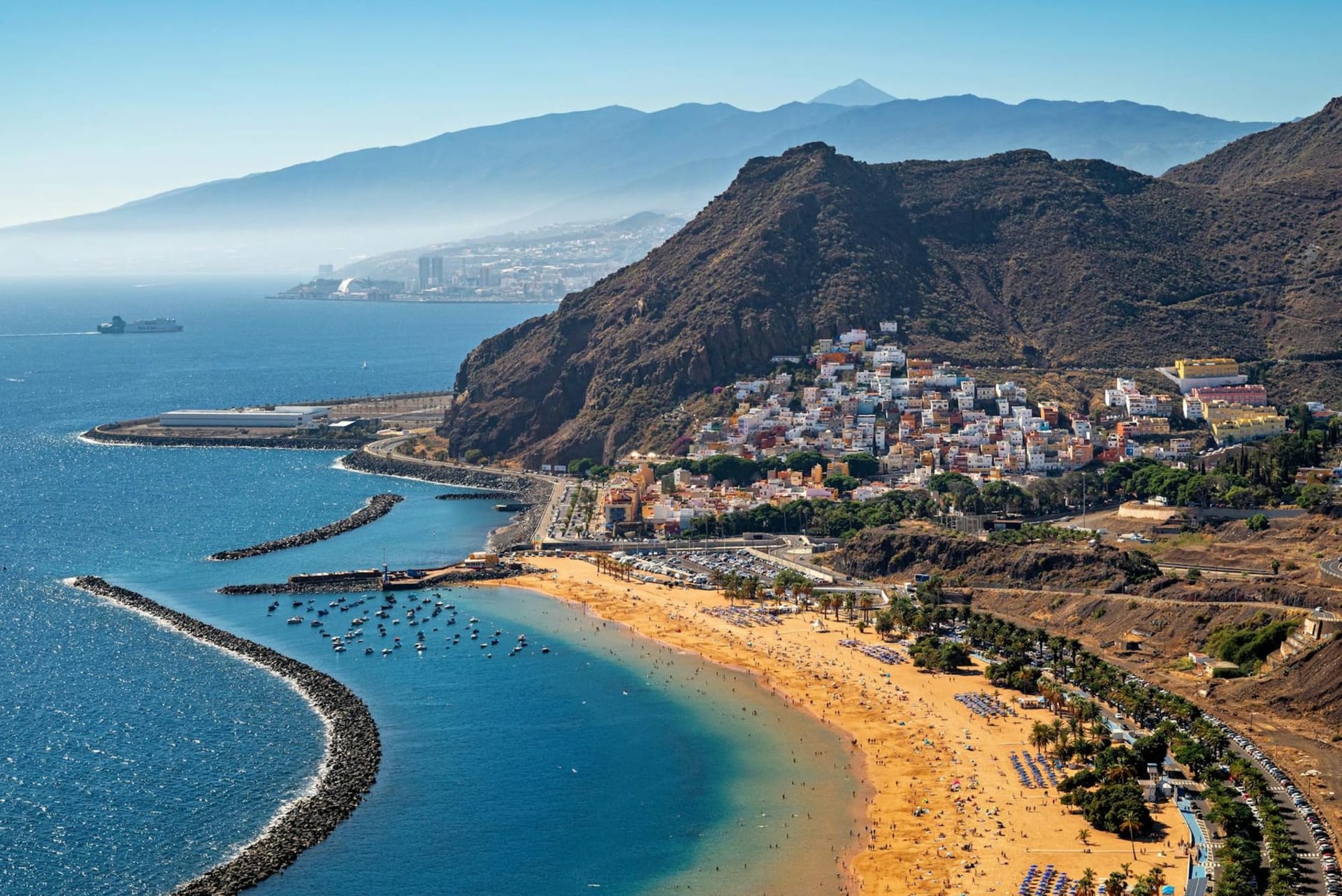
Spain's African archipelago offers volcanic moonscapes, eternal spring climate, and a cultural layering of Guanche, Spanish, and Atlantic influences.
The first thing I noticed flying into Tenerife Sur was that the island looked scorched — not devastated, but sculpted by fire. From the window seat I could see lava fields stretching toward the coast like dried rivers of tar, the earth still carrying the memory of what made it. Africa is only a hundred kilometres away and you feel that in the light: flatter, more ancient, less forgiving than anything on the Iberian Peninsula.
A Mountain That Rewrites the Sky
Lia and I drove up to Teide on our second morning, leaving behind the banana plantations and tourist corridors of the south. The road climbs through pine forest that smells of resin and altitude, then breaks suddenly into a lunar caldera that has no business existing in the middle of the Atlantic. At 3,715 metres, El Teide is the highest point in all of Spain, and standing at the base of the cable car station with the clouds below us and a silence so complete it felt pressurised — I understood why the Guanche people considered this mountain the pillar holding up the sky.
The volcanic soil shifts colour as you walk: ochre, burgundy, ash-grey, a brief impossible green where some stubborn shrub has taken hold. I kept stopping to photograph the same thing, which is the thing about Teide — it refuses to resolve into a single image.
Las Palmas and the Atlantic Creole
On Gran Canaria, Las Palmas gave me something I hadn’t expected: a city that felt genuinely lived-in. The Vegueta neighbourhood, the oldest part of town, has the crumbling dignity of a place that traded with the entire Atlantic world for five centuries. Columbus stopped here on his way to the Americas — his house still stands on Calle Colón, stone and dark wood and an inner courtyard where the air hardly moves.
What surprised me was the food. I’d assumed the Canaries would feel like mainland Spain with better weather. Instead, mojo rojo — that fierce sauce of garlic, cumin, and dried pepper — turned up on everything, and papas arrugadas, tiny salt-wrinkled potatoes, were so simple and so perfect that I ate them three days running without embarrassment. The culinary DNA here is its own thing: Iberian, Guanche, Cape Verdean, all folded together over centuries of port traffic.
The Light at the End of the Afternoon
Late afternoon on Lanzarote, driving north from Arrecife along the LZ-1, the light turns the kind of gold that makes ordinary things look deliberate. Cesar Manrique’s fingerprints are everywhere on this island — the roundabouts, the buildings, the refusal to let a single ugly hotel block the horizon. It works. Lanzarote is the only island I’ve visited where the architecture feels like an argument won.
When to go: The Canaries earn their “eternal spring” reputation most honestly from November through March, when the rest of Europe is grey and the islands sit at a steady 20–22°C. Summer is warm and crowded; spring and autumn are quieter, with the eastern islands drier and the western ones greener after winter rains.