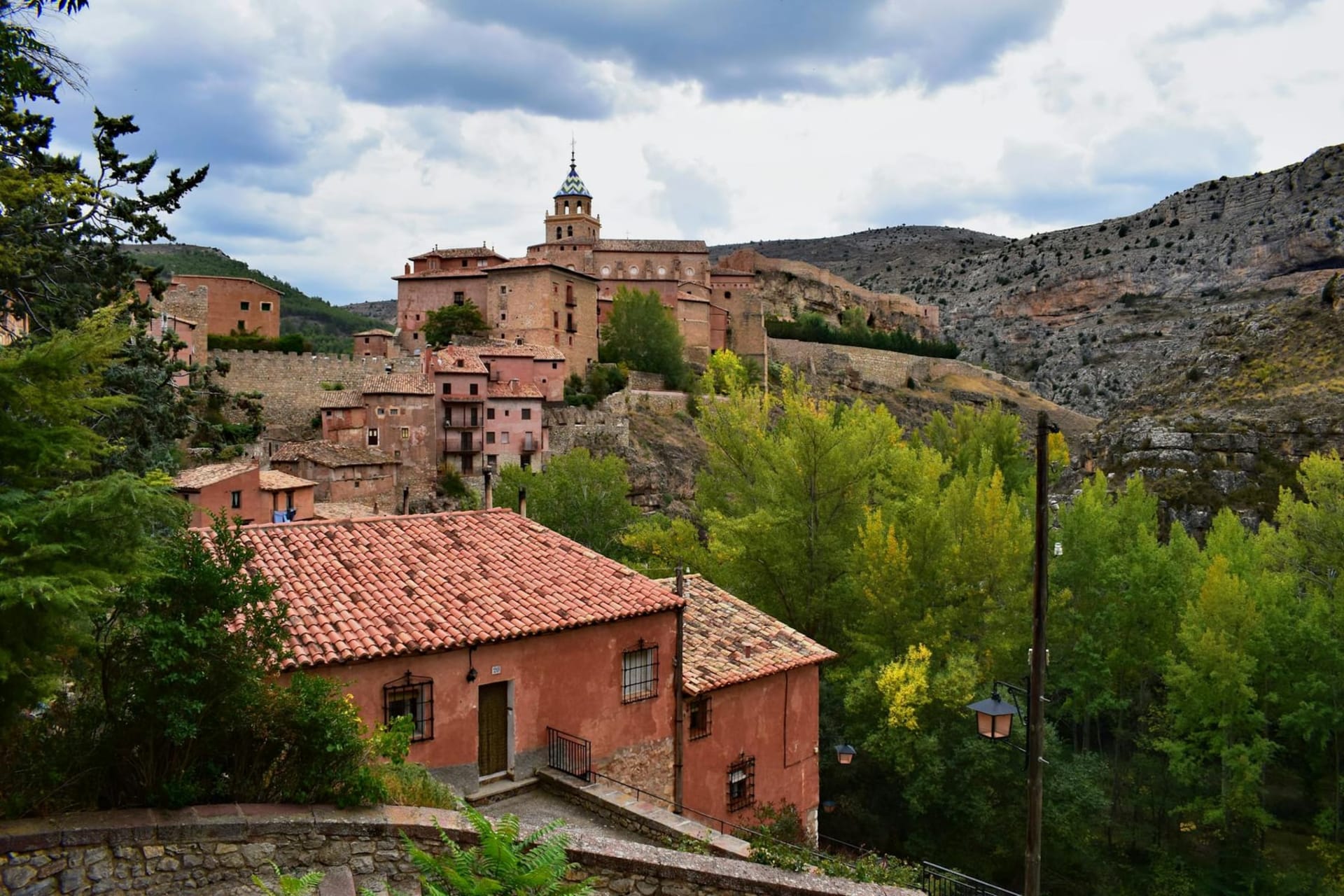
Pink-red medieval walls clinging to a cliff loop in Aragon, considered the most beautiful small town in Spain by those who find it.
We arrived in Albarracín on a Tuesday, which I now understand is the correct day to arrive. The parking lot at the base of the hill held four cars. By the time we climbed the cobbled slope into the old quarter — past the Portal de Molina, through the gate that has stood since the eleventh century — the town felt less like a place we had found and more like a place that had been waiting, quietly, for someone to bother showing up.
The Color of the Walls
Nothing prepares you for the specific color of this place. I had seen photographs, but photographs collapse it into something generically pretty. In person, the walls of Albarracín read as ochre in morning light, terracotta by noon, and something close to dried blood at sunset. The stone was quarried from the cliffs immediately behind the town — the same reddish limestone that forms the gorge of the Guadalaviar river below — so the buildings seem less constructed than secreted, extruded from the rock like a geological event rather than a human one.
The old medina layout is still legible under eight centuries of Christian overlay. The streets bend and narrow the way Moorish streets do, designed for shade and defense rather than procession. On Calle de la Catedral, I spent ten minutes watching how the light moved across a single facade, the way the shadows shifted with the precision of a sundial.
Jamón and the Unexpected Staircase
Lia found the restaurant by accident — she had ducked into what looked like a doorway to escape a brief rain and discovered it was actually the entrance to Rincón del Chorro, a small place carved into the rock wall itself. We ate migas with jamón serrano and a local wine from Teruel, and the owner, without being asked, brought out a plate of tortas de Albarracín, the dense anise-scented biscuits made by the convent at the edge of the old town. I had not known they existed until that moment. They tasted of something between a cookie and a ceremony.
The genuine surprise came later, climbing toward the Torre del Andador — the watchtower at the crest of the walls — when a section of the rampart opened onto a balcony I had seen on no map. The entire river loop was visible below: the Guadalaviar curling around the base of the cliff like a moat nature had arranged by itself. I stood there long enough that Lia had to come back and find me.
Getting There, Getting the Timing Right
Albarracín sits forty kilometers west of Teruel. There is no train. A car is necessary, and the drive through the sierra is itself a reason to go.
When to go: Late April through June for wildflowers in the gorge and empty streets; late September into October for the warm amber light and harvest-season food. Avoid August entirely — the town’s capacity for charm is real but finite, and July and August test it badly.