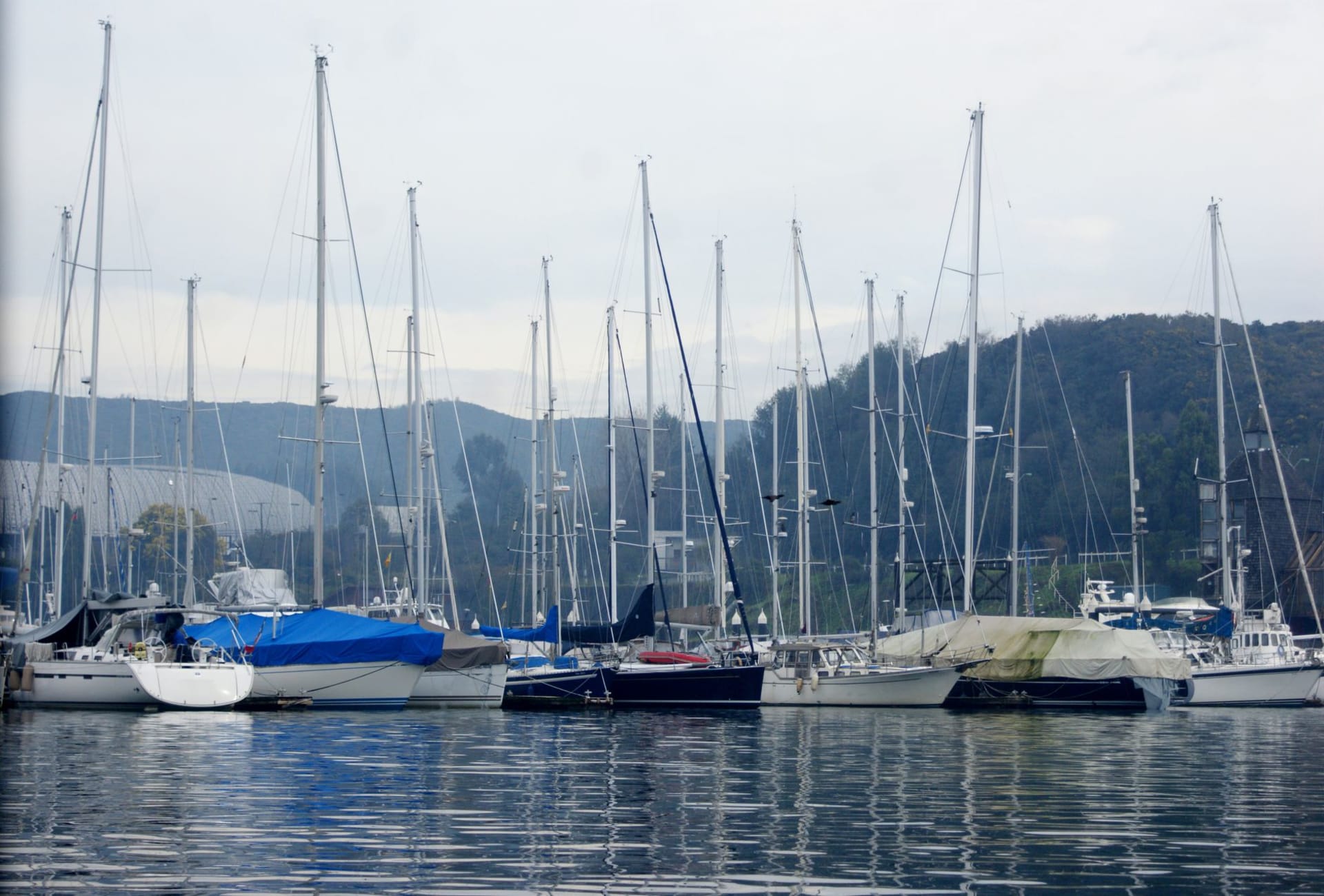
Puerto Montt
"Every serious journey south passes through Puerto Montt. That's not a compliment to Puerto Montt, but it's not not one either."
Gateway Logic
Puerto Montt has the particular energy of a city that knows what it’s for. It’s the end of the Pan-American Highway, the northern terminus of the Carretera Austral, the starting point for the Navimag ferry through the fjords to Puerto Natales, and the largest city in the Chilean lake district with about 250,000 people. It moves fast, it smells of the sea and the processing plants, and it has the functional intensity of a place where people are constantly arriving from somewhere and leaving for somewhere else.
Lia and I spent three nights here at the beginning of a longer trip south, which is more than most travelers allocate, and I’d argue it was the right call. The city rewards slowing down slightly — not to the pace of a destination chosen for itself, but to the pace of someone who is actually looking at where they are rather than treating it as a transit point.
The Angelmó Fish Market
The Angelmó neighborhood at the western end of the waterfront has a fish market that functions simultaneously as a working commercial operation and an unintentional performance of everything that’s specific about this coast. The morning is the time to go: stalls selling locos (Chilean abalone), piures (sea squirts), sea urchins, merluza, congrio, salmon, and a dozen things I couldn’t identify, all on ice with the specific smell of very cold, very fresh ocean. The market women — mostly women — work with a speed and efficiency that implies they are not interested in theatrical displays of hospitality, but they’ll answer questions about what something is and how to cook it if you ask them directly rather than photographically.
Behind the fish stalls, the food court does cheap and excellent lunches: chupe de jaibas (crab gratin), ceviche with local machas (razor clams), and caldillo de congrio — the fish and potato soup that Pablo Neruda wrote an ode to and that justifies the poem once you’ve eaten it. I came back twice.
Volcán Calbuco and the Surrounding Landscape
On clear days — and they occur, though the lake district has a reputation for cloud — the volcán Calbuco is visible from the city: a near-perfect conical stratovolcano that erupted explosively in 2015, its plume visible from Argentina. The volcano sits within visual range across the Reloncaví Sound and gives Puerto Montt’s harbor views a specific drama that compensates for the city’s general industrial character. The Reloncaví Estuary south of the city has excellent salmon and mussel aquaculture operations visible from the shore — the fjord geography of this coast makes it ideal for mariculture, which is visible everywhere and which the locals discuss with a mixture of economic pride and environmental ambivalence.
The town of Puerto Varas, 20 kilometers north on the shore of Lago Llanquihue, is the architecturally more polished neighbor — a lakeside resort town built by German settlers in the late 19th century, with chocolate shops and craft beer and a straight sightline to the volcano Osorno. It’s worth a day trip for the lake views and for the contrast: Puerto Varas self-consciously performs Bavarian heritage while Puerto Montt has no heritage to perform and doesn’t try.
The Navimag Departure
The Navimag ferry sails from Puerto Montt to Puerto Natales through 1,460 kilometers of Chilean fjord system — a four-night journey through channels, past glaciers, across the Golfo de Penas (which lives up to its name when the weather is bad), and into Magallanes. I’ve done the trip and I’d do it again: it’s slow, the food is functional rather than inspired, the lower deck cabin is exactly as small as it sounds, but the scenery through the channels is continuous and extraordinary and you spend hours on deck watching the coast change from forested fjord to glaciated Patagonian landscape. Booking in advance is essential in the summer season.
When to go: Puerto Montt itself operates year-round as a functional city. For travel connections — the Navimag ferry and the Carretera Austral — October through March is the practical window. The lake district around Llanquihue and Todos los Santos is most appealing November through March for hiking and water activities.