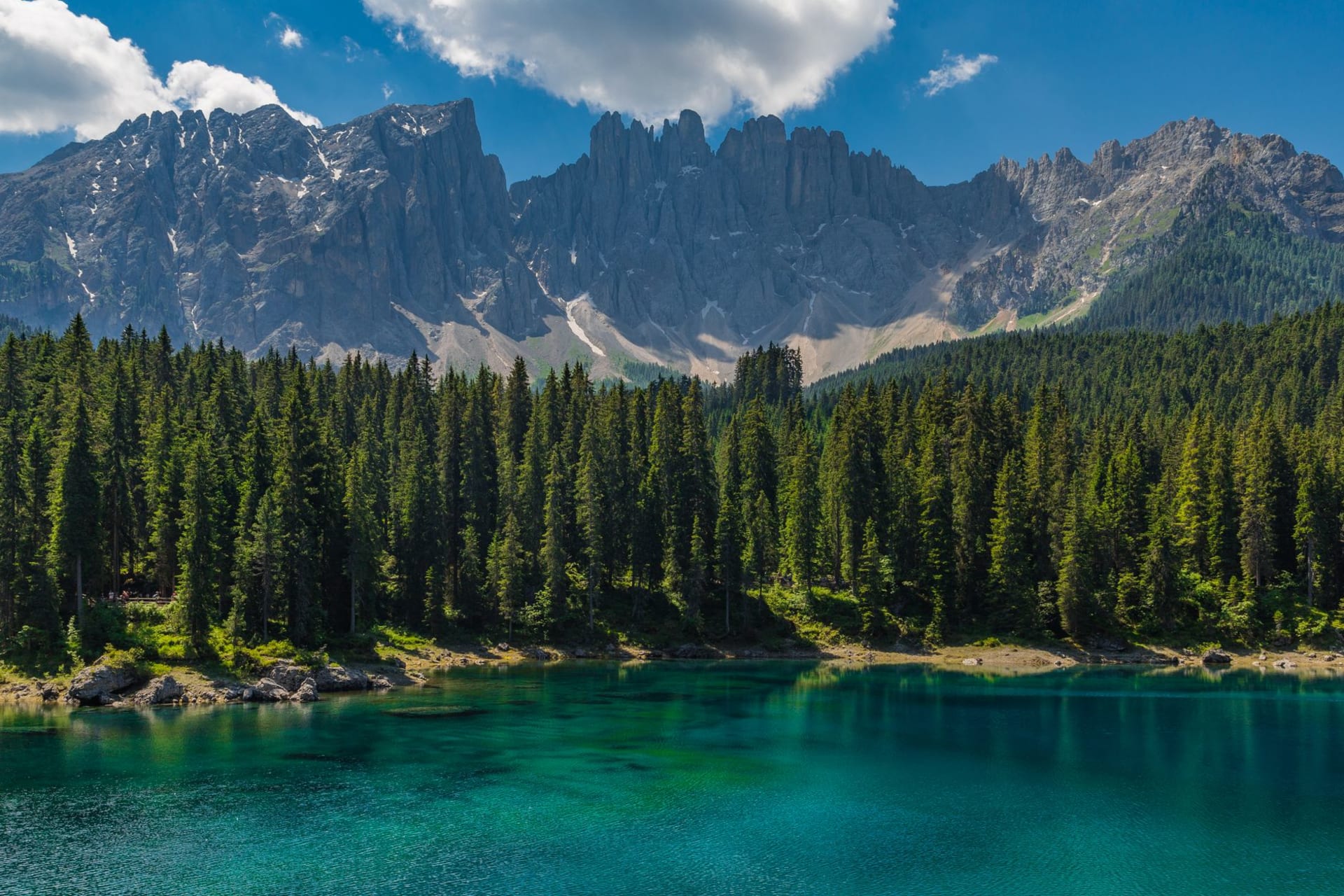
Lago di Carezza
"I have seen lakes that photograph well and disappoint in person. This one does the opposite, somehow."
I will admit I went to Lago di Carezza braced for disappointment. It is one of those places that has been photographed to death — the rainbow-coloured water, the perfect mirror of the mountains — and I have learned to distrust any view that fits neatly onto a postcard. We drove up from Bolzano on the road toward the Costalunga Pass, Lia navigating, the spruce forest thickening around us, and parked in a lot already half-full of tour coaches at ten in the morning. My expectations sank accordingly.
The Colour Is Real
Then you walk through the little tunnel under the road, the trees part, and — annoyingly, gratifyingly — the colour is real. Lago di Carezza is small, you can stroll its whole perimeter in twenty minutes, but the water is a green I genuinely struggle to describe: emerald shading to turquoise where it deepens, so clear that the submerged tree trunks and pale stones on the bottom seem suspended in coloured glass. Behind it, across the surface, the bare grey towers of the Latemar massif stand reflected with a stillness that feels staged but is not.
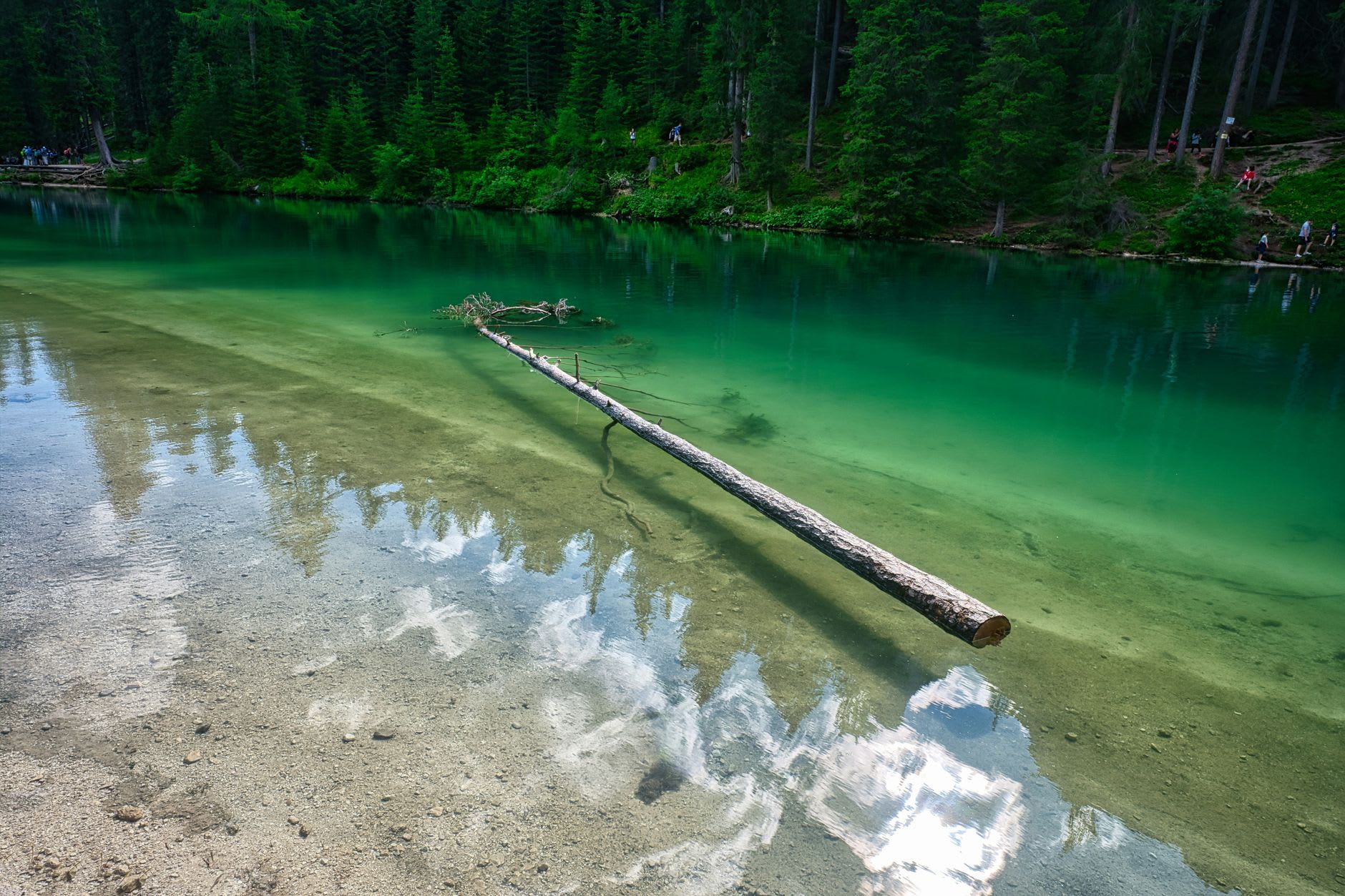
Lia, who has a deep suspicion of beauty that performs for cameras, went quiet, which from her is the highest praise. We did the loop slowly, against the flow of the tour groups, and found that the crowds thin remarkably the moment you put thirty metres of path between yourself and the main viewpoint. By the far end we had a stretch of railing entirely to ourselves and stood there long enough that a couple of coal tits came down to investigate Lia’s pockets.
The Legend and the Light
The local Ladin legend explains the colour better than geology does. A sorcerer, smitten with a water nymph who lived in the lake, tried to lure her out with a rainbow flung across the water. When she fled instead, he shattered the rainbow and threw the broken pieces into the lake — which is why the water holds every colour at once. I am not a romantic about much, but standing there in shifting cloud-light, watching the green deepen and brighten as the sun came and went, I found the legend more useful than any explanation involving mineral suspension and water depth.
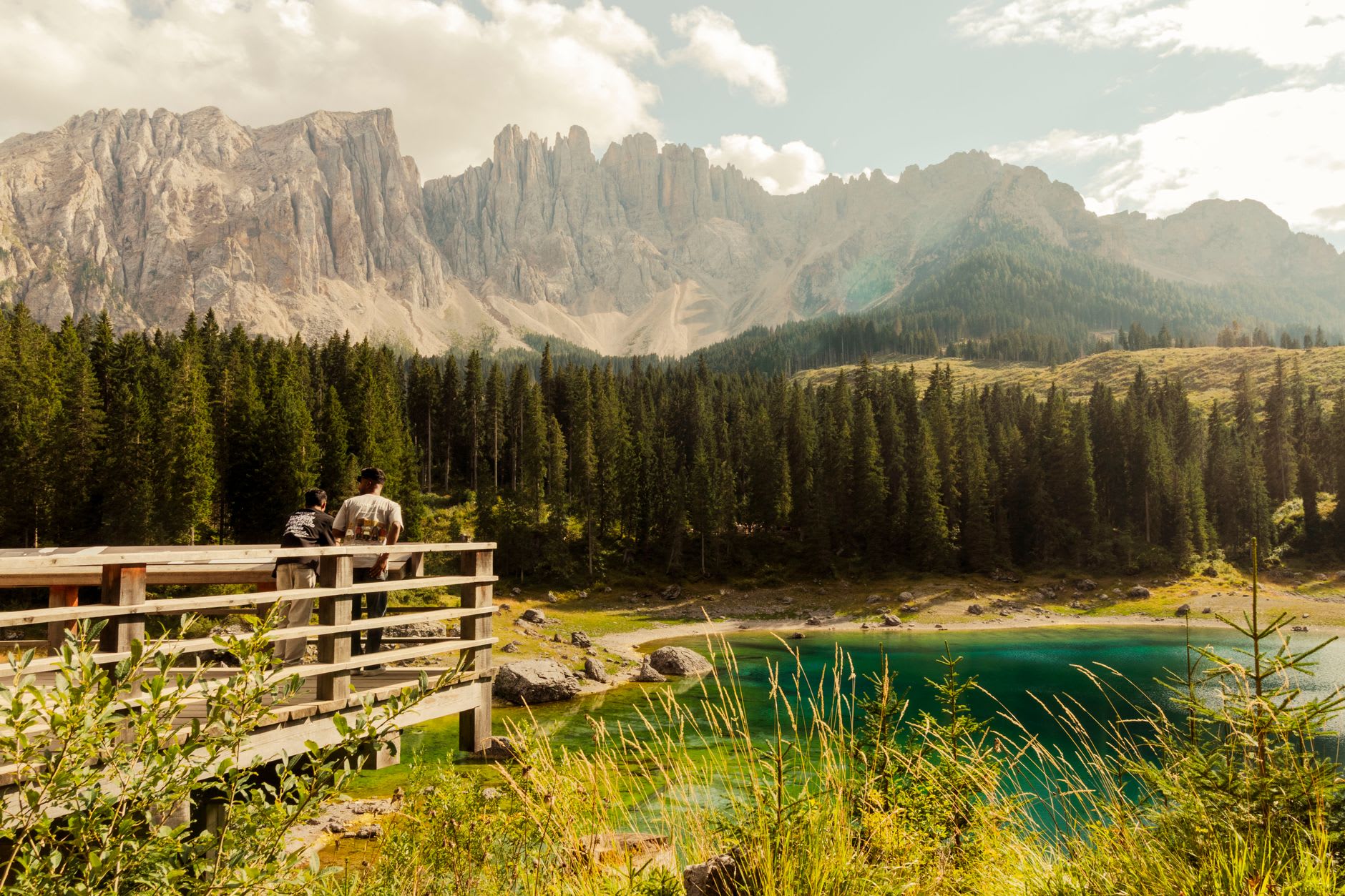
A word of honest advice: the lake itself takes half an hour, no more, and you cannot swim or even get down to the water — it is fenced for conservation, and rightly. Treat it as a stop rather than a destination. We paired it with a walk up toward the Latemar foothills afterward, and the combination — quick jewel of a lake, then real mountain air and effort — felt about right. Going only for the lake and leaving feels a little hollow; the Dolomites reward those who linger.
When to go: Late spring through autumn, early morning before the coaches arrive, or the golden hour before they leave. The water colour is most vivid under bright but not harsh light. In winter it often freezes and the road conditions can be serious — check before driving the pass.