The City That Can’t Decide — and Doesn’t Have To
Bolzano confused me pleasantly from the first hour. The street signs are doubled — Italian above, German below — and the menus follow suit. I ordered a Weißwurst in a café where the barista pulled espresso with the precision of a Milanese, and nobody found this strange. The city sits at the confluence of three valleys and the convergence of two cultures, and rather than picking a side it has spent centuries getting comfortable with the contradiction.
The arcaded streets — the Lauben — run through the old center in covered corridors wide enough that you can walk in January rain without an umbrella. Under them, butchers sell Speck in vacuum-sealed bricks, wine shops lay out bottles of Lagrein and Gewürztraminer grown on the slopes just visible from the end of the street. I spent a morning moving from one shop to the next, getting progressively slower and more decisive about nothing.
Ötzi, Up Close
I went to the South Tyrol Museum of Archaeology mostly because I felt I should. I left two hours later genuinely moved, which I hadn’t expected. The Iceman — Ötzi, found in 1991 in a glacier near the Austrian border — lies in a refrigerated chamber viewable through a small porthole. You queue, you lean in, you look at a man who was murdered 5,300 years ago and whose last meal was red deer and einkorn wheat. He had 61 tattoos. He was 45 years old.
The museum contextualizes everything they’ve found: his copper axe, his grass cape, the arrowhead lodged in his left shoulder. It’s not sensationalized. It doesn’t need to be.
Wine Country in the Shadow of the Alps
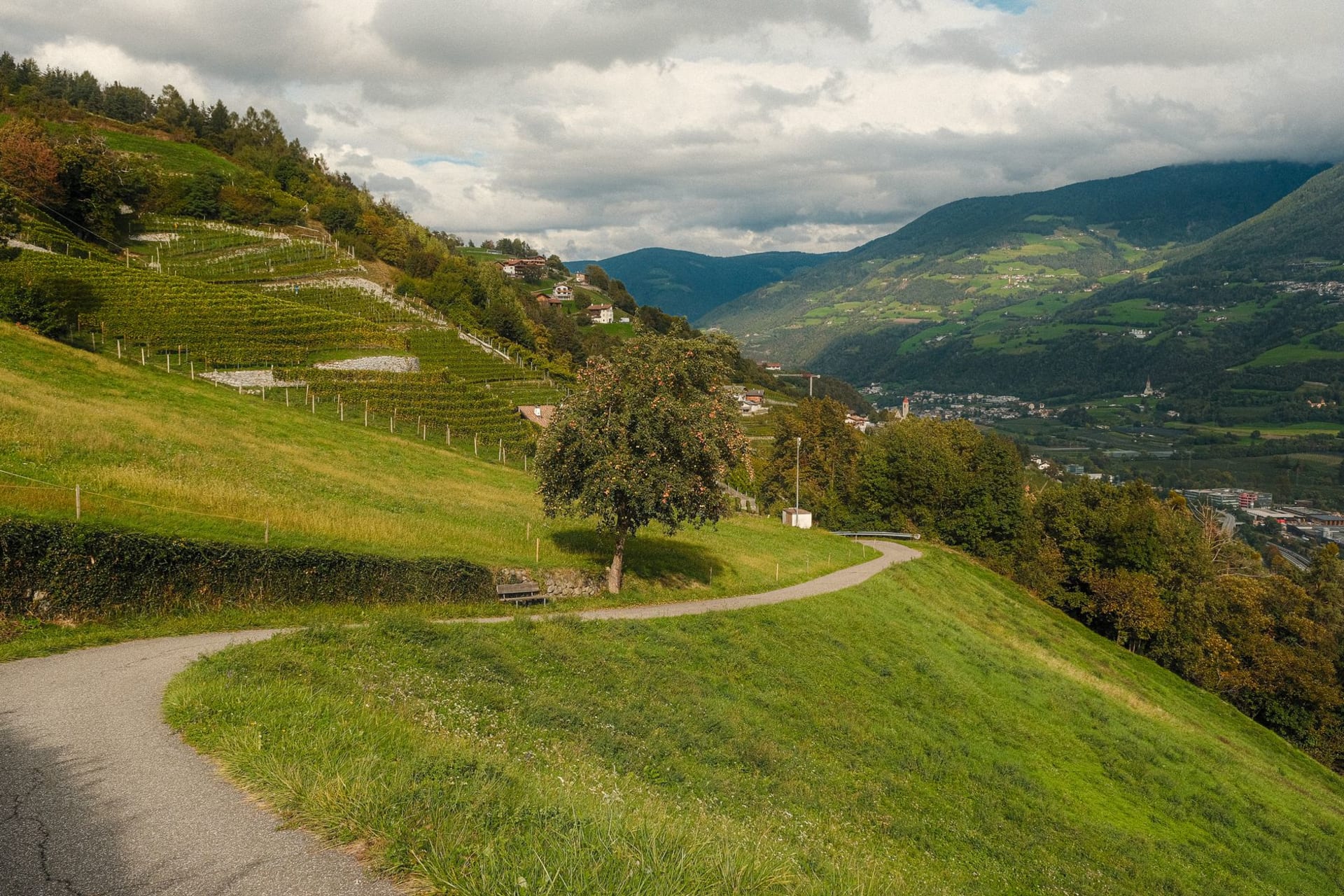
The Bolzano wine scene operates on a scale I didn’t anticipate. The Lagrein grape — dark, slightly smoky, structured — grows almost nowhere else on Earth, and the Kellereien (wine cooperatives) in the surrounding villages produce it in quantities that suggest nobody here is keeping it a secret. I took an afternoon bus south toward Caldaro to follow the South Tyrolean Wine Road and tasted my way through four cellars before admitting that three was probably the right number.
The vineyards climb steep terraced hillsides. In October the foliage goes gold-red against white limestone walls. A Gewürztraminer nose — lychee, rose petal, white pepper — is a specific thing, and it smells like nothing else.
The Market and the Morning
The Friday market at Piazza delle Erbe sells produce from the surrounding valleys: tiny potatoes, thick-skinned apples in varieties I’d never seen, dried mushrooms from the Dolomites, fresh pasta from women who’ve clearly been making it longer than I’ve been alive. The air smells of roasting chestnuts and cold stone. I bought a wedge of aged mountain cheese and ate it standing up with a small glass of Vernatsch from a stall that didn’t have chairs.
It’s the kind of market that makes you want to have a kitchen nearby.
When to go: Late April through June for mild weather and pre-summer crowds. October is spectacular — harvest season, wine festivals, and the first snow on the peaks above the city. Avoid August if you dislike crowds; the city fills with German tourists escaping the heat.