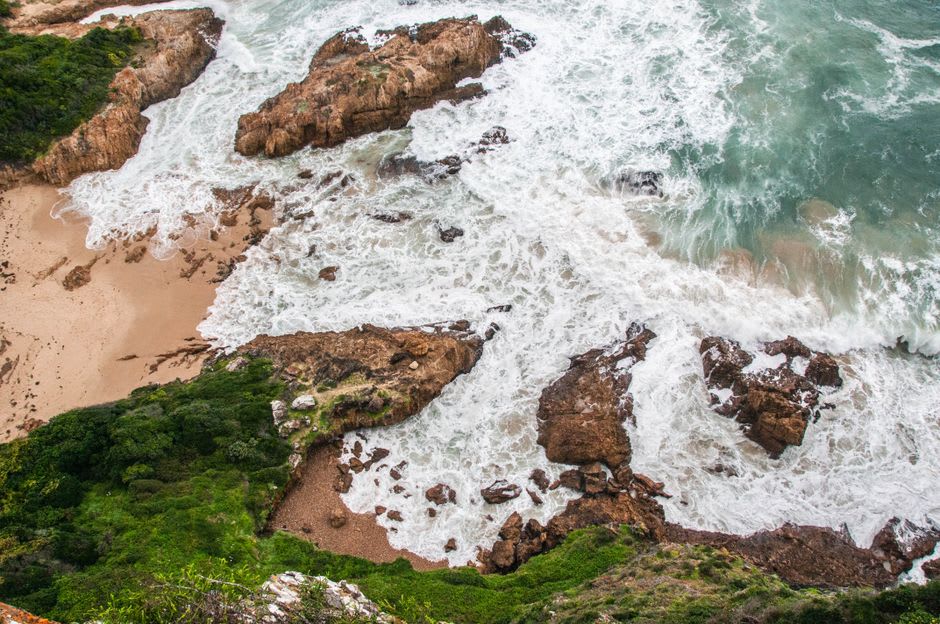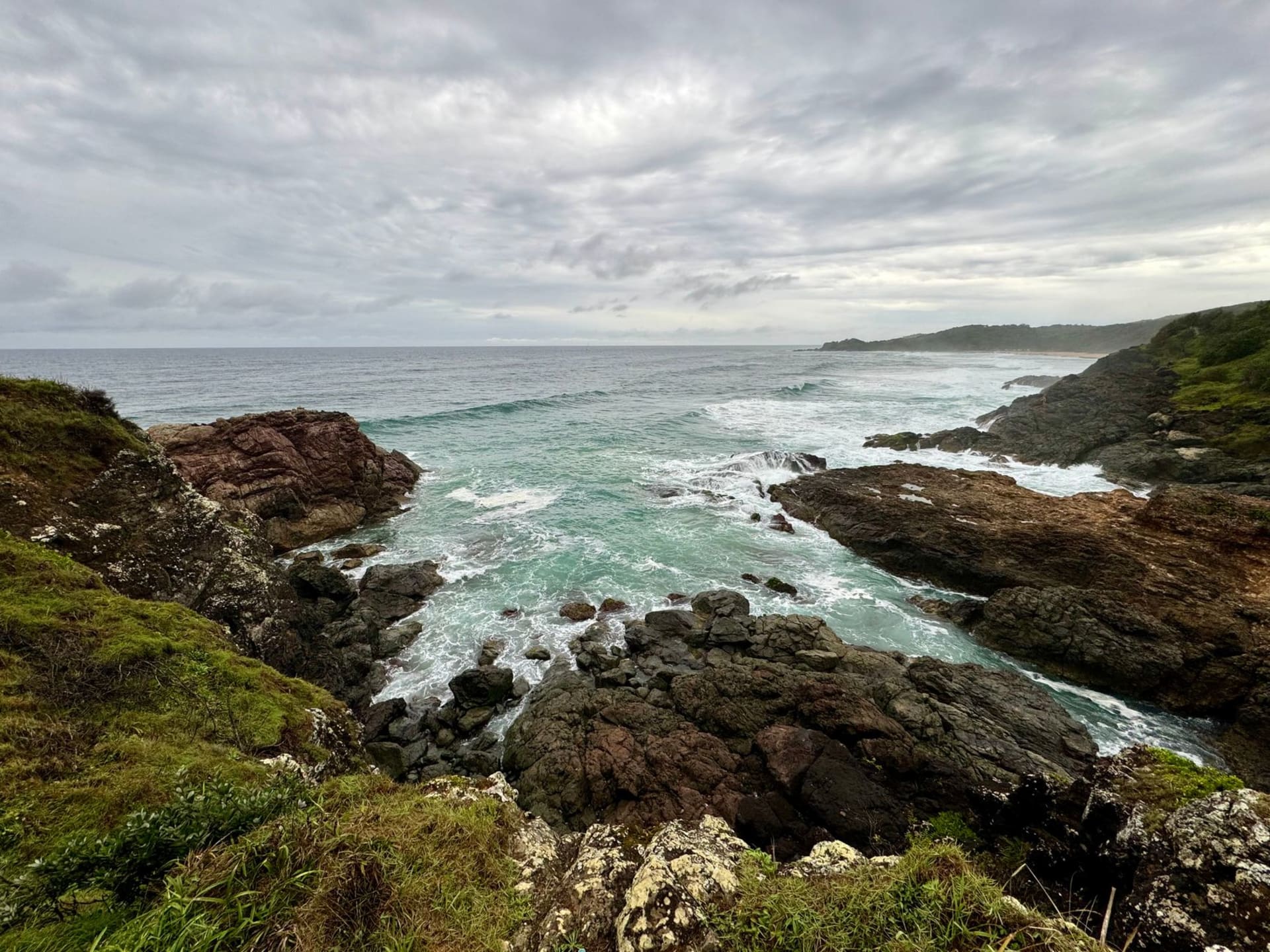
Untamed cliffs and green hills meeting a fierce Indian Ocean — Nelson Mandela's ancestral homeland.
There is a road in the Eastern Cape that stops being a road and becomes a suggestion. Past the last painted line, past Kokstad and the turn-off to Lusikisiki, the N2 gives way to something unmapped in the useful sense — tracks through grassland, cattle wandering across the tarmac with the unhurried authority of landowners. This is where the Transkei begins, and where I understood, for the first time, that South Africa is not one country but several pressed together at the seams.
The Sound Before Anything Else
We heard the Wild Coast before we saw it. Lia and I had pulled over near Coffee Bay to read a hand-painted sign — distances to Durban and East London scrawled in white on a piece of corrugated iron — and that’s when it arrived: a low, continuous thunder from somewhere below the hill. Not a single wave, but the sum of all waves, the ocean working itself against cliffs that have never once yielded. We walked to the edge and stood there longer than I can account for. The water was an impossible green, the kind that belongs to cold nutrient-rich currents. The Hole in the Wall — a massive free-standing cliff arch a few kilometers south — frames the sea like a portal someone bored through the rock for the specific purpose of humbling visitors.
On the Road and Off the Plate
The village of Coffee Bay is the closest thing to a hub out here, and it operates on a schedule governed by the tides and nothing else. I ate grilled crayfish at a plastic table outside a shebeen with no name visible on any sign, just a hand-lettered sheet of paper in the window listing what was available that day. It came with pap — thick maize porridge that Xhosa families have eaten in this valley for centuries — and a chili sauce that left a slow burn behind the ears. There was cold Castle Lager and a view of the Bomvu River mouth where it spreads into the sea in a fan of brown sediment. That meal cost almost nothing and I think about it constantly.
An Unexpected Quiet
The surprise was not the landscape, which I had braced for. It was the silence between settlements. Driving the coastal track from Bulungula toward Mngazana, I passed three hours without phone signal, without advertising, without the ambient noise of any economy operating at speed. A boy no older than ten walked alone along the track carrying a stick and a small bag, going somewhere with total certainty. The hills were so green they looked digital. The Indian Ocean stayed loud in the middle distance. I had expected drama. I hadn’t expected the particular peace that comes with it.
When to go: May through September offers dry, clear days with cooler temperatures ideal for coastal hiking and birdwatching along the mangrove estuaries. Avoid December and January when the rough dirt tracks flood and summer rains make the backcountry roads genuinely impassable.