A cable car climbing 1,000 meters above Lake Bohinj to a ski station turned summer viewpoint, where the whole Julian Alps range spreads out at once.
We’d spent two days walking around Bohinj at water level, and it was Lia’s idea to see it from above instead. The Vogel cable car station sits a short drive from Ribčev Laz, at the lake’s eastern end, and the ride up is short — about six minutes — but it reorders your sense of scale almost immediately. Lake Bohinj, which had felt substantial from the shore, shrinks into a slim green-blue ribbon within the first minute of ascent.
A Ski Station in Summer Clothes
Vogel is primarily known as one of Slovenia’s larger ski resorts, and in July the empty chairlifts and closed rental huts give the upper station a slightly off-season feel — like arriving at a beach town in winter. But the hiking infrastructure more than compensates. From the top cable car station at around 1,540 meters, marked trails fan out toward the Vogel summit itself and toward a handful of viewpoints that don’t require any real climbing to reach.
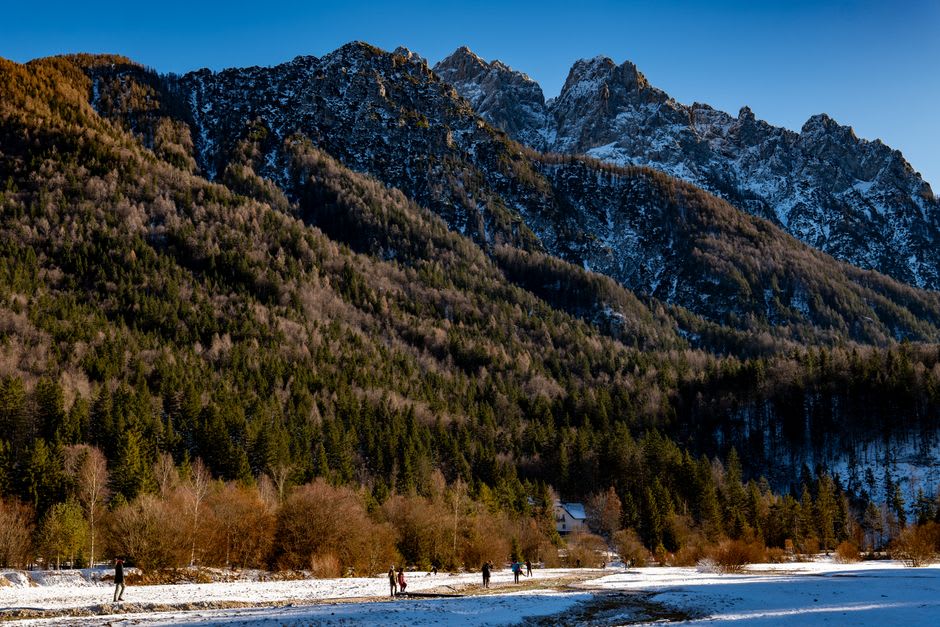
The View That Explains Everything
From the ridge just above the station, the panorama opens onto the entire Bohinj basin and, further north, the jagged wall of the Julian Alps including Triglav itself on a clear day. It’s the kind of view that makes you understand a region’s geography in one glance rather than in the accumulated pieces you’d gathered from ground level over the previous days. I could trace the road we’d driven in on, the trailhead to Savica, even the rough line of the Voje Valley — all of it suddenly legible from above.
Cows, Mostly
The upper meadows around Vogel are grazing land for cattle in summer, and we spent a good ten minutes waiting out a small herd that had decided the marked trail was theirs. There’s a working alpine dairy hut near the ridge selling fresh cheese and yogurt, which felt like the correct reward for the modest walking we’d done, and we sat on a low stone wall eating both while a cowbell orchestra played somewhere just out of sight.
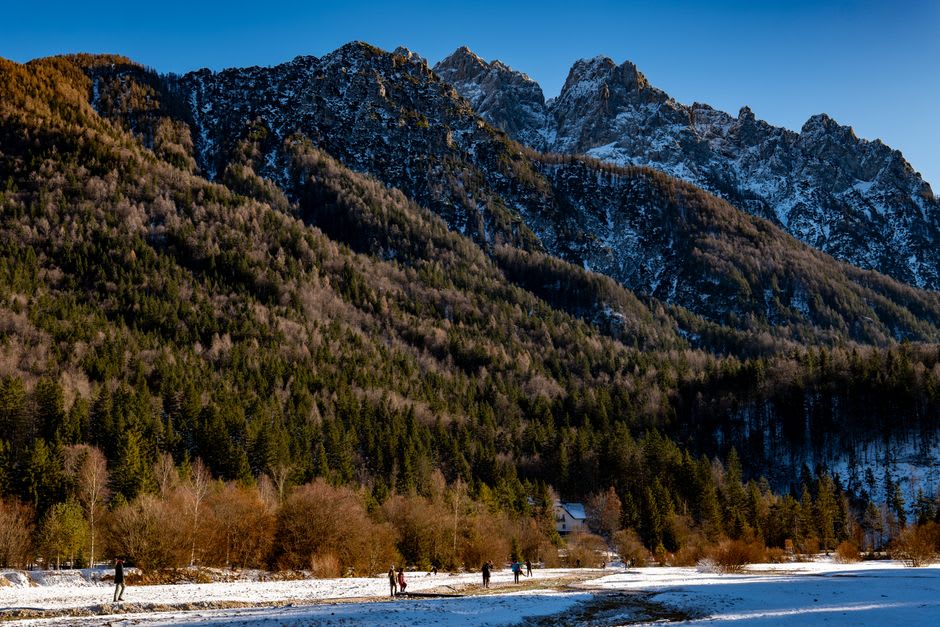
When to go: June through September for hiking and the clearest mountain views; the cable car also runs in winter for skiing, but the summer trails and dairy huts are closed by then. Aim for a clear morning — cloud tends to build over the peaks by early afternoon.
Keep exploring
More from Slovenia
 slovenia
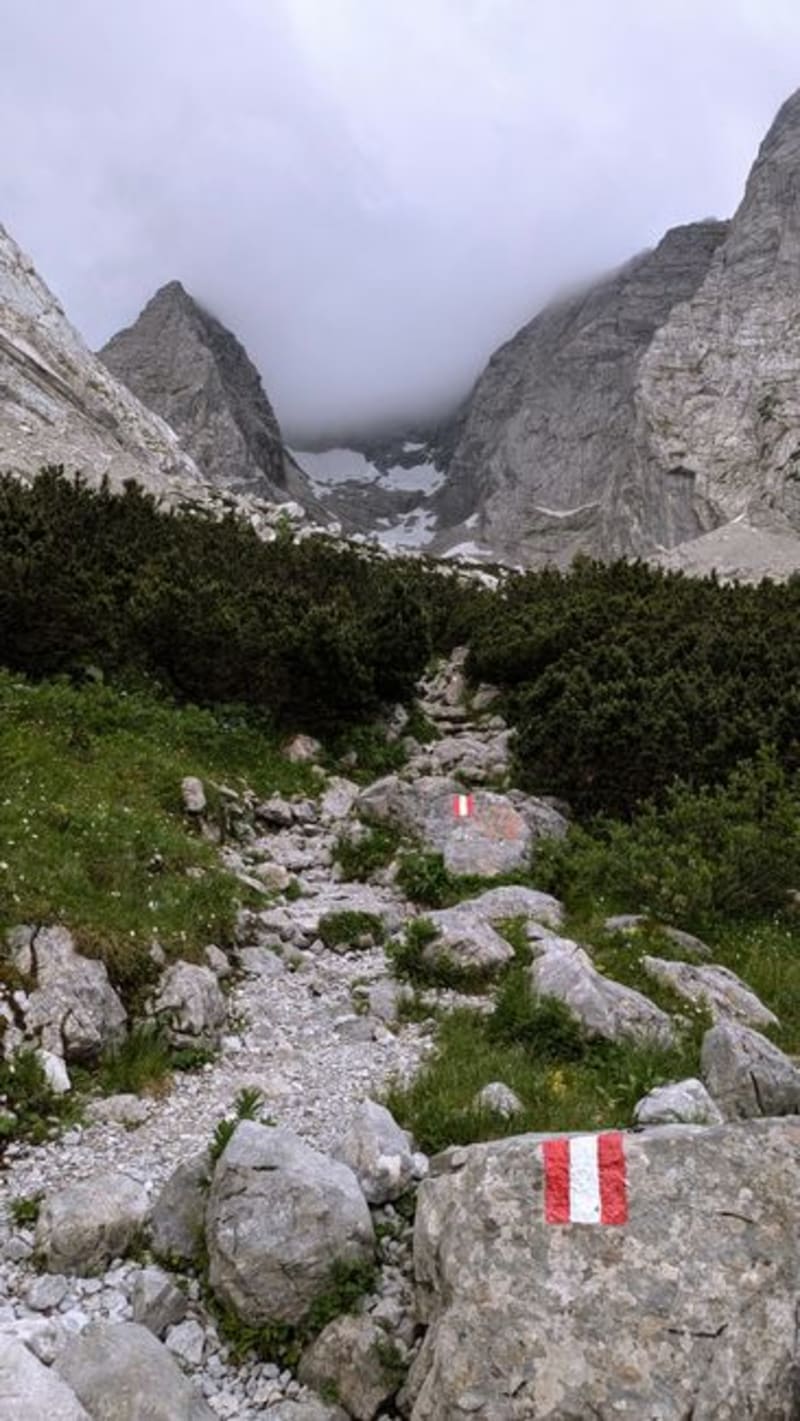
 Vršič Pass
Fifty hairpin turns over the highest road pass in the Julian Alps, built by Russian prisoners of war and driven today for the view, not the destination.
Explore slovenia
 Žužemberk
A ruined medieval fortress rebuilt after wartime destruction stands guard over the Krka River in southern Dolenjska, one of the region's most photogenic and least-crowded castle ruins.
Explore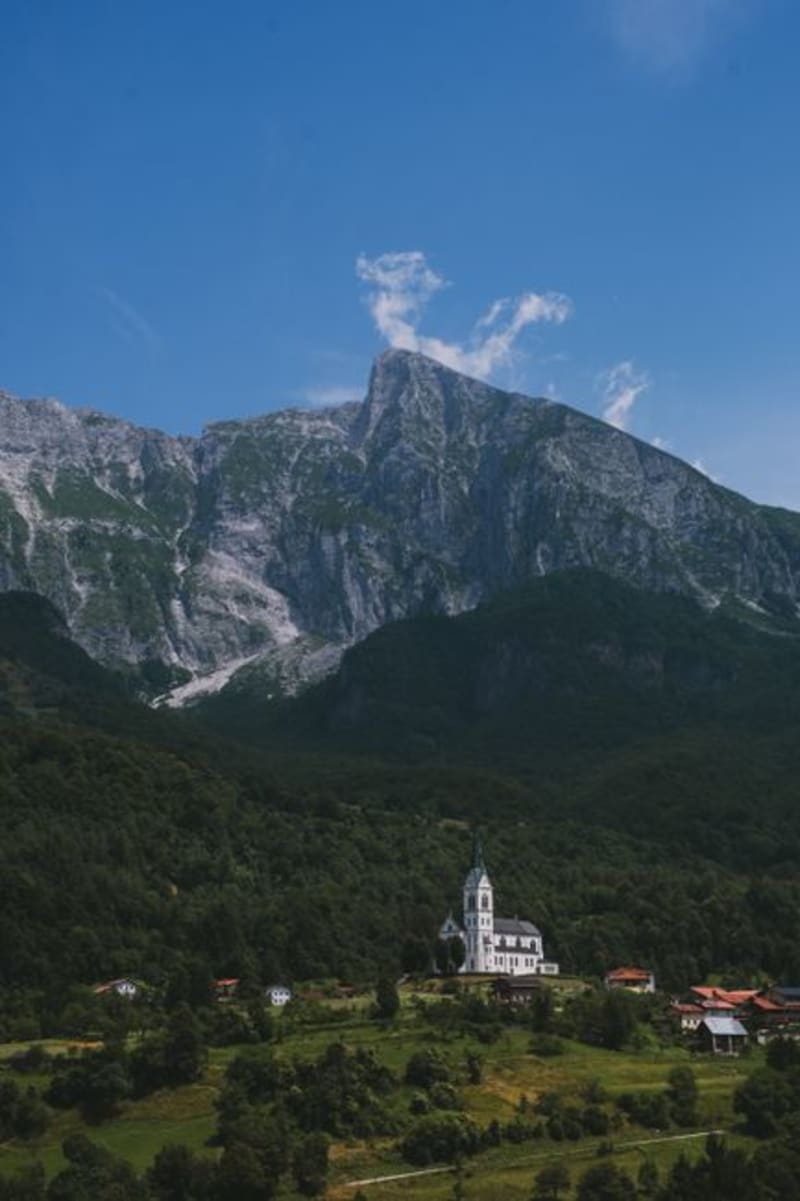 slovenia
 Ankaran
A sleepy former monastery town at the northern edge of the Slovenian coast, with the country's best sandy beach and almost none of its tourist traffic.
Explore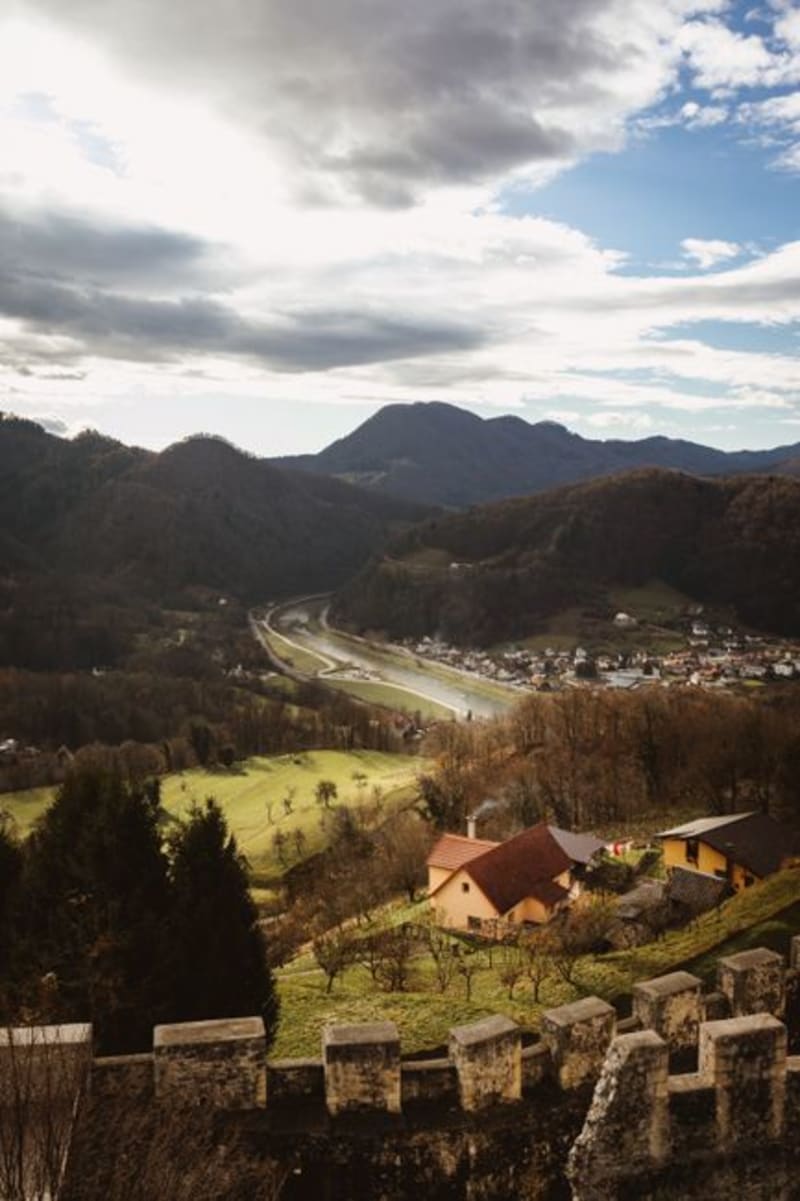 slovenia
 Bela Krajina
Slovenia's southernmost, sunniest, and most overlooked wine region, where the Kolpa river forms a natural border with Croatia and traditions survive that vanished everywhere else generations ago.
Explore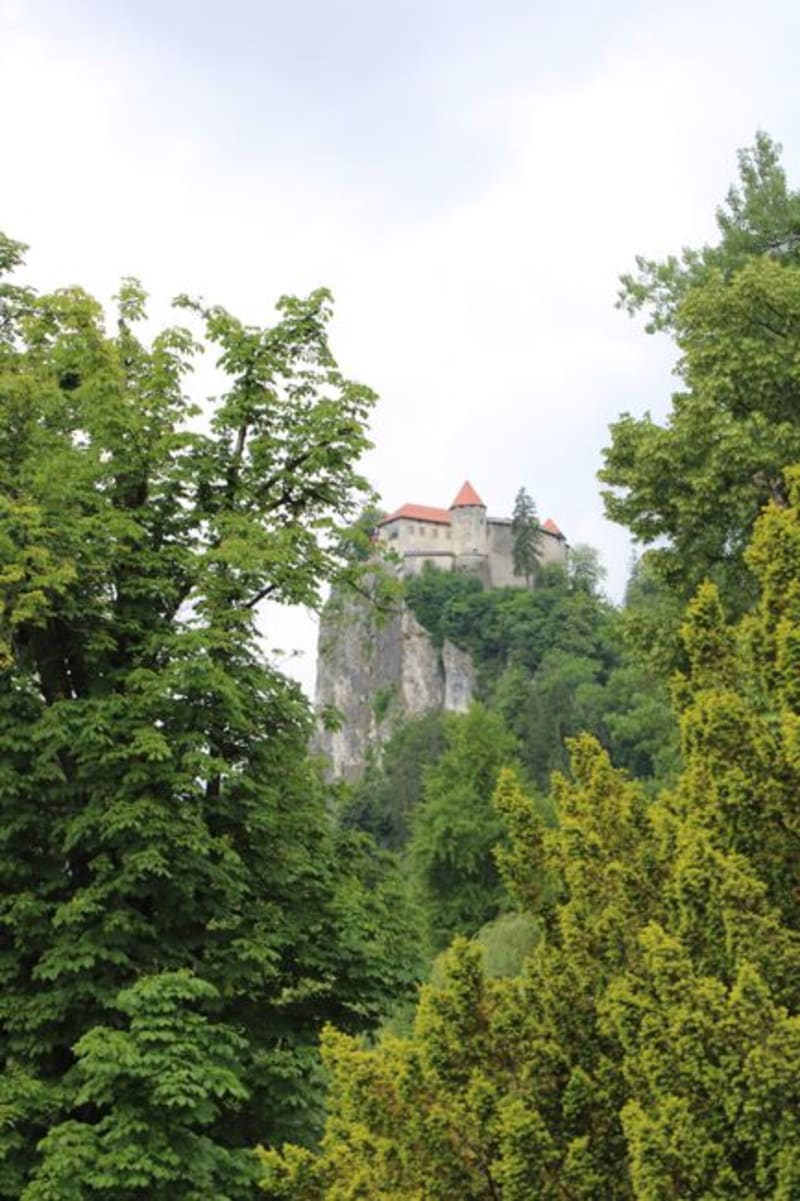 slovenia
 Bled Castle
The oldest castle in Slovenia, perched on a hundred-meter cliff above the lake, offering the one view of Bled that Bled itself can never give you — of Bled.
Explore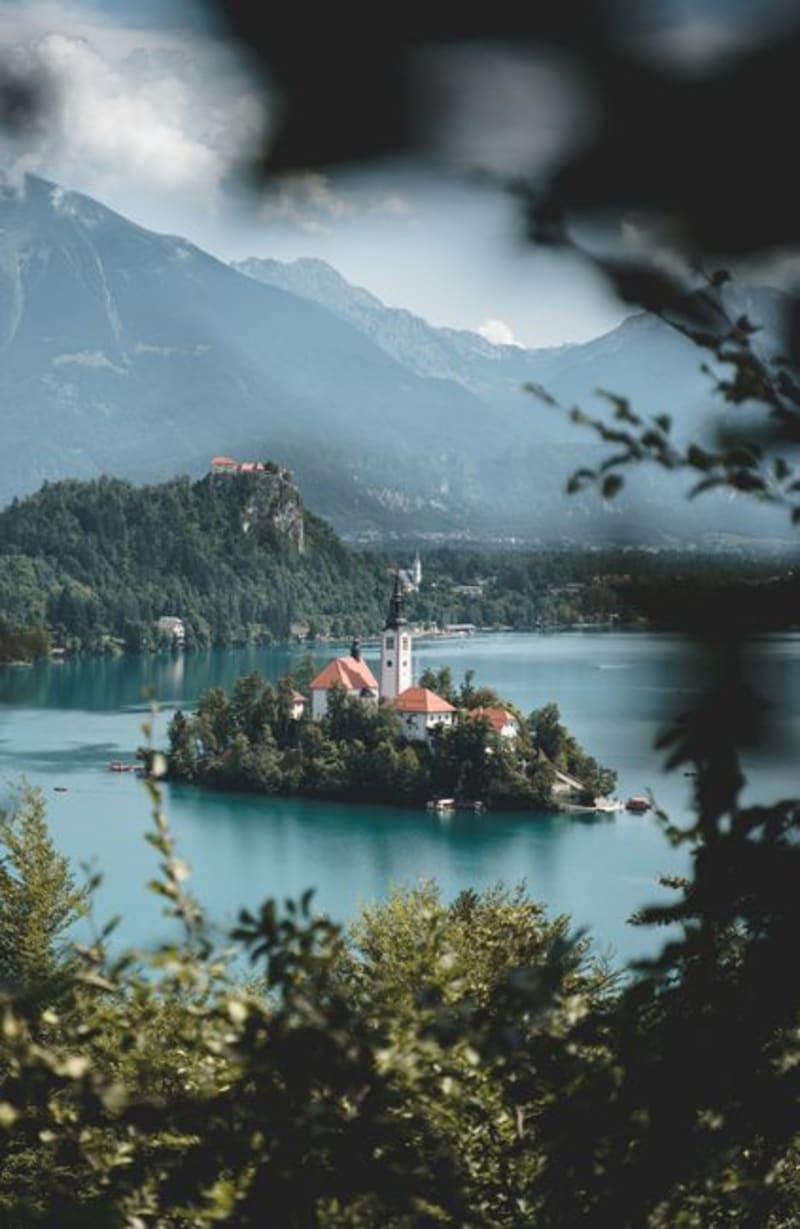 slovenia
 Bled Island
Slovenia's only natural island, home to a baroque church, ninety-nine stone steps, and a wishing bell that has been ringing wedding vows into existence for centuries.
Explore