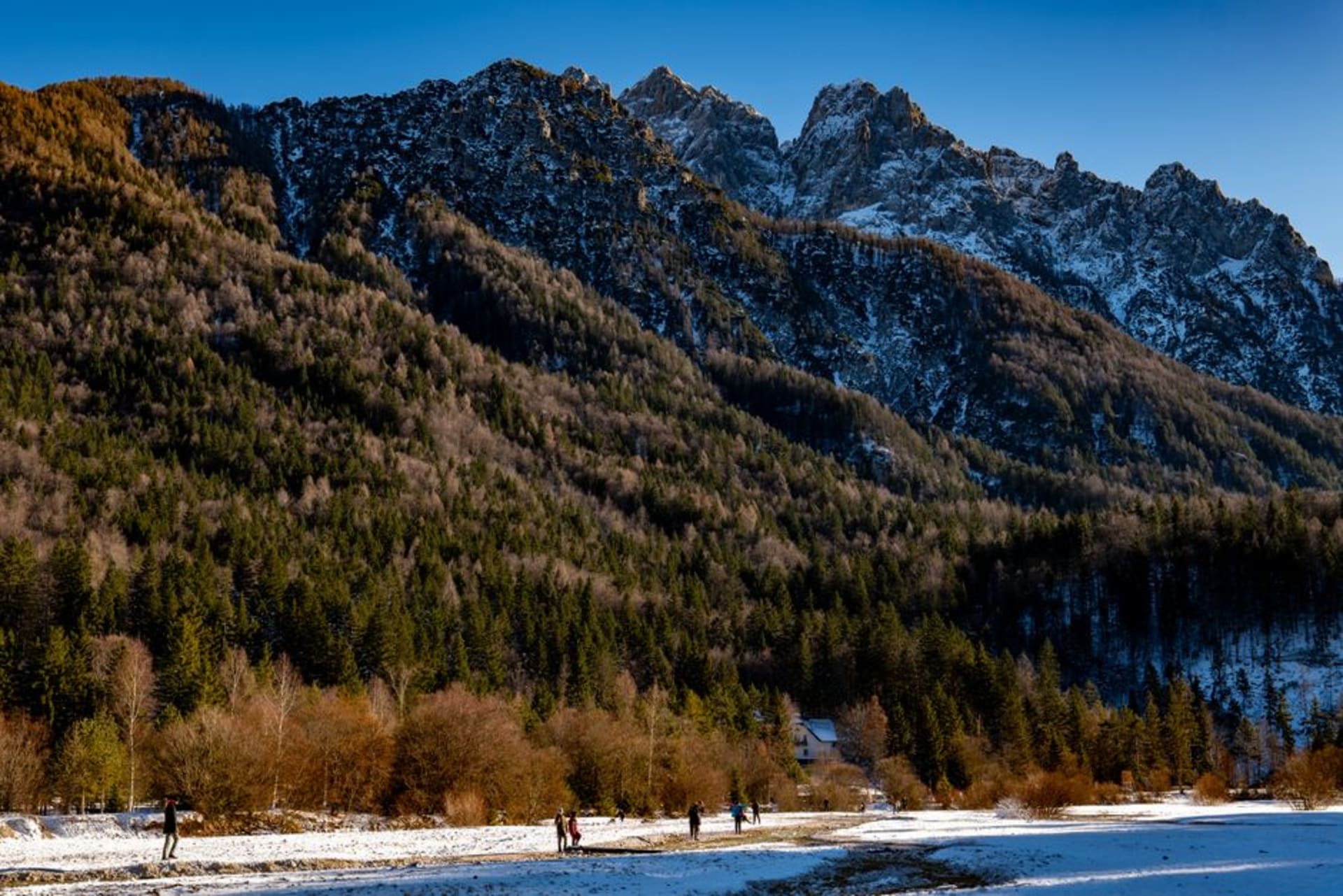
Štanjel
"Every stone in Štanjel came from directly underfoot — nothing here was ever imported."
A karst hill village so tightly stacked in pale stone that it looks fused to the rock beneath it, with a modernist garden by architect Max Fabiani tucked improbably into its medieval core.
Štanjel is the village I point to when someone asks what “karst architecture” actually looks like, because it’s the clearest example I’ve found: houses built entirely from the pale limestone quarried from the ground they stand on, stacked so close together up the hillside that from a distance the village and the rock outcrop it sits on are barely distinguishable. We drove up a narrow road from the Vipava Valley floor and the place seemed to resolve out of the hillside rather than sit on top of it.
A Village Older Than Its Records
People have lived on this hill since prehistoric times, and the settlement has been continuously fortified and rebuilt since at least the Middle Ages, which is why walking through it feels less like visiting a single historical period and more like reading geological strata — a Romanesque church tower, defensive walls added under Venetian threat, houses patched and repatched across five centuries, all using the same stone, so the seams between eras are almost invisible unless you know to look for them.
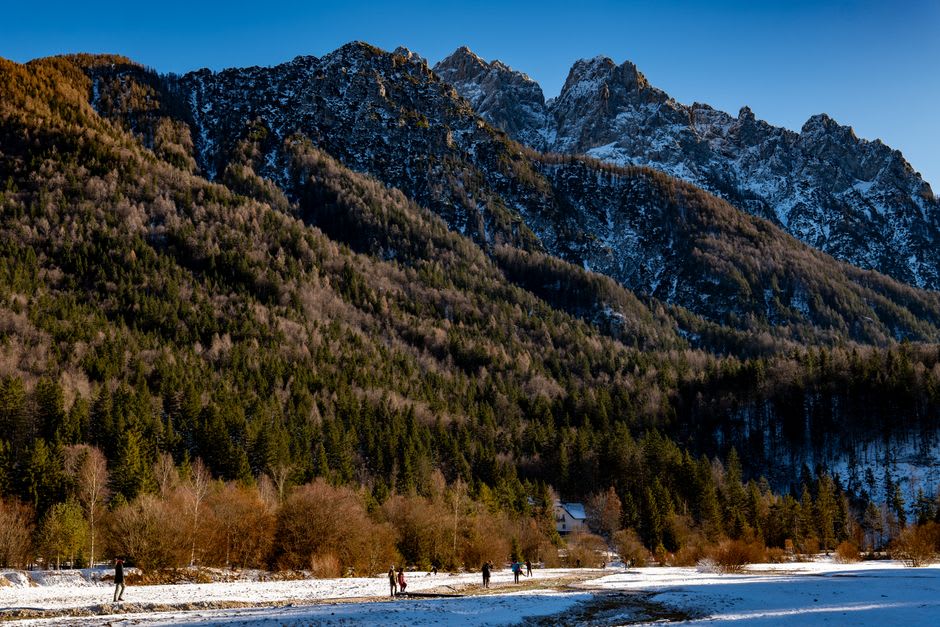
Fabiani’s Garden
The surprise inside all that medieval density is the Ferrari Garden, designed in the 1920s by Max Fabiani, a Slovene-Italian architect who trained under Otto Wagner in Vienna and brought a distinctly modernist sensibility back to his home village. Terraced, geometric, built from the same local stone as everything around it but arranged with an entirely different logic — straight lines and formal proportion inside a village that otherwise grew organically over centuries. It shouldn’t work. It does, mostly because Fabiani understood the material he was working with rather than fighting it.
We sat on the garden’s upper terrace with a view over the Vipava Valley opening out below — vineyards and orchards in neat rows after the tight stone of the village, a genuinely dramatic change of texture in the space of about thirty meters.
Why It’s Quiet
Štanjel gets a fraction of the visitors that Piran or Bled see, partly because it isn’t on the coast and partly because it doesn’t have a single headline attraction — no cave, no lake, no castle with a dramatic backstory. What it has instead is a completely intact sense of place, which is its own kind of rare.
When to go: Late spring through early autumn, when the Vipava Valley below is green and the garden terraces are in bloom; a weekday visit means you may have entire alleyways to yourself.