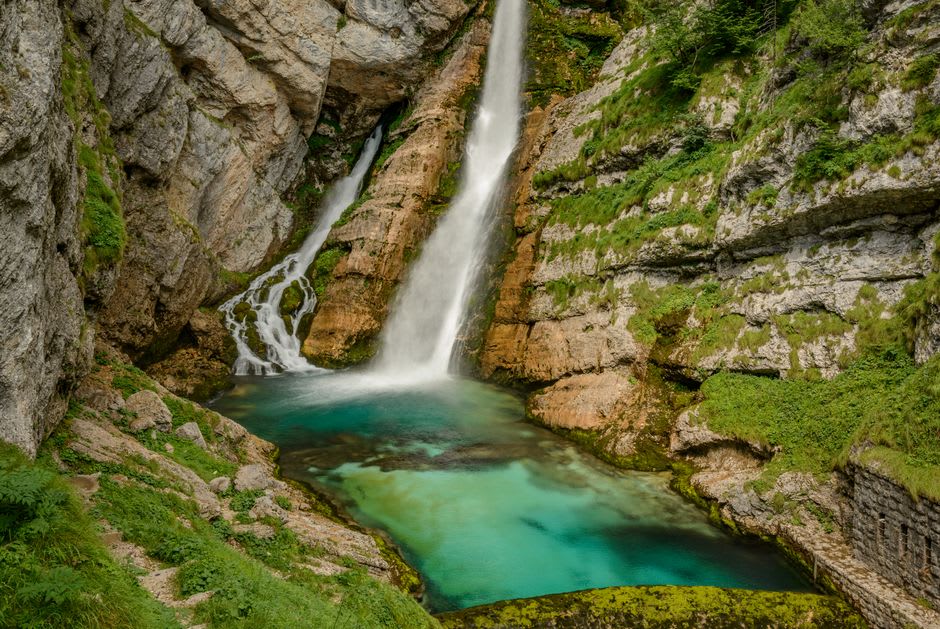
A two-tiered waterfall dropping into a cave-carved amphitheater at the source of the Sava Bohinjka, mythologized in Slovenia's national epic and every bit as dramatic in person.
We’d already seen Slap Savica mentioned in passing on our first afternoon at Bohinj — Lia had ordered the local buckwheat soup at a gostilna near the lake and the waiter, hearing we planned to stay a few days, told us not to leave without walking up to it. It took us until our last morning to actually make the trip, which in hindsight was a mistake; it deserved more than a rushed final visit.
The Walk Up
The trailhead sits at the western end of Lake Bohinj, past the village of Ukanc, and the walk to the falls takes about forty minutes each way along a well-maintained path that climbs steadily through beech forest. Near the top, the path gives way to a set of stone steps — several hundred of them, cut into the hillside in the 1950s — that deliver you to a wooden viewing platform directly across from the falls.
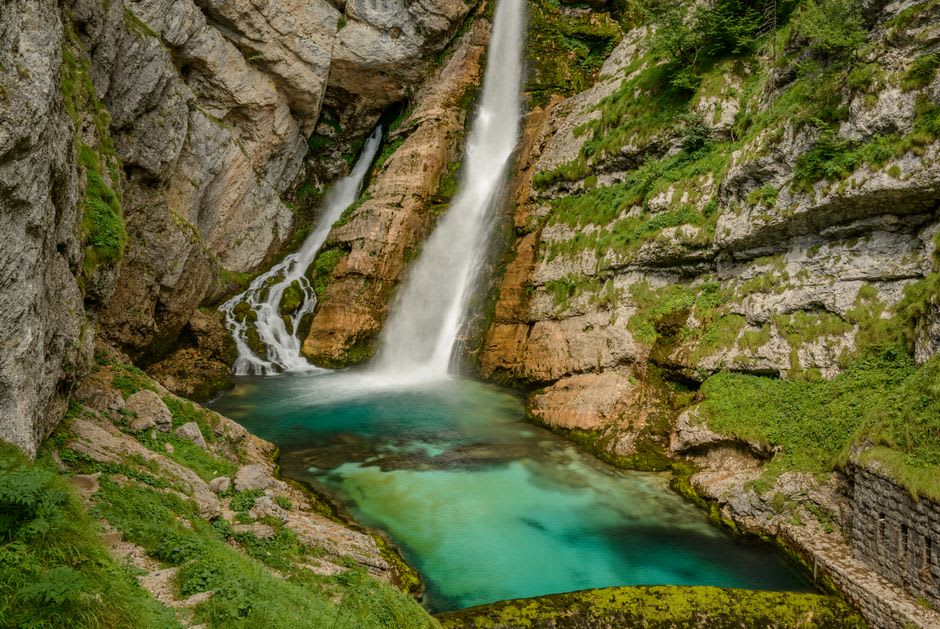
Where the Sava Bohinjka Begins
Savica drops seventy-eight meters in two stages from a hidden cave system in the limestone above, feeding directly into the Sava Bohinjka — one of two source rivers that eventually combine to form the Sava, Slovenia’s longest river. The water at the base pools an intense, almost chemical turquoise, cold enough that the mist rolling off the falls carries a genuine chill even in August. I stood on the platform long enough to get slightly damp from the spray and didn’t mind at all.
The Legend of Zlatorog
The falls carry weight beyond their geology. In Slovenian folklore, Zlatorog — a white chamois with golden horns who guarded a hidden treasure in these mountains — is said to have wept from this very spot after being wounded by a hunter’s greed, his tears forming Savica. The story is woven into France Prešeren’s epic poem “Krst pri Savici” (Baptism at the Savica), which cemented the waterfall’s place in Slovenian national identity well beyond its physical beauty. Standing there, knowing generations of Slovenian schoolchildren have read that poem with this exact waterfall in mind, added a layer to the view I hadn’t expected.
When to go: Late spring through early autumn, when snowmelt keeps the falls at full force and the trail is clear of ice. Go early to have the viewing platform to yourself — it’s a short walk but a popular one.
Keep exploring
More from Slovenia
 slovenia
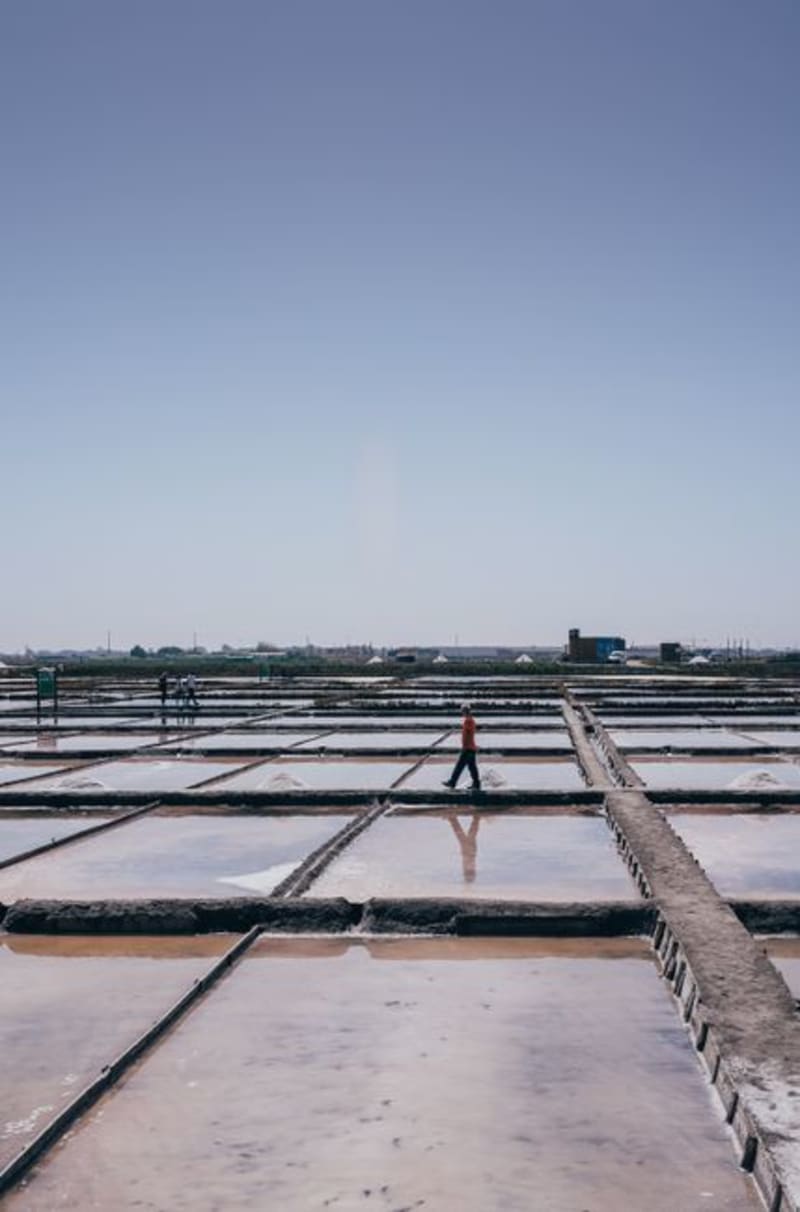
 Sečovlje Salt Pans
A working salt landscape at Slovenia's southern tip where the harvest still happens by hand exactly as it did seven hundred years ago, and flamingos show up as if summoned.
Explore slovenia
 Šiška
Ljubljana's unglamorous northern district turned creative stronghold, anchored by a converted cinema that hosts some of the best live music in the Balkans.
Explore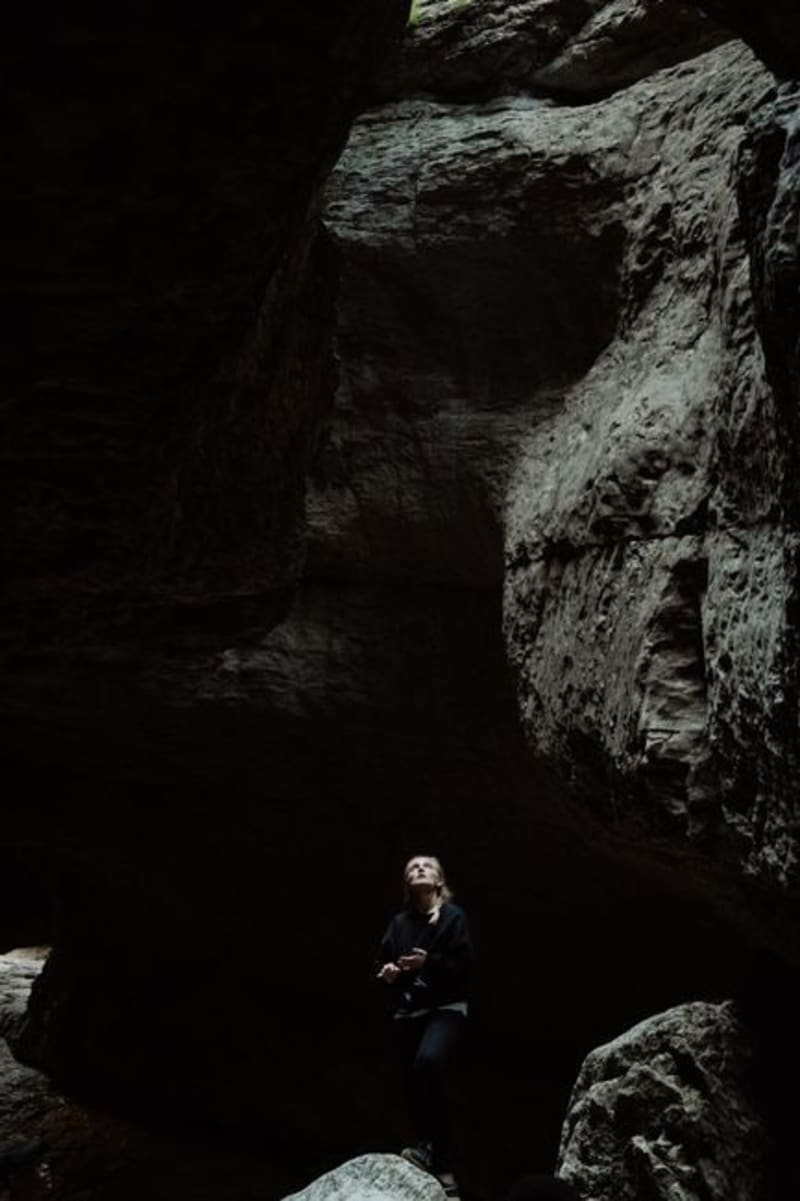 slovenia
 Škocjan Caves
A UNESCO-listed canyon of a cave so vast that the footbridge across its underground gorge feels like crossing into a different planet — the Reka River disappears here and doesn't resurface for thirty kilometers.
Explore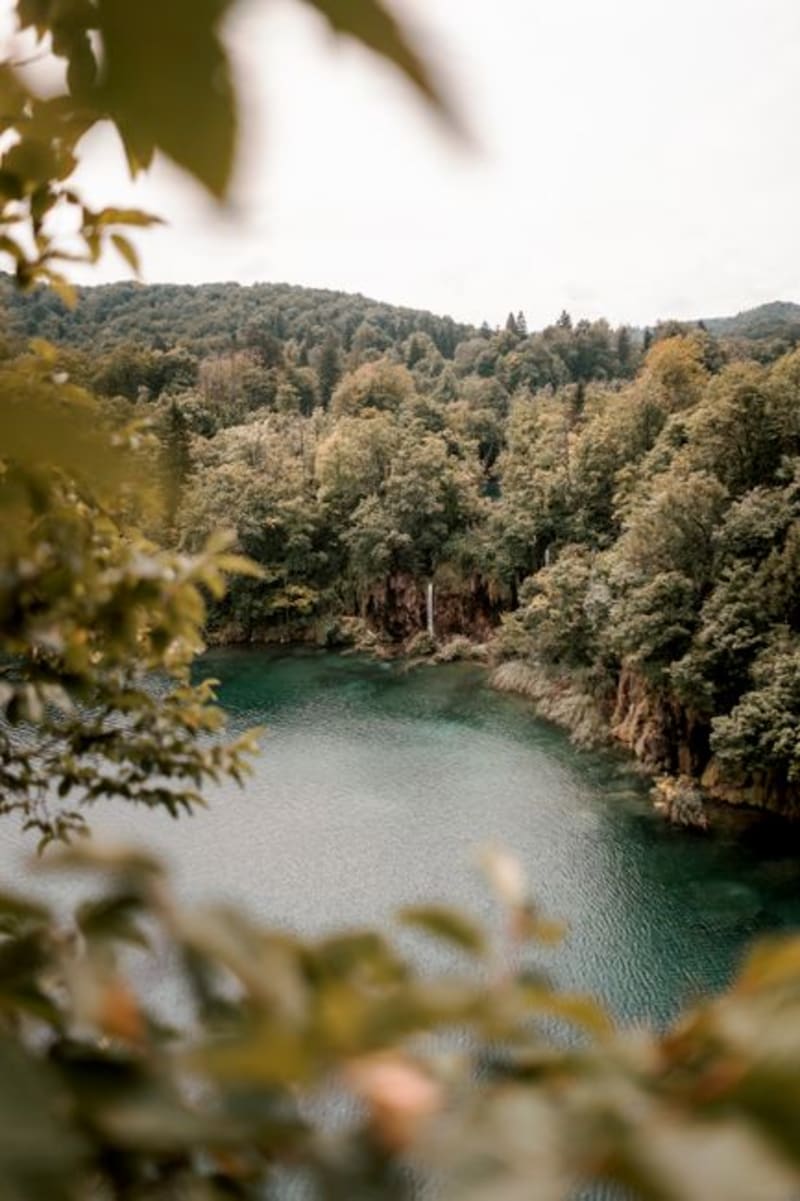 slovenia
 Škocjanski Zatok Nature Reserve
A reclaimed lagoon wedged between Koper's port cranes and its highway ramps — improbably, one of the best birdwatching sites on the entire Adriatic.
Explore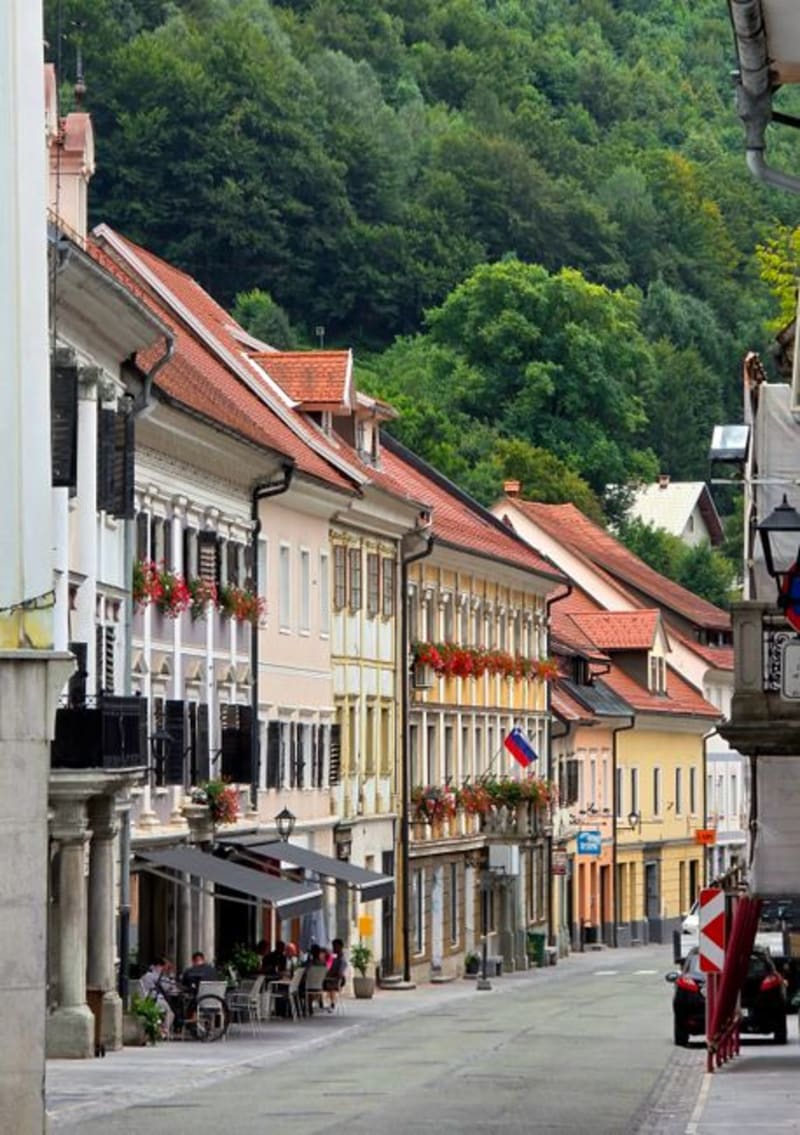 slovenia
 Škofja Loka
A medieval town at the confluence of two rivers, twenty minutes from Ljubljana, where a stone bridge, a hilltop castle, and a Baroque town square somehow avoid every tour bus in Slovenia.
Explore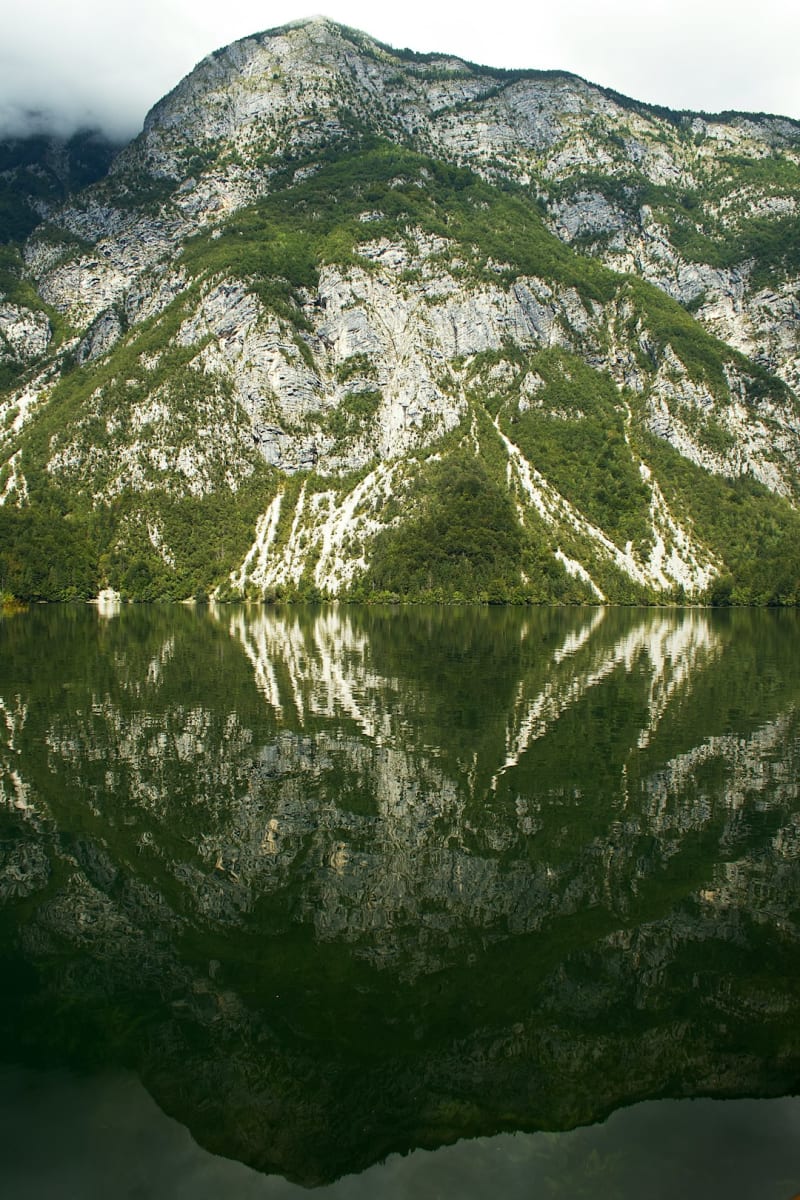 slovenia
 Slovenske Konjice
A small wine town under the Pohorje foothills, home to Slovenia's oldest working winery and the haunting ruins of a Carthusian monastery in the hills above.
Explore