A small, impossibly turquoise reservoir at the entrance to Kranjska Gora, framed by two bronze ibex statues and more Instagram tripods than actual swimmers.
Lake Jasna sits right off the main road into Kranjska Gora, small enough that you could walk its perimeter in fifteen minutes, and I almost dismissed it as a roadside photo-op before actually getting out of the car. It’s technically two connected artificial reservoirs, formed by damming mountain streams decades ago, and there’s something a little funny about how a man-made lake ended up looking more surreal than most natural ones I’ve seen.
Two Ibex and a Lot of Cameras
At the lake’s edge stand two bronze ibex statues, mid-leap, that have become the unofficial symbol of the whole Kranjska Gora area — you’ll see them on everything from beer labels to hiking maps. When we arrived in the late morning there was a small queue of people waiting to photograph themselves beside them, patient and good-humored about it, which felt very in keeping with the general lack of pretension in this part of Slovenia. The water itself is the real draw: a bright, glassy turquoise that shifts toward emerald depending on the angle of the sun, fed by glacial streams that keep it cold even in August.
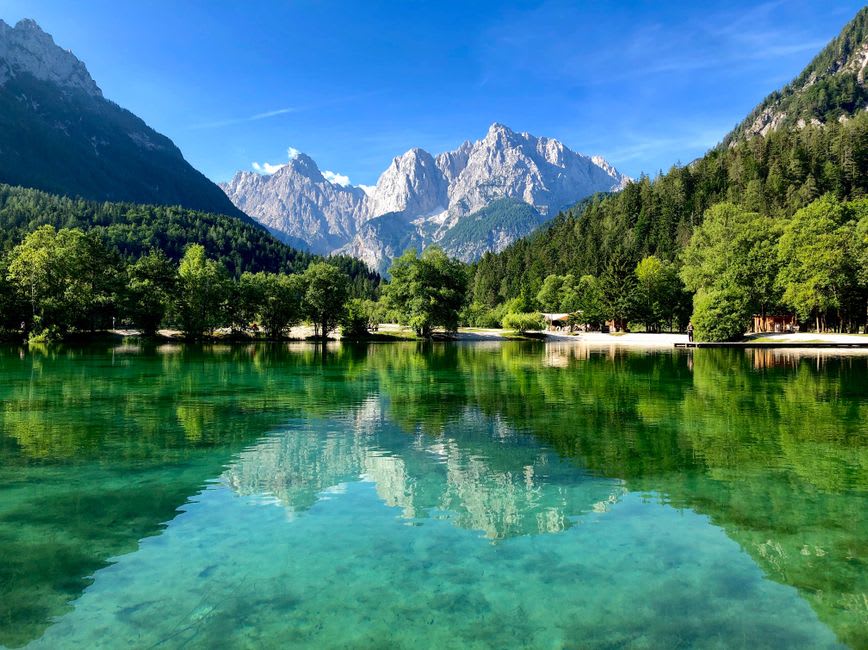
A Short Walk, A Long Pause
We circled the lake slowly, stopping often, which is really the only way to do it given how small it is. A handful of people were swimming despite the cold; most were doing exactly what we were doing, standing at the shore in a kind of low-key disbelief at the color. There’s a small restaurant terrace nearby where we had coffee and watched paragliders circle down from somewhere above the ridgeline, landing in the field just past the parking lot with the casualness of people who do this every day.
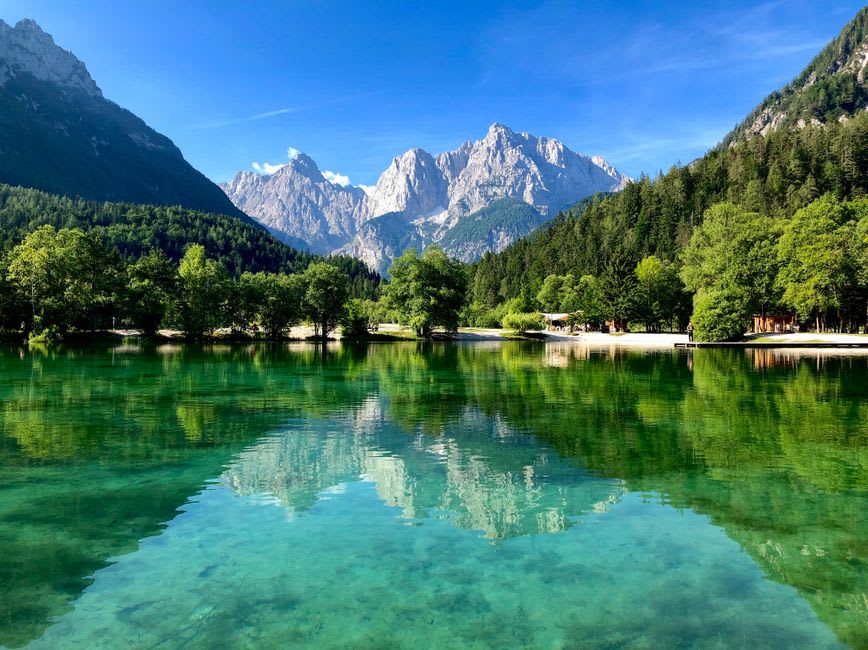
When to go: May through September for the best color and warmest air; it’s a five-minute stop that pairs naturally with a Kranjska Gora visit or a Vršič Pass drive, so there’s rarely a bad reason not to swing by.
Keep exploring
More from Slovenia
 slovenia
 Laško
A Savinja riverside spa town better known as the home of Slovenia's most famous beer, with thermal pools and a brewery tour that don't pretend to be anything fancier than they are.
Explore slovenia
 Lendava
Slovenia's easternmost town, wedged against Hungary with vineyard hills on one side and a preserved synagogue on the other, carrying a bilingual Hungarian-Slovenian identity found nowhere else in the country.
Explore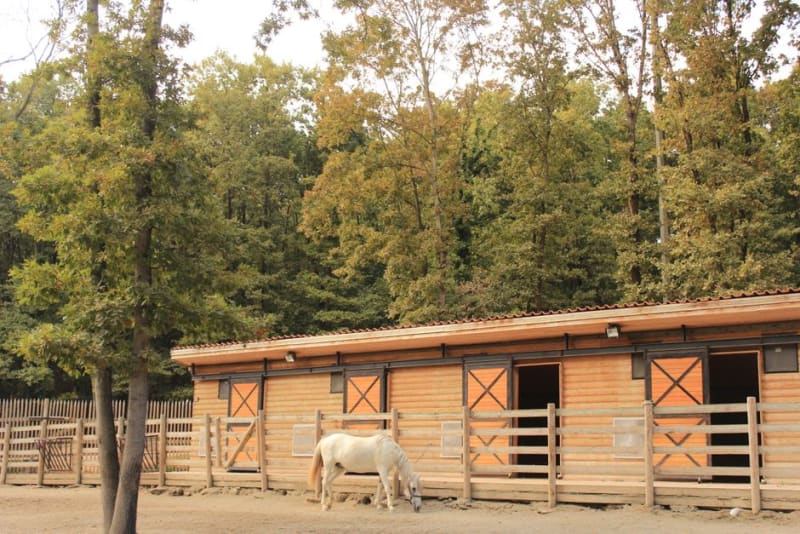 slovenia
 Lipica Stud Farm
The 16th-century home of the Lipizzaner horse, where white stallions bred for Habsburg court riding schools still graze the karst pastures that gave the breed its name.
Explore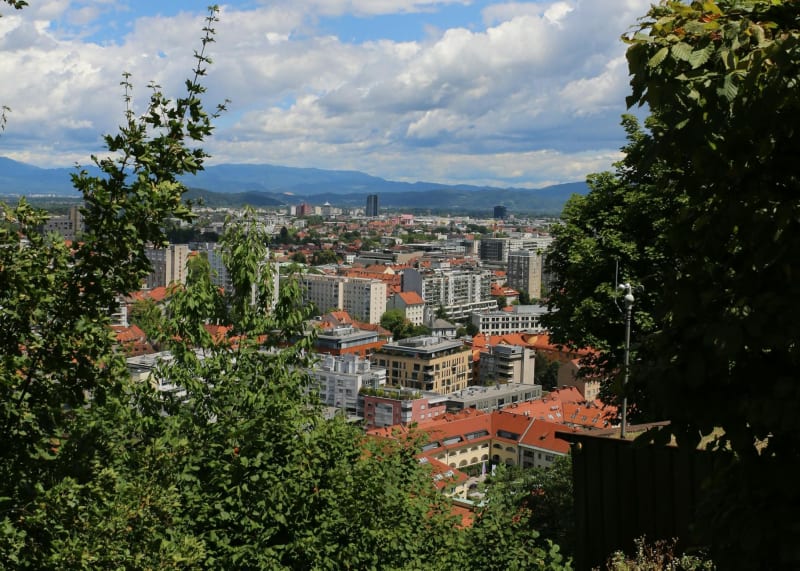 slovenia
 Ljubljana
Europe's most livable small capital stretches lazily along the Ljubljanica, its castle-crowned hill watching over cafe-filled riverbanks.
Explore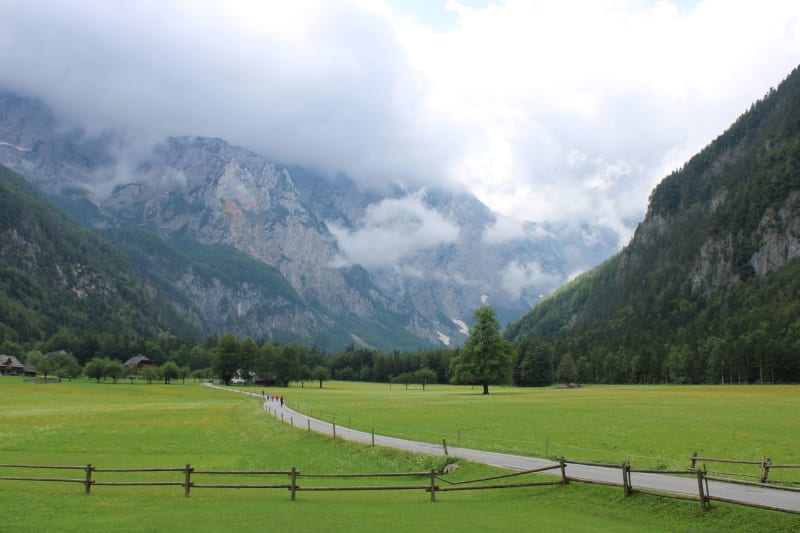 slovenia
 Logarska Dolina
A glacial valley tucked into the Savinja Alps where working farmsteads share meadows with 2,000-meter peaks and the only waterfall in Slovenia worth driving a narrow mountain road to reach drops 90 meters off a cliff into cold silence.
Explore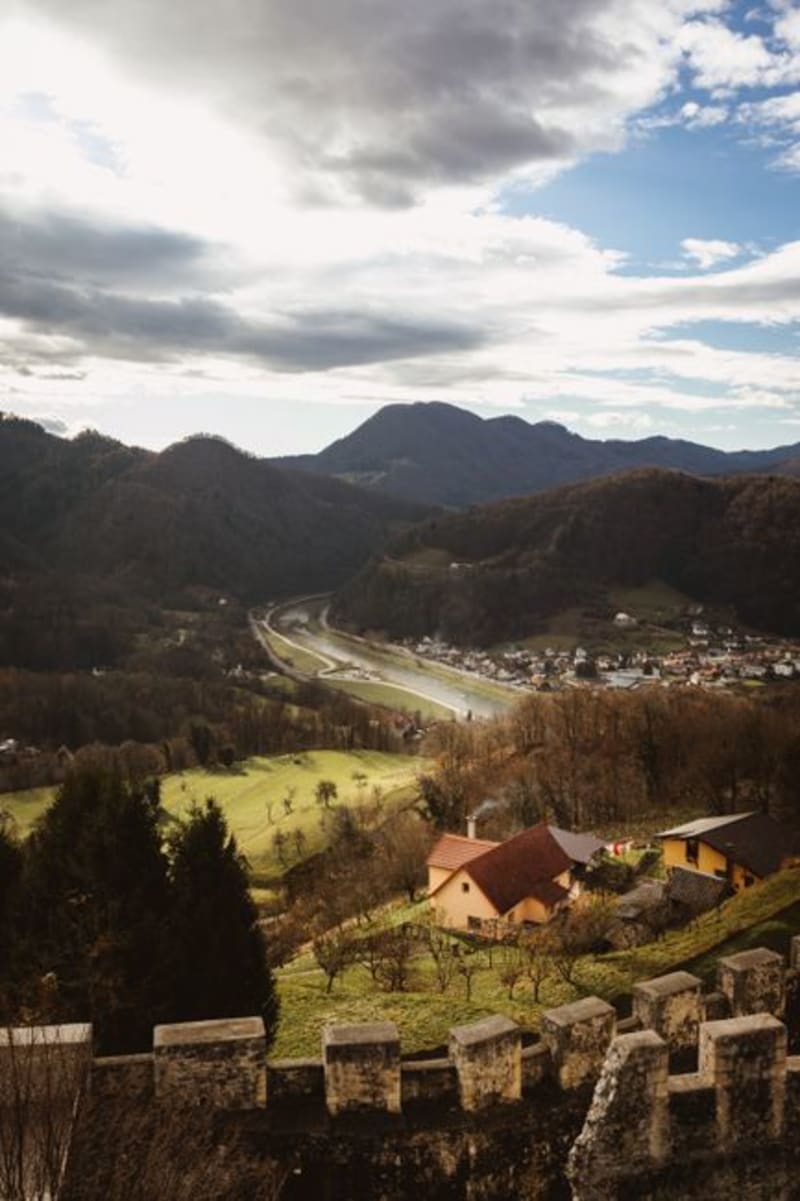 slovenia
 Luče
A small village strung along the Savinja River where the valley widens just enough to breathe before narrowing again toward Solčava — an easy, unhurried base for the Upper Savinja without a single tour bus in sight.
Explore