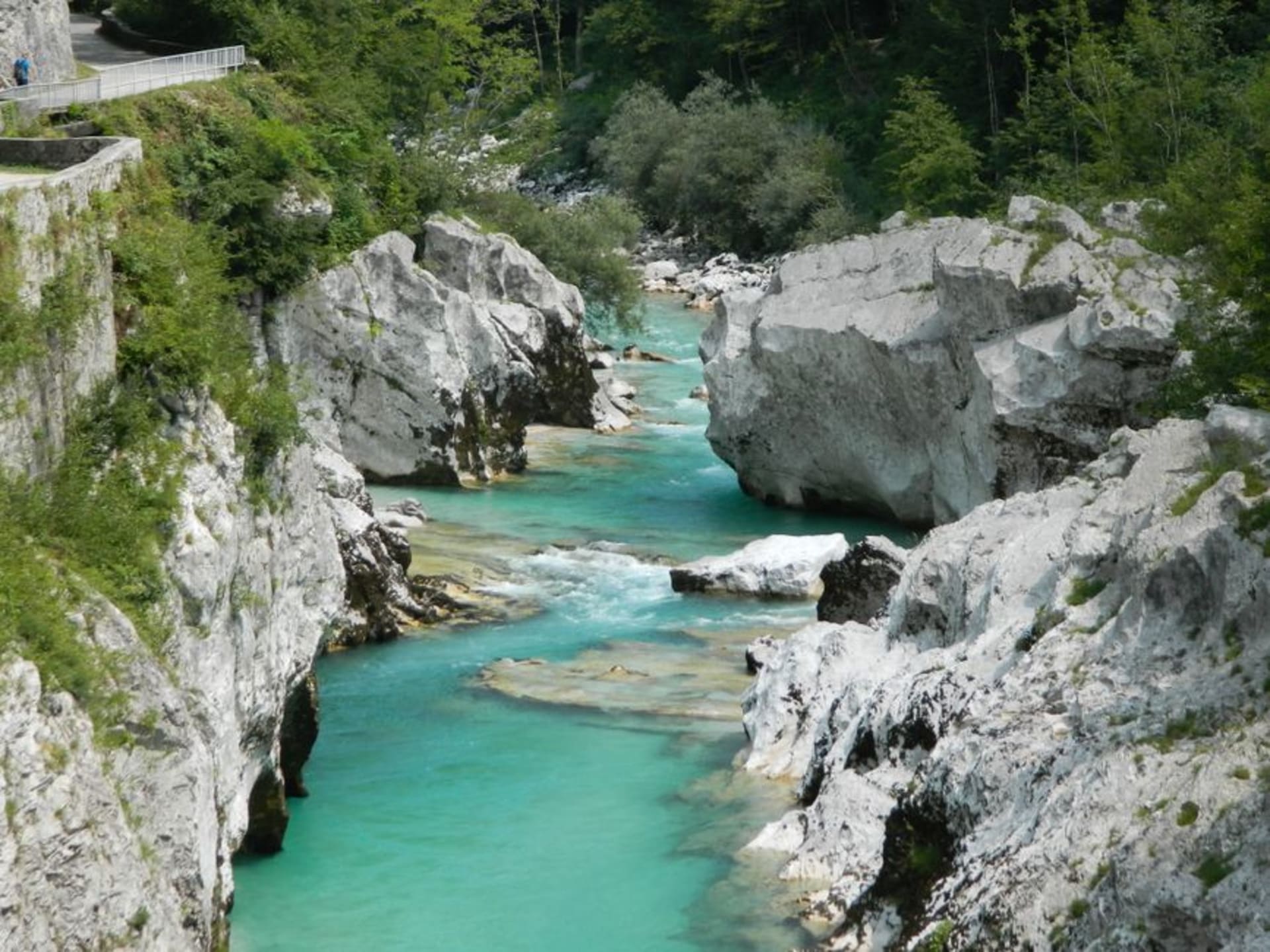
Kobarid
"Caporetto, if the name means anything to you, is this quiet town seen from the other side of history."
A small town in the lower Soča Valley carrying the weight of one of the First World War's most devastating battles, and one of Slovenia's best restaurants for the trouble.
Kobarid doesn’t announce itself the way Bled or the Soča’s turquoise bends do. We arrived from Bovec on a warm afternoon, expecting a pleasant lunch stop, and left several hours later having gone somewhere much heavier than we planned. This is Caporetto — the site, in October 1917, of a combined Austro-Hungarian and German offensive that broke the Italian army’s line so completely it reshaped the rest of the war on this front, with casualties along the Isonzo running into the hundreds of thousands over the preceding years of fighting.
The Museum That Doesn’t Perform Grief
The Kobarid Museum sits in a modest building just off the main square, and its restraint is what makes it effective. No dramatic soundtracks, no reenactments — just maps, photographs, uniforms, letters, a room-sized relief model of the front that lets you understand the terrain in a way no photograph manages. I’ve been to war museums that try to overwhelm you with scale; this one lets the facts sit in silence and trusts you to feel their weight. Ernest Hemingway, who drove ambulances nearby and later set part of A Farewell to Arms on this front, gets a small mention, which felt appropriately understated.
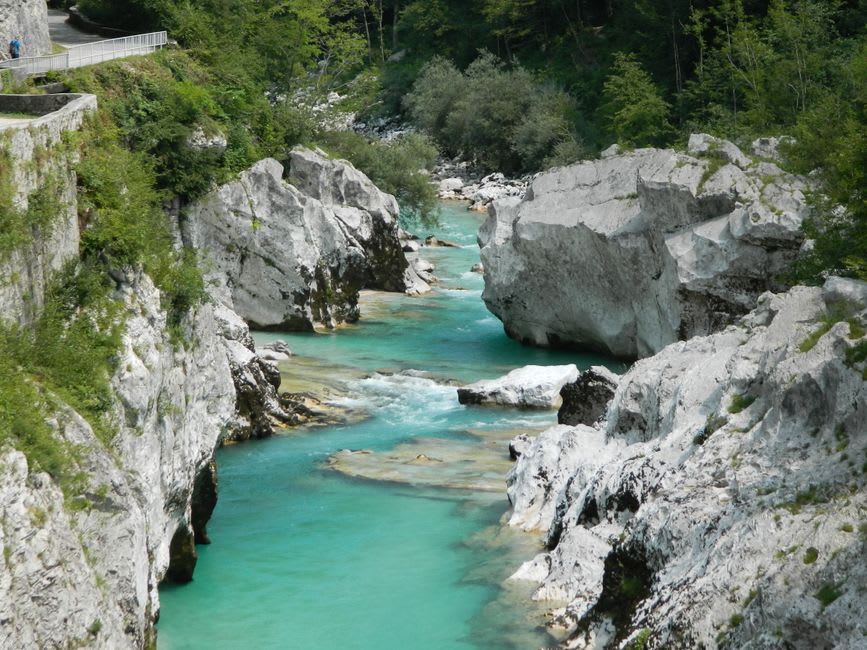
Up Above the Valley
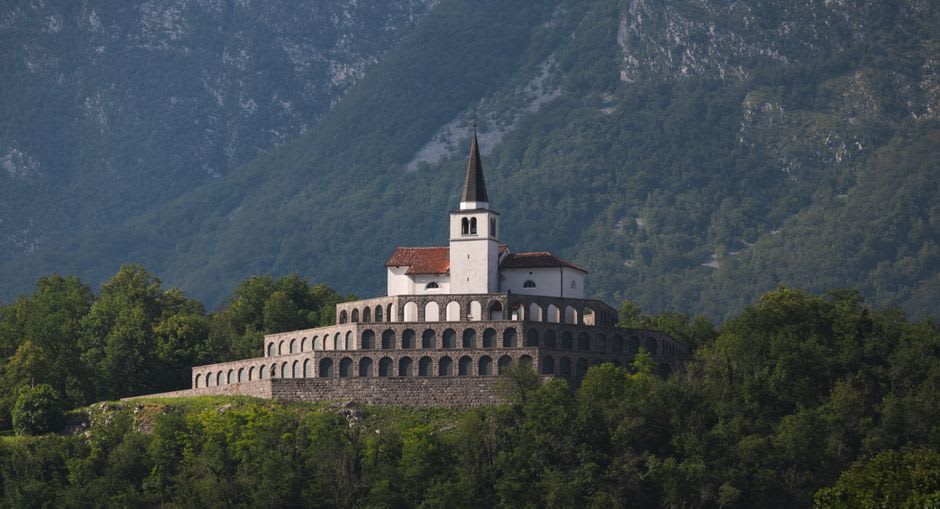
Above the town, a walking trail called the Kobarid Historical Trail loops past old trenches, gun emplacements cut into rock, and a war cemetery on the hillside where white crosses run in rows through long grass. It’s a strange thing to walk a battlefield that has become, over a century, simply a quiet hillside with a good view. We finished the loop and sat down for dinner at Hiša Franko, a short drive outside town and one of the most celebrated restaurants in Slovenia — a tasting menu built entirely from what grows and grazes in the valley below, and easily the best meal either of us had in the country.
When to go: Year-round for the museum and town; May to September for the historical trail when the ground is dry and the paths are clear. Book Hiša Franko weeks in advance if you want a table — it fills up fast, even outside peak season.