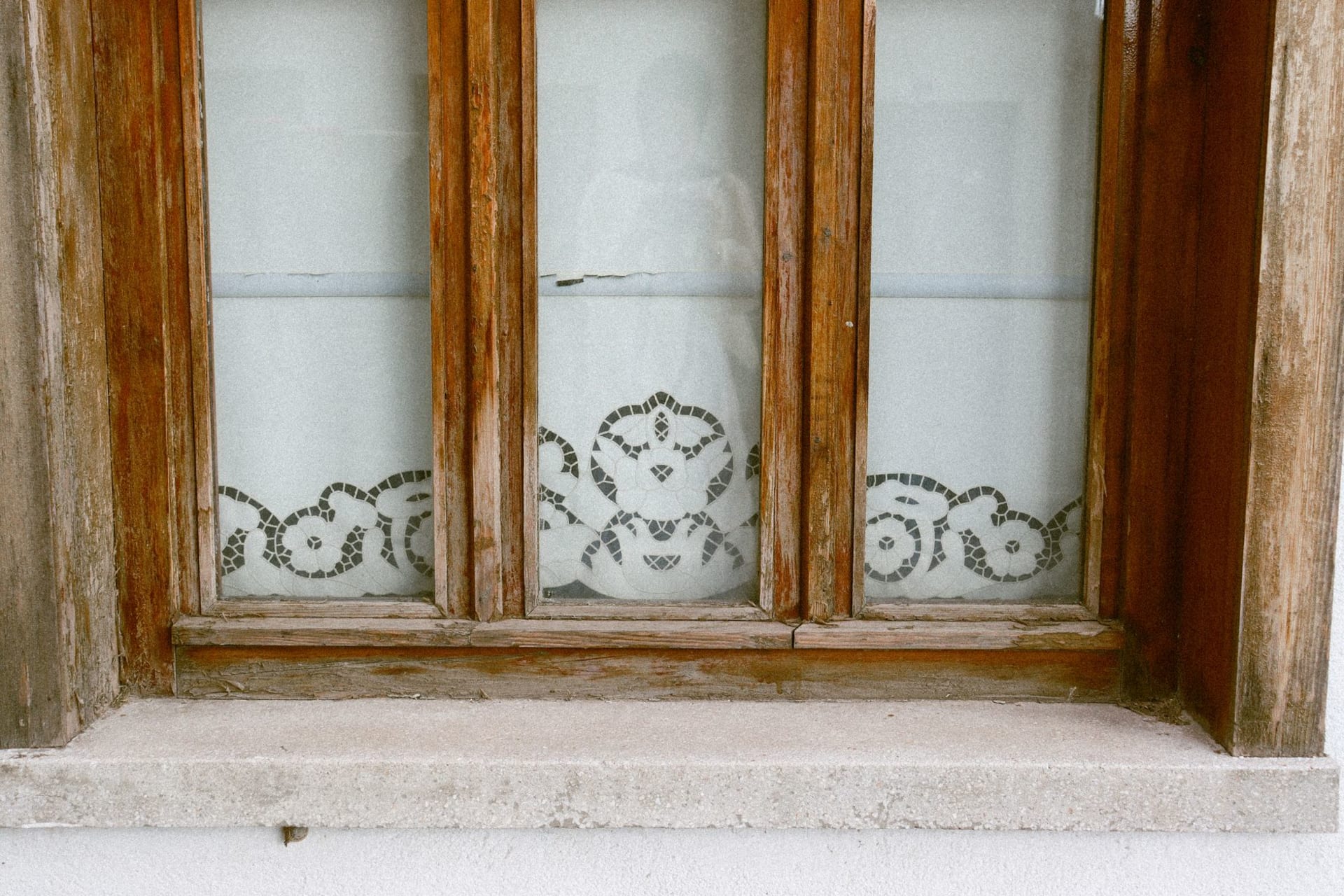
Čičmany
"Somebody decided long ago to cover everything in patterns, and the decision stuck."
The village that looks like nothing else
There is genuinely no other place that looks like Čičmany. I had seen photographs before I arrived and still wasn’t prepared for the reality of it: a valley village in the Strážovské vrchy hills, perhaps two hundred houses, and every single one of them covered in white geometric patterns painted directly onto the dark timber walls. Circles, crosses, spirals, zigzags, stylized flowers — the patterns vary house to house but follow a consistent vocabulary that developed locally over several centuries. From a distance the village looks like an enormous collection of decorated Easter eggs arranged along a stream.
The tradition began in the seventeenth century, when locals started painting their log houses with lime wash to protect the timber from weather. The patterns evolved over generations into a distinctive regional folk art that was eventually documented, preserved, and in 1981 listed as a national monument. The documentary listing sounds academic. The actual experience of walking those streets is anything but.
Walking the village
Čičmany sits in a narrow valley, and the main street follows the Rajčianka stream for perhaps half a kilometer before the houses thin out and the meadows begin. Walking it takes about twenty minutes at a comfortable pace — or considerably longer if you stop to examine the pattern variations from house to house, which you will.
The differences between individual houses are worth attention. Some follow older, more geometric patterns — strict diamonds and crosses that echo the region’s textile traditions. Others incorporate more naturalistic elements: stylized deer, birds, the occasional human figure. There are houses where the painting is crisp and recent, and others where the lime has aged to a pale gray-cream against timber that has darkened to near-black. Both are beautiful in different ways.
The Radenov dom — a preserved historic house now operated as a small museum — gives context for the interiors: low-ceilinged rooms, embroidered textiles, wooden furniture with the same decorative vocabulary as the exterior painting. The woman running the museum the day I visited spoke no English but communicated through enthusiastic pointing at specific pattern details that she clearly found most remarkable. It was one of the better guided tours I’ve had.
A working village, not a museum
What strikes me most about Čičmany is that it functions. People actually live in these houses. Laundry hangs between patterned walls, children’s bicycles lean against decorated doorways, an older man was splitting firewood in his garden when I passed. The tourist infrastructure exists — a small car park, a few signs in English, the occasional souvenir stall — but it sits lightly on a place that was never rebuilt or reconstructed for visitors.
The village was almost completely destroyed by fire in 1921, and the reconstruction that followed was done deliberately in the traditional style, with the traditional patterns. That decision, made in the aftermath of catastrophe, is the reason the place exists as it does today. There’s something worth thinking about in that: the conscious choice to maintain a specific visual identity when rebuilding from nothing.
The surrounding hills
The hills above the village offer good walking on relatively unmarked trails. I followed a path up the valley slope above the main street and reached a meadow in under thirty minutes, with the full extent of the village visible below — the geometric patterns tiny from that height but still somehow readable as patterns, the stream catching the light, the surrounding forested ridgelines. A straightforward, uncluttered view.
When to go: Late spring through early autumn for the clearest light and open access to walking trails. The village is accessible year-round, and winter — with snow on the painted timber — is reportedly extraordinary, though the road from Žilina can be difficult in heavy snow. Weekday visits are quieter than weekends, when Slovak day-trippers arrive from Žilina and Trenčín.