Banská Štiavnica
"The town that once produced half of Europe's silver, and never fully recovered from the discovery that it had run out."
A town on a hillside
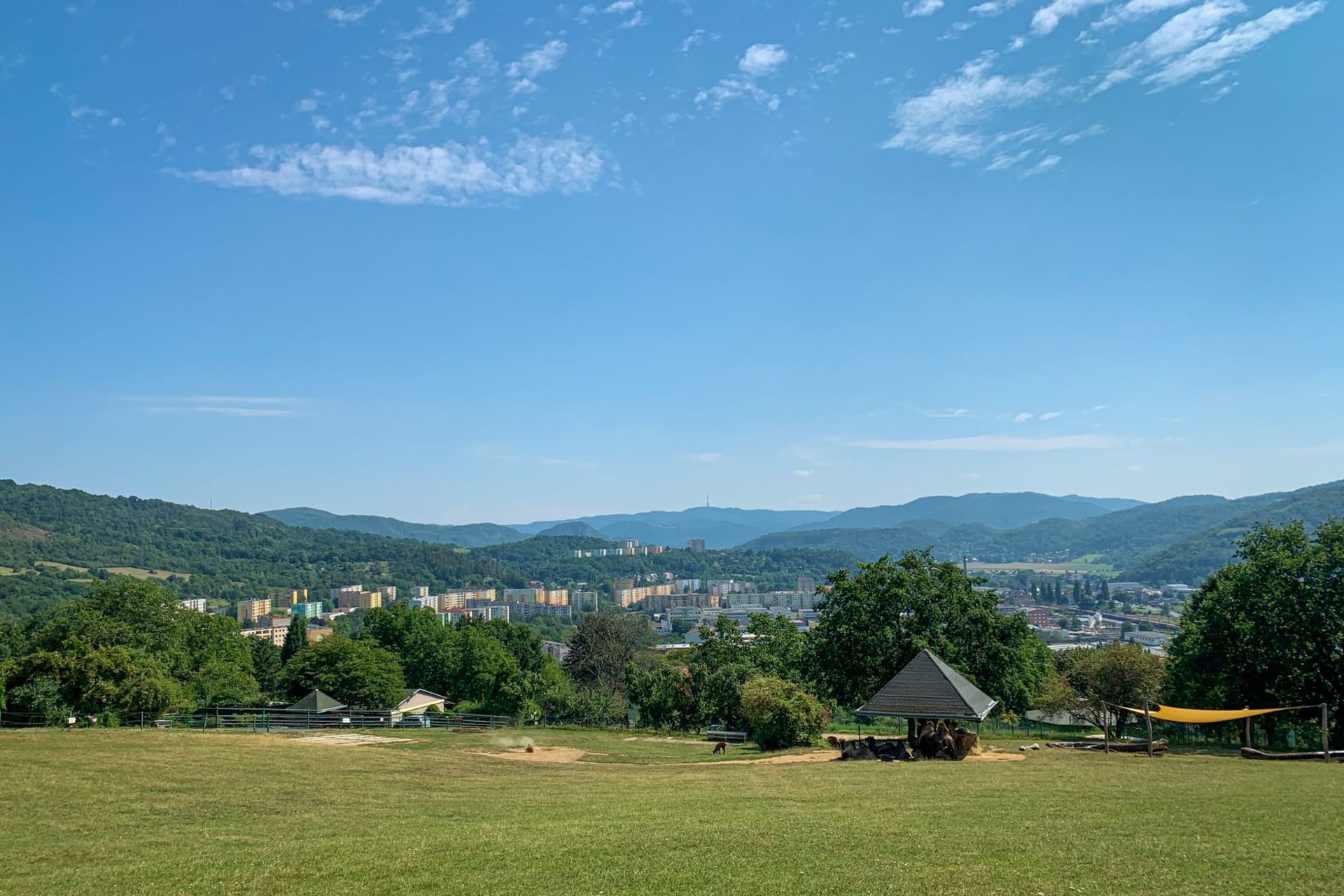
Banská Štiavnica is not easy to reach — that’s part of what saved it. No motorway passes through, the train connections are indirect, and the bus from Zvolen takes the kind of mountain road that bends back on itself every few hundred meters. When you arrive, the town reveals itself gradually: red-tiled rooftops appearing between ridgelines, a church tower, then the baroque square opening up below you like a basin. It’s a place that had to be found to exist, and there’s a quality to it — quiet, slightly faded, enormously self-possessed — that feels earned.
The silver and gold mining that built this town began in the twelfth century and ran for seven hundred years. At its peak, Banská Štiavnica was one of the most important cities in the Habsburg Empire, and the architecture reflects that former weight: the old castle, the new castle, a Calvary pilgrimage site on the hill above, and dozens of baroque palaces and fountains on streets too narrow for any vehicle wider than a small truck.
Trinity Square and the walking town
The main square — Trojičné námestie — is built on a slope, which gives it a particular sense of depth that flat squares never achieve. The plague column in the center dates to 1764, and the surrounding facades are a tutorial in Central European baroque: windows with elaborate keystones, cornices in faded ochre and dusty rose, wooden shutters that look original to the century. I spent an hour one morning just walking the perimeter of the square with a coffee, watching the light move across those buildings, and felt no urgency to be anywhere else.
Below the square, the streets drop steeply toward the old mining districts. You pass former miners’ houses — modest, low-ceilinged, with deep cellars — and then the occasional more ambitious structure: a former merchant’s palace now housing a regional museum, an old pharmacy with its original wooden fitments intact. The whole lower town is walkable in an afternoon, but the density of architectural detail means you could spend considerably longer without running out of things to look at.
The open-air mining museum
The Slovak Mining Museum here is the oldest of its kind in the world, founded in 1762, which gives you a sense of how seriously this place takes its underground heritage. The outdoor section spreads across several hectares and includes reconstructed mine entrances, original equipment, and the kind of rusting infrastructure — stamping mills, ore processing sheds — that photographers find irresistible. I went in with mild interest and stayed for three hours.
The underground tour takes you into actual historic mine shafts. The temperature drops immediately, the headlamps create dramatic geometry in the tunnel rock, and the guide explains, with evident pride, how Slovak miners in the eighteenth century invented the hydraulic pumping system that made deep mining viable worldwide. That history is specific and real, and standing underground in the shaft where it happened gives it a texture that no museum display can replicate.
Evening above the town
The Calvary — a baroque pilgrimage complex built on the hill to the east — is technically a religious site, but it works equally well as a viewpoint. Forty-one chapels and stations trail up the hill through pine forest. By late afternoon the light turns everything amber and the view down over the rooftops of Štiavnica, with the hills rolling beyond, is one of the quieter beautiful things I’ve seen in Central Europe.
When to go: May through October. August hosts a mining history festival that fills the squares with period costumes and brings the whole town to unusual life. Spring and early autumn are ideal for quieter exploration — the town receives very few international tourists outside summer, which is mostly an advantage.