
Hawker Centres
"Three dollars for chicken rice that a Michelin inspector called extraordinary. This city is serious about food."
Singapore’s hawker centres are not restaurants — they are institutions. Born from the street-food carts that once lined every road, these open-air food courts gather dozens of specialist stalls under one roof, each perfecting a single dish over decades, sometimes generations. The culture was inscribed on UNESCO’s Intangible Cultural Heritage list in 2020, and eating your way through a hawker centre is the most essential Singapore experience. I say this as someone who has eaten in thirty-odd countries and lived in Mexico, where street food is a religion. Singapore’s hawker system is something different: a government-built, meticulously maintained infrastructure for extraordinary food at prices that make you question the economics of every restaurant you have ever visited.
We started at Maxwell Food Centre for Tian Tian chicken rice — the plate that put hawker food on the global map. The queue was twenty minutes. The chicken was poached to an impossible tenderness, the rice was fragrant with chicken fat and pandan, and the chilli sauce had a heat that built slowly and stayed. Three dollars fifty. I have eaten chicken rice in Bangkok, in Kuala Lumpur, in Hainan itself. This was the best.
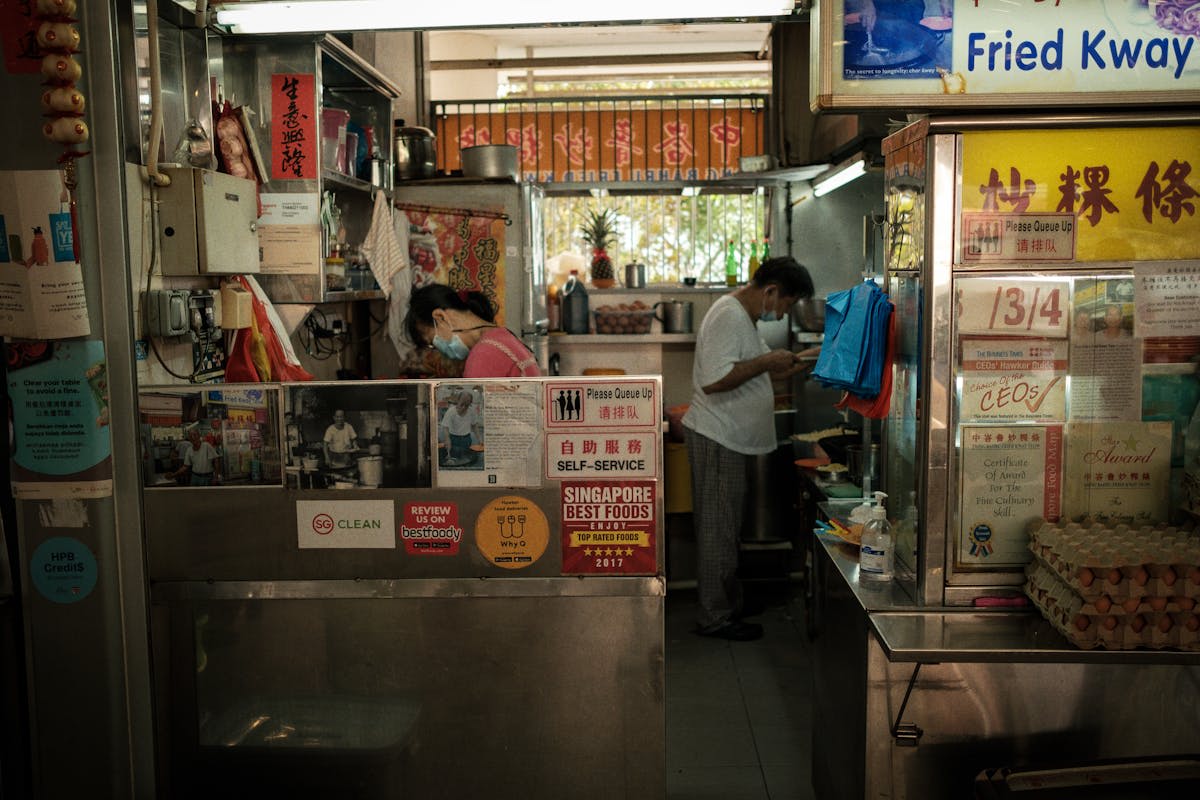
Old Airport Road Food Centre gave us the best char kway teow I have ever tasted — flat rice noodles fried in a wok with such ferocious heat that the edges were smoky and charred while the centre stayed silky. The uncle running the stall was in his seventies, his wok arm moving with a speed and precision that made me think of musicians rather than cooks. Cockles, Chinese sausage, bean sprouts, egg — all tossed together in lard and dark soy with a timing that must have taken forty years to perfect. Four dollars. I went back twice.
Lau Pa Sat, housed in a Victorian cast-iron market building that was shipped from Glasgow in the 1890s and reassembled in the tropics, sizzles with satay stalls after dark. The outdoor street — Boon Tat Street — closes to traffic in the evening and the charcoal grills come out, and the smoke and the sizzle and the smell of peanut sauce create an atmosphere so dense and so inviting that you sit down before you have decided to eat. We ordered thirty sticks between us. We should have ordered forty.
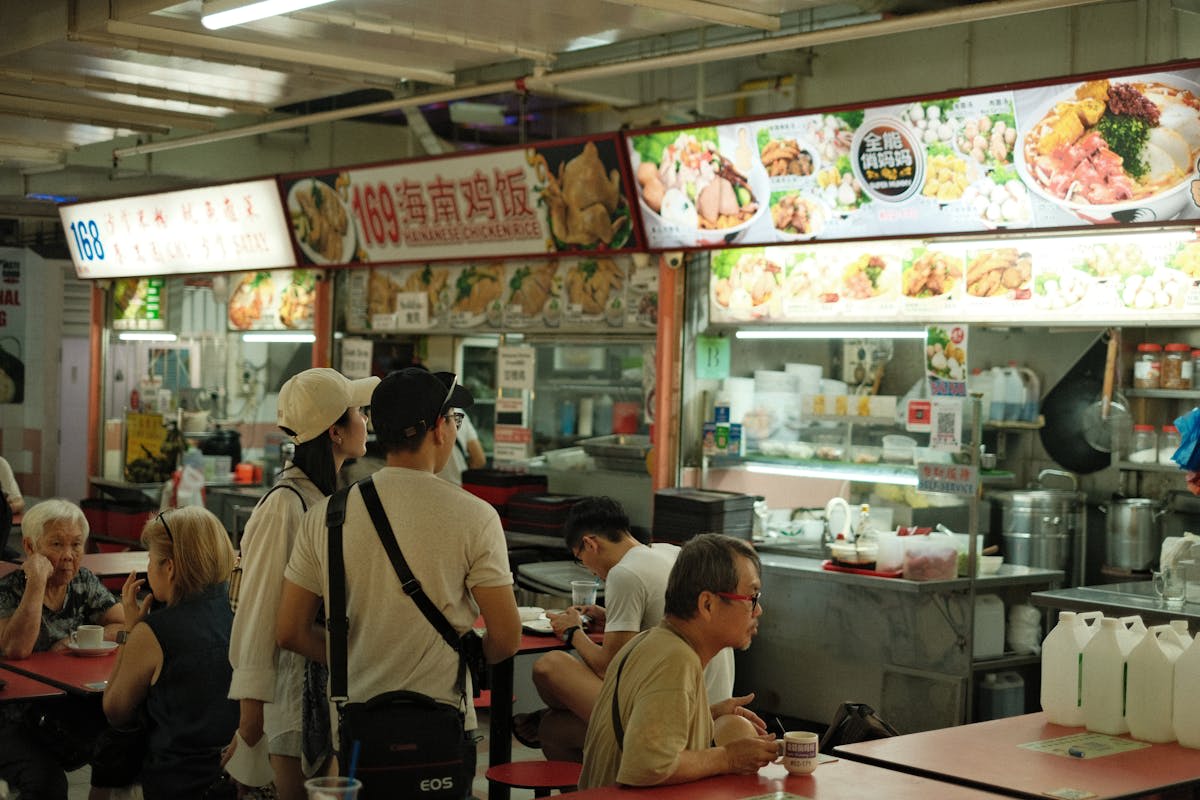
The etiquette is simple and worth knowing: reserve seats with a tissue packet placed on the table, queue without complaint (the best stalls have the longest queues, and this is the most reliable quality indicator in the country), and eat with gratitude. Each hawker centre tells a different story of migration, mastery, and meals that punch absurdly above their price. Tiong Bahru Market for chwee kueh. Chomp Chomp for barbecued stingray. Newton for the full after-dark circus of grilled seafood and Tiger beer under the trees.
The thing I kept thinking about, plate after plate, centre after centre, was the generational commitment behind each stall. These are not weekend projects. They are life’s works — a single family perfecting a single dish for decades, the recipe passed down and refined, the muscle memory of wok technique inherited like an heirloom. The UNESCO inscription was not symbolic. It was an acknowledgment that this is one of the great culinary systems the world has produced, and it operates at a price point that makes fine dining feel like a misallocation of resources.
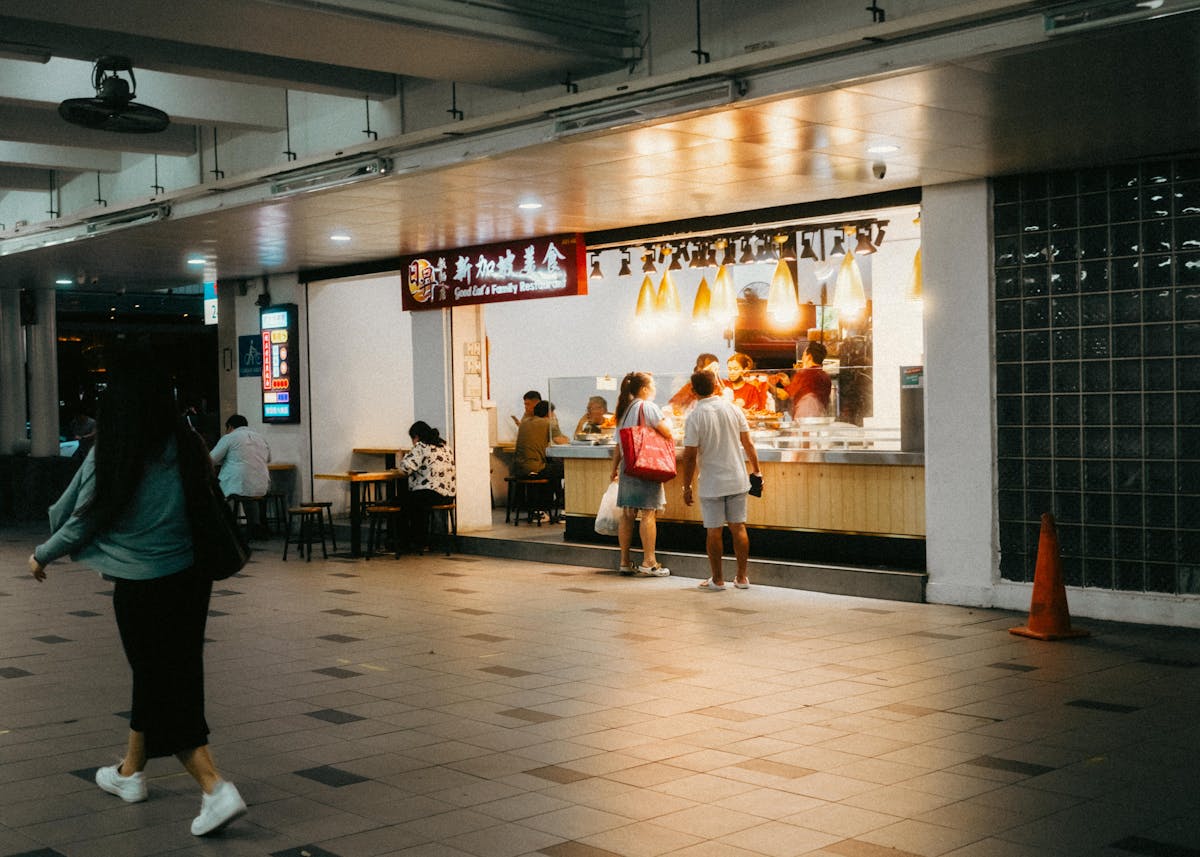
When to go: Year-round. Breakfast and lunch are peak hours at most centres. Many stalls close one day per week — check before visiting. The best stalls often have the longest queues; budget an extra fifteen minutes and do not try to outsmart the system. Newton and Chomp Chomp are best after dark. Maxwell and Old Airport Road are best at lunch.