
Gardens by the Bay
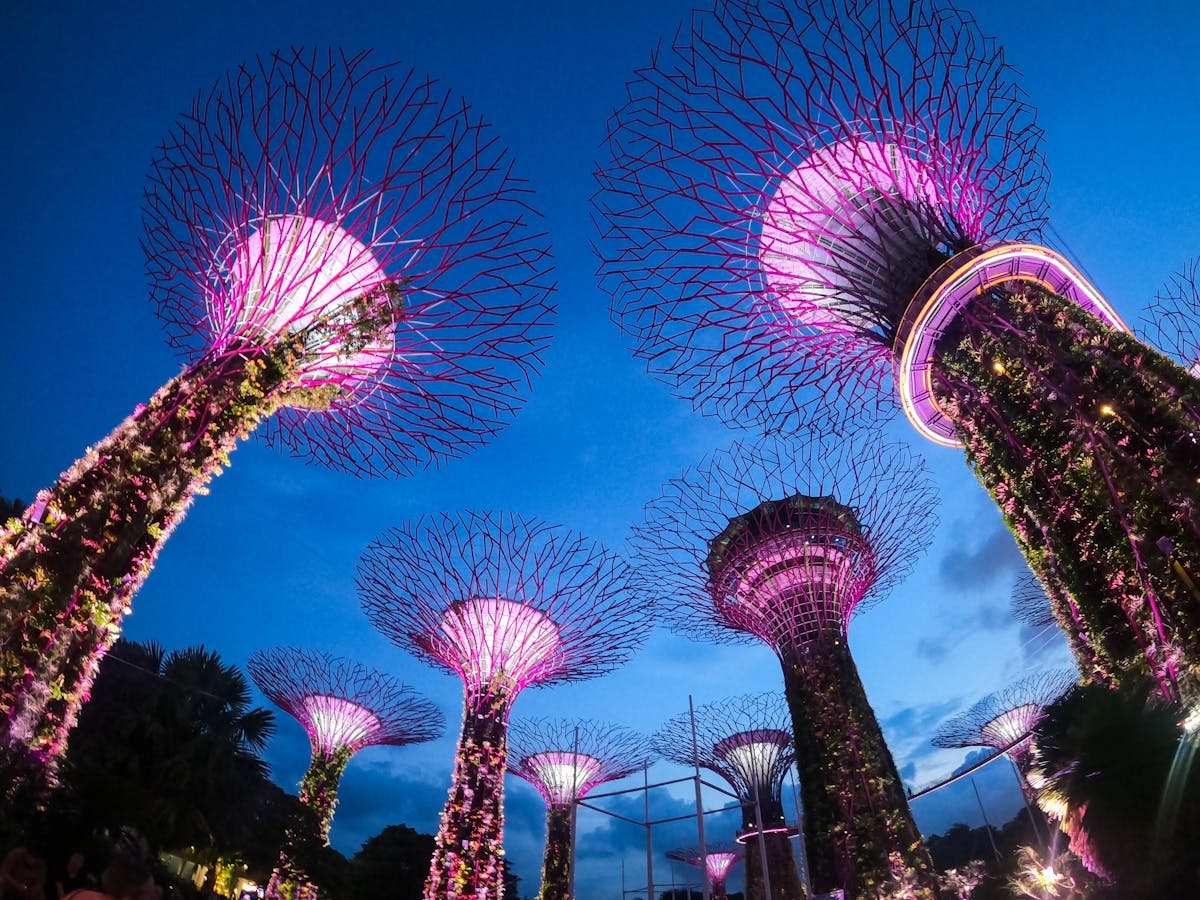
"Walking between the supertrees at night felt like visiting another planet."
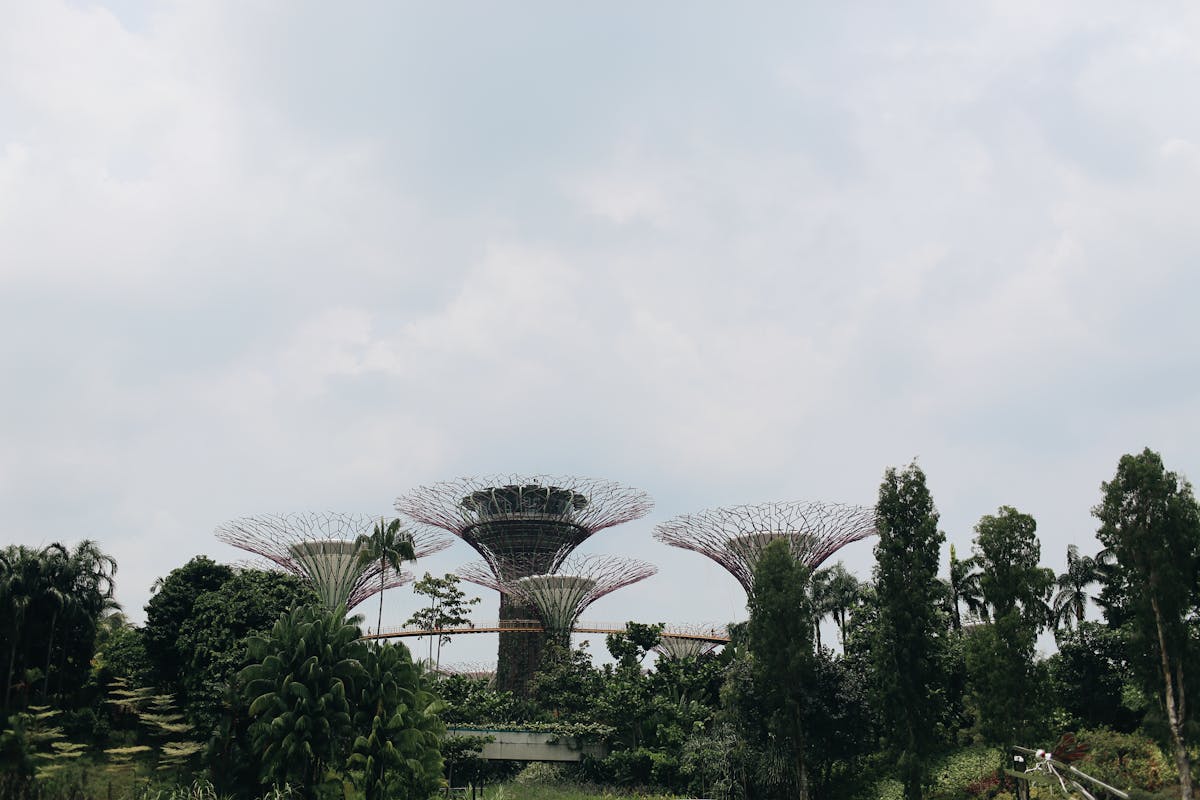
Gardens by the Bay is the single best argument for what happens when a city decides to build the future rather than wait for it. The Supertree Grove — eighteen vertical gardens up to 50 metres tall, connected by a skyway and covered in ferns, orchids, and bromeliads — is extraordinary by day and otherworldly at night, when the Garden Rhapsody light show turns them into a pulsing, glowing forest that belongs in a film no one has made yet. I lay on the grass beneath them during the 7:45 show and stared upward as the lights shifted through colours and the music swelled and I thought: this is what optimism looks like when it has a budget and a government that takes botanical engineering seriously.
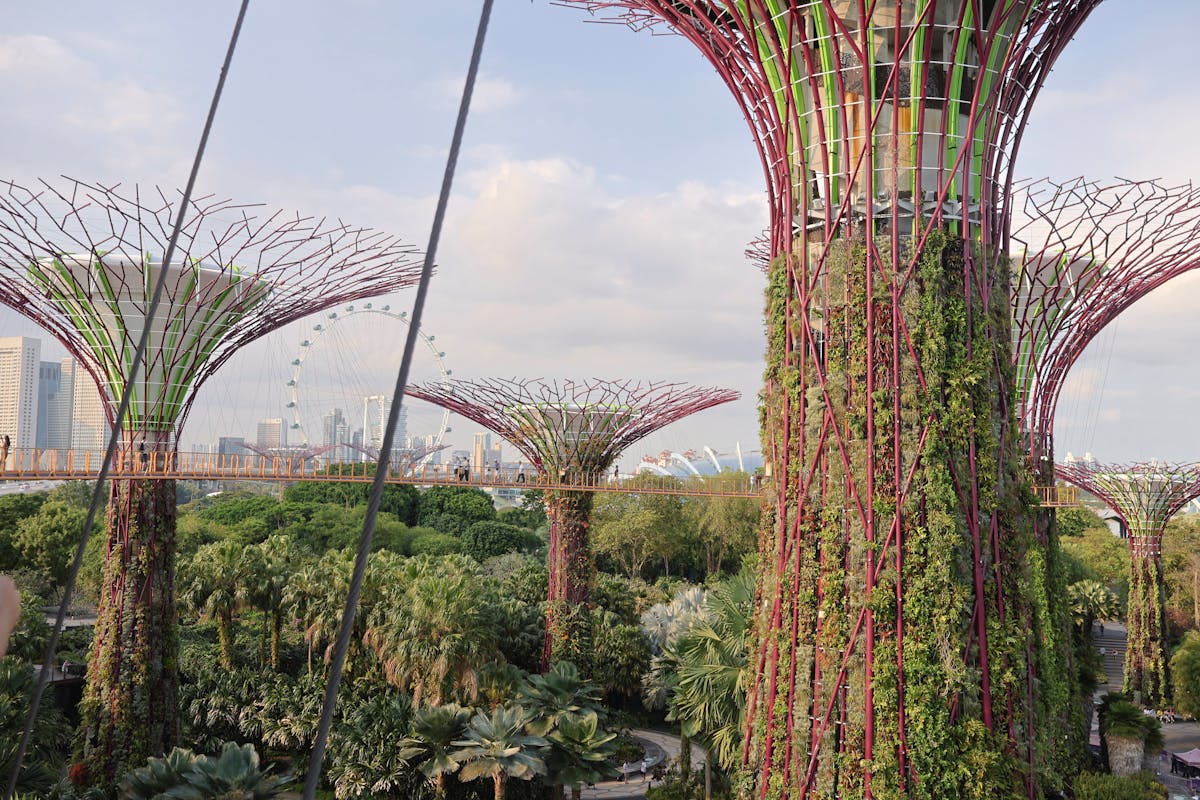
The skyway between the supertrees — a 128-metre walkway suspended 22 metres above the ground — is not for anyone uncomfortable with heights, but the view from it is extraordinary: the grove below, the bay behind, the city beyond, and the strange sensation of walking through the canopy of trees that are not trees but structures that function like trees, collecting rainwater, generating solar energy, and providing vertical growing surfaces for over 162,000 plants. I have seen a lot of gardens. This is not a garden. It is a thesis.
The two conservatories are equally stunning. The Flower Dome, the world’s largest columnless greenhouse, recreates Mediterranean and semi-arid climates under a single roof — I walked through groves of olive trees and fields of lavender and for a moment forgot I was two degrees north of the equator. The baobabs from Madagascar stand in the African section like sculptures, their swollen trunks holding water against a drought that will never come here. The seasonal flower displays change throughout the year, and the one we saw — a tulip exhibition with ten thousand blooms arranged in geometric patterns — was absurdly beautiful.
The Cloud Forest is the one that stayed with me. A 35-metre indoor waterfall cascades down a mountain draped in orchids and ferns, the mist cool against my skin after the equatorial heat outside. A walkway spirals through the cloud forest, climbing through different altitude zones, and at each level the plants change — from tropical lowland species to montane orchids to the mosses and ferns of the cloud zone. The exhibition at the top explains the fragility of these ecosystems with a clarity that made me uncomfortable in the right way. This is a conservatory that does not just display nature. It argues for it.
The outdoor gardens are free to enter and beautifully maintained — we spent a morning in the Heritage Gardens learning the ethnobotany of Southeast Asia, and the Indian Garden in particular, with its spice plants and medicinal herbs, connected to what I had been smelling in Little India the day before. The Children’s Garden has a water play area that looked so appealing in the heat that I considered pretending to have a child.
When to go: Year-round. The evening Garden Rhapsody light show runs at 7:45pm and 8:45pm nightly — free and unmissable. Visit the conservatories in the afternoon for cooler refuge from the heat. The skyway is best at dusk, when you can watch the transition from daylight to the light show. Book tickets online to avoid the conservatory queues.