East Coast
"East Coast is where Singapore goes to be off-duty, and it suits the city beautifully."
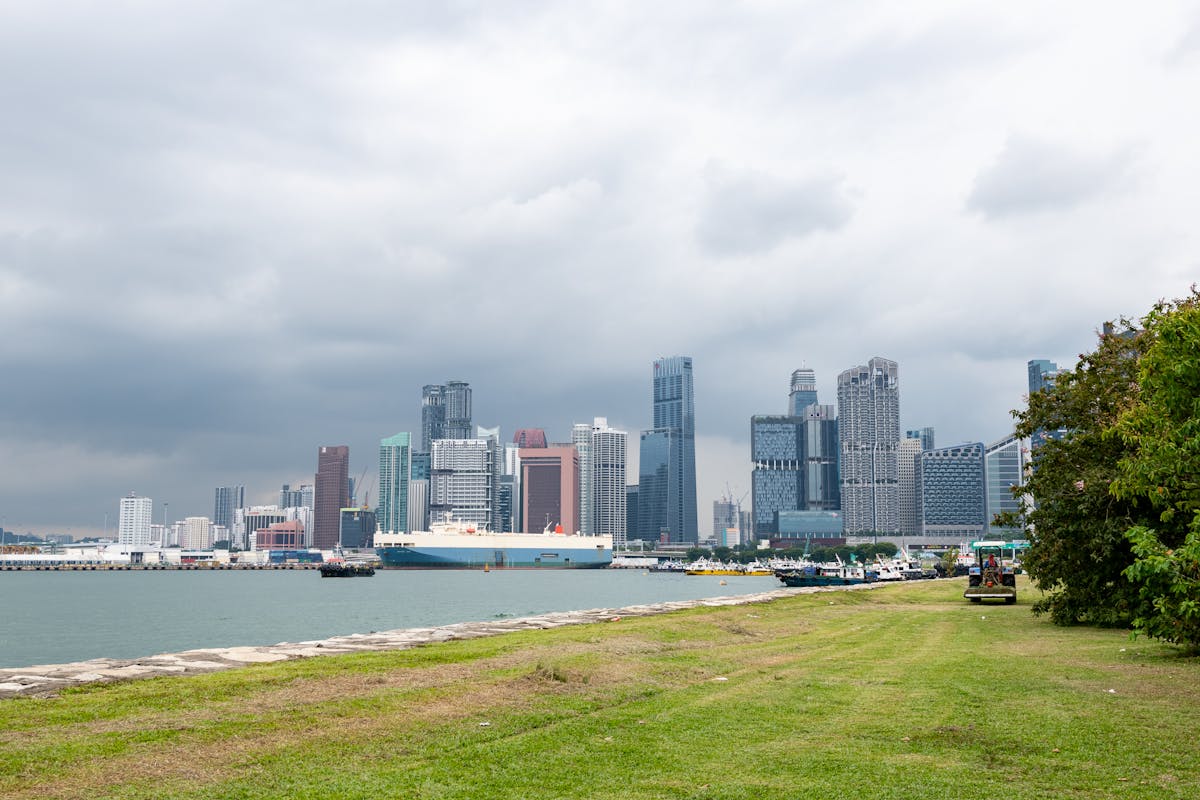
East Coast Park stretches for 15 kilometres along Singapore’s southeastern shore, and it is where the city comes to exhale. Families barbecue under the casuarina trees, cyclists cruise the dedicated paths, rollerbladers weave between joggers, and kayakers paddle out to the breakwater while container ships queue on the horizon like a traffic jam designed by a logistics professor. It is not glamorous, and that is exactly the point. This is Singapore off-duty — shoes optional, sweat expected, the kind of place where a cabinet minister might be running past you in shorts and you would never know.
We rented bicycles and rode the length of the park in the late afternoon, the sea breeze doing what air conditioning cannot, the path winding between the trees and the shore with the kind of gentle purposelessness that Singapore rarely permits itself. The East Coast Lagoon Food Village is a hawker centre set right on the beachfront, and the satay here — grilled over charcoal by stalls that have held the same spots for decades — is some of the best on the island. We sat on plastic chairs, the sea a few metres away, and ate chicken and mutton satay with peanut sauce and cucumber and ketupat rice cakes, and the combination of the food and the setting and the salt air created one of those moments that no restaurant, however expensive, can replicate.
We ate laksa at a corner stall — the rich, coconut-based curry broth with thick rice noodles, prawns, and cockles that is one of Singapore’s defining dishes. The version here was extraordinary: the broth was dense with coconut milk and dried shrimp paste, the spice was present but not aggressive, and the noodles had the particular chew that means someone cut them that morning. The sambal stingray from a neighbouring stall was equally good — the fish grilled in a banana leaf with a sambal so aromatic I could smell it from three stalls away.
I watched planes descend into Changi Airport so close overhead we could read the livery — Singapore Airlines, Cathay Pacific, Garuda — and the incongruity of it, eating five-dollar laksa while wide-body aircraft passed fifty metres above, felt like a metaphor for a country that has figured out how to put everything in the same small space and make it all work.
The Katong and Joo Chiat neighbourhoods just inland are the heart of Peranakan culture — the Straits-born Chinese community whose hybrid traditions produced some of Singapore’s most distinctive architecture, food, and design. The pastel shophouses along Koon Seng Road are among the most photographed in the country, their ornate facades decorated with floral tiles and carved pintu pagar swing doors. The Nyonya restaurants here serve dishes you will not find anywhere else — ayam buah keluak, a chicken stew with Indonesian black nuts that tastes like nothing else on earth, and kueh pie tee, tiny crisp cups filled with turnip and prawn that are the most elegant finger food I have encountered outside of a French amuse-bouche.
When to go: Year-round. Early mornings and late afternoons are best for cycling — the midday heat is not for recreation. The hawker centre is busiest on weekend evenings, and the atmosphere then is at its best. Combine with a visit to Katong and Joo Chiat for a full day exploring the east side — it is the Singapore that most tourists never see.