
Clarke Quay
"The river reflected every colour the buildings threw at it, and neither of us wanted to leave."
Clarke Quay takes Singapore’s favourite trick — preservation with reinvention — and applies it to a row of nineteenth-century godowns along the Singapore River. These were warehouses once, storing the goods that flowed through one of the busiest ports in the world. Now they store restaurants, bars, and the particular kind of evening energy that makes you forget you have been walking in equatorial heat all day. The buildings are painted in colours so vivid they look like they were chosen by someone who wanted the river to have something interesting to reflect. They succeeded.
By day, it is a pleasant riverside walk with cafes occupying the restored warehouses and the Singapore River flowing past with a calm that belies its history as one of the most commercially important waterways in Asia. The Asian Civilisations Museum sits at one end, its colonial architecture housing a collection that traces the trade routes and cultural exchanges that made Singapore what it is. We spent two hours inside and could have spent four.
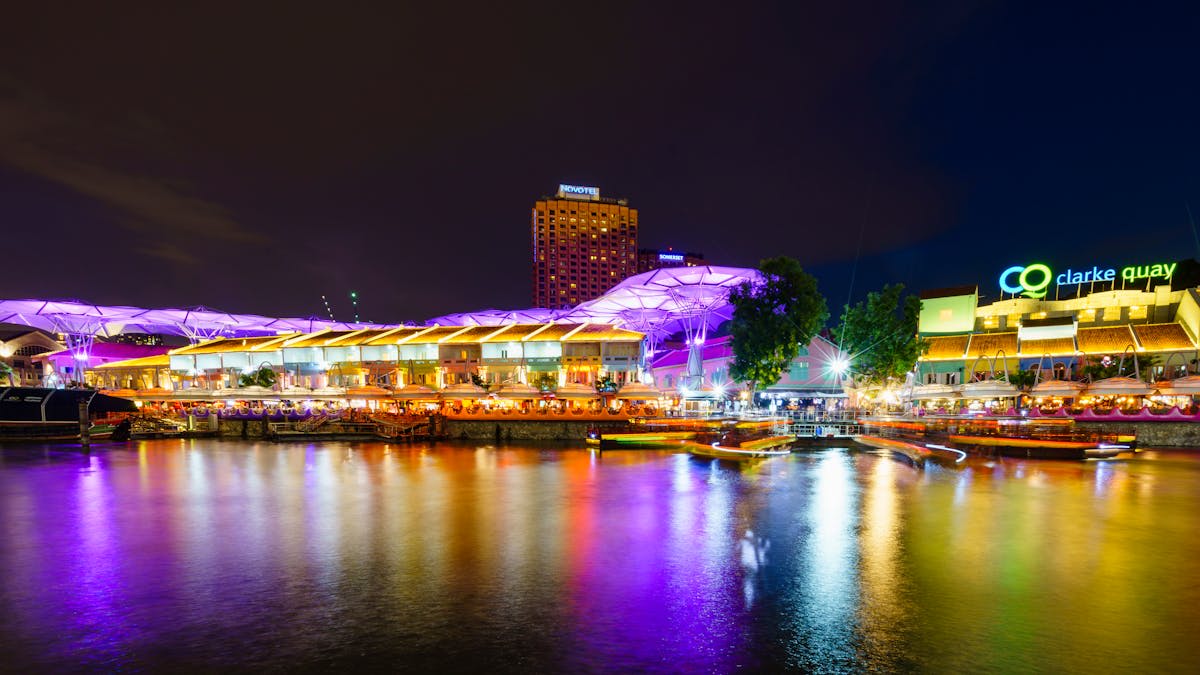
By night, the quay becomes the city’s most energetic entertainment district. The buildings are bathed in colour and the restaurants spill onto quayside terraces where the river breeze takes the edge off the humidity. We ate chilli crab at Jumbo Seafood — messy, rich, the sauce somewhere between sweet, sour, and volcanic, mopped up with fried mantou buns that exist solely for this purpose — and I understood why Singaporeans argue about chilli crab the way the French argue about wine. The dish is a national statement, and Jumbo’s version is one of the better arguments.
We took a bumboat cruise from Clarke Quay, the traditional wooden boats that once carried trade goods now carrying tourists past the glittering skyline. The forty-minute ride downstream to Marina Bay at dusk, with the city lighting up on both sides, the old shophouses giving way to the glass towers, the Merlion appearing around a bend — is the most underrated experience in Singapore. Ten dollars. Worth ten times that. The boat driver pointed out buildings with the casual authority of someone who has watched this skyline change over decades and has opinions about every addition.
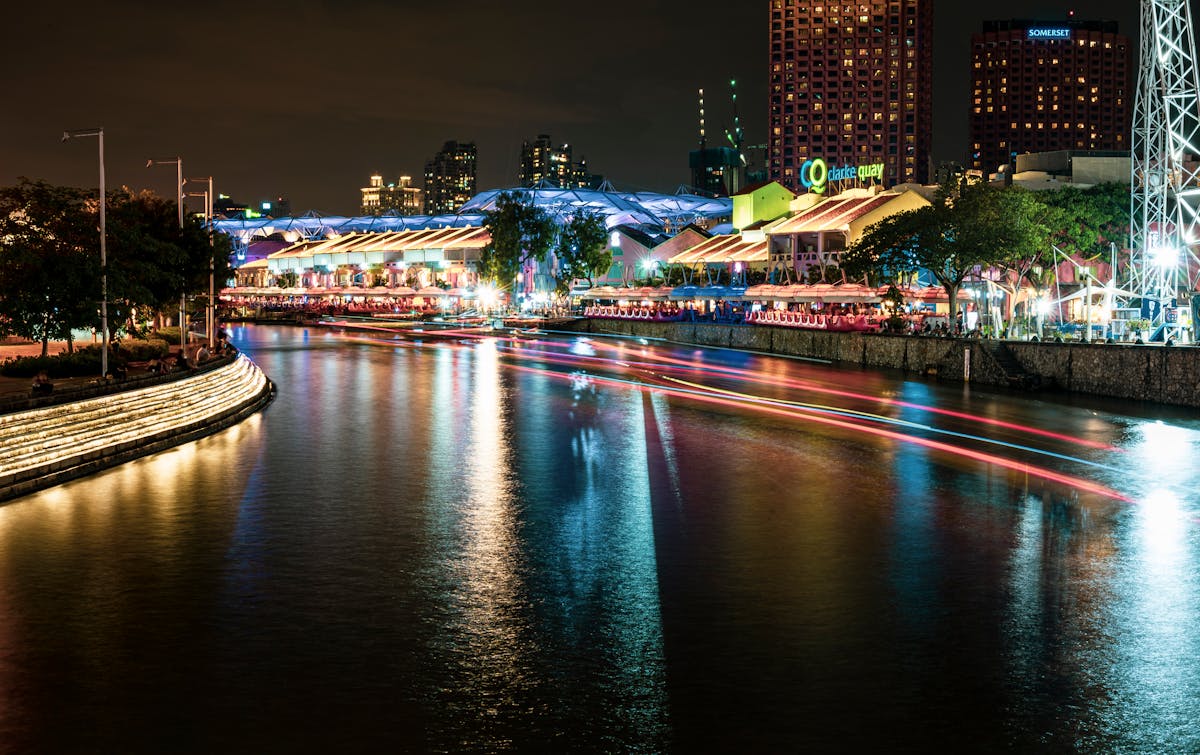
Walking upstream from Clarke Quay takes you to Robertson Quay, where the scene is quieter and the wine bars favour conversation over bass drops. This is where the expats and the locals who have outgrown the main quay come to drink well and talk slowly. The restaurants are more ambitious here — Southeast Asian fusion, Japanese omakase, Italian trattorias that would hold their own in Rome. We ended most evenings at Robertson Quay, a glass of something cold in hand, watching the river darken and the city hum on the other side of the water.
When to go: Year-round. Evenings from Thursday to Saturday are liveliest. The riverside restaurants are best at sunset — arrive early to secure a waterfront table. The bumboat rides run until 11pm; take the last one for a quieter, more atmospheric journey when the skyline is fully lit and the river traffic has thinned.